

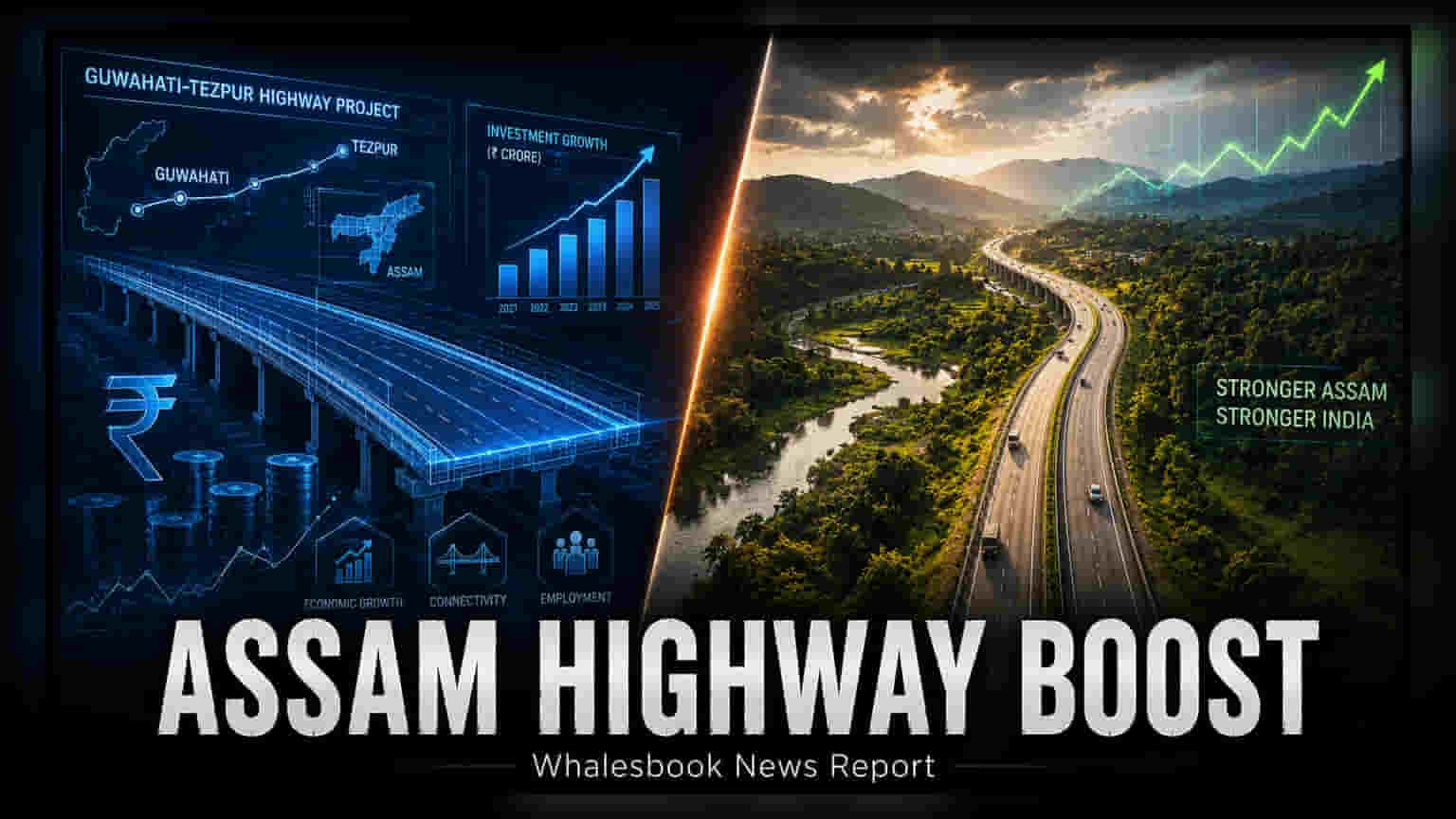
The Cabinet Committee on Economic Affairs has approved a Rs 8,970.20 crore plan to construct a 135.87-km four-lane highway between Guwahati and Tezpur in Assam. The project, following a Build-Operate-Transfer model, aims to reduce travel time and strengthen connectivity with major economic and defense hubs. Investors will likely track the upcoming bidding process and the potential execution risks common in large-scale infrastructure projects.
The Cabinet Committee on Economic Affairs (CCEA) has formally approved a significant infrastructure expansion in Assam, sanctioning an investment of Rs 8,970.20 crore to develop a new highway corridor. The project involves constructing a 135.87-kilometer, four-lane access-controlled highway between Guwahati and Tezpur. This development will be executed under the Build-Operate-Transfer (BOT) Toll model, a structure where a private entity finances and builds the road, then operates it to collect tolls for a set duration before transferring it back to the government.
Project Scale and Strategic Features
The scale of this infrastructure work is substantial. The design includes five major bypasses covering 58.7 kilometers to divert traffic away from busy towns such as Baihata Chariali, Sipajhar, Kharupetia, Dekiajuli, and Tezpur. The construction requirements are complex, involving 15 major bridges, 30 minor bridges, 19 flyovers, and 46 underpasses. A distinctive component of this project is the inclusion of a 4.9-kilometer Emergency Landing Facility (ELF) on the Tezpur bypass, which is being developed in coordination with the Indian Air Force to support national strategic requirements. The project also prioritizes environmental management, with plans for an elephant underpass to ensure wildlife safety.
Economic and Connectivity Impact
This corridor is intended to relieve pressure on the existing NH-27, which currently handles a significant volume of regional traffic. By connecting eight PM Gati Shakti economic nodes—including industrial parks and logistics hubs—and linking major airports and railway stations, the government aims to boost trade and regional development. The highway is also expected to enhance access to tourism hotspots like Kaziranga National Park and the Maa Kamakhya Temple, while providing better connectivity to the aspirational districts of Darrang and Udalguri.
Investor and Execution Considerations
For investors following the infrastructure sector, the BOT model introduces specific financial dynamics. While this model allows companies to generate long-term revenue through toll collection, it also places the burden of traffic risk on the operator. If traffic volume does not meet initial projections, the revenue may fall short, potentially impacting the financial viability of the project for the successful bidder.
Furthermore, large-scale highway projects in India frequently encounter execution risks. Common challenges include delays in land acquisition, lengthy environmental and forest clearance processes, and the possibility of cost overruns if project timelines are not met. The market will be monitoring the upcoming tender process, as the bidding companies' ability to manage these execution risks and secure land without delays will be essential. Investors may want to look for future announcements regarding the tender timeline and the successful bidders, as these will provide clarity on the expected impact on the balance sheets of the participating construction firms.