

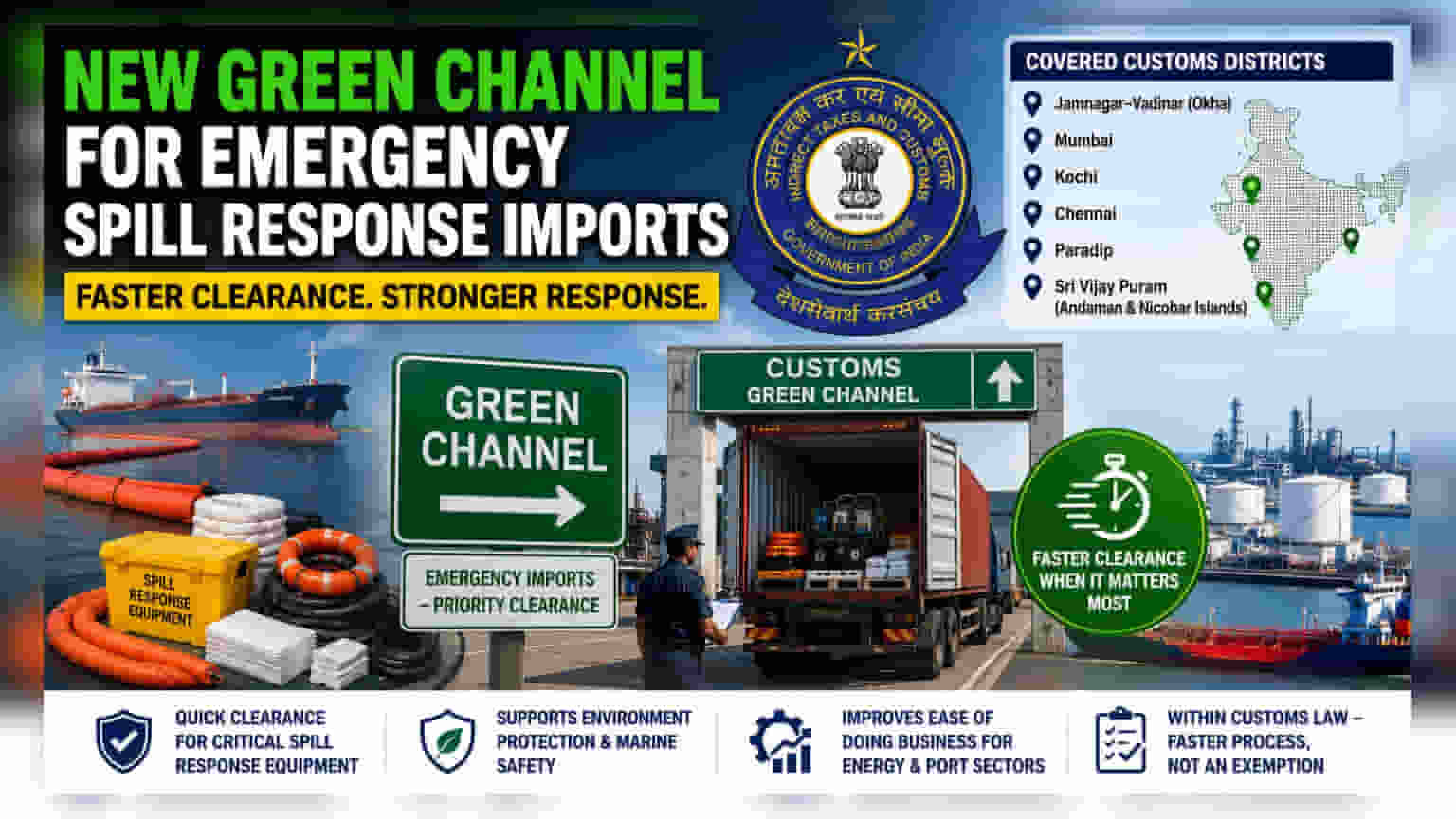
The Central Board of Indirect Taxes and Customs (CBIC) has launched a green channel to speed up customs clearance for emergency oil and hazardous spill equipment. This initiative, which covers key Indian ports, will help the Coast Guard and relevant companies respond faster to marine environmental incidents, ensuring quicker access to essential response gear.
What Happened
The Central Board of Indirect Taxes and Customs (CBIC) has introduced a new "green channel" for the clearance of emergency imports required during oil and hazardous spill incidents. This regulatory update is designed to remove customs-related bottlenecks, allowing critical spill-response equipment to move quickly through India’s ports and airports during environmental emergencies.
This system applies to specific customs districts, including those linked to major Coast Guard headquarters. The covered locations include Jamnagar-Vadinar (Okha), Mumbai, Kochi, Chennai, Paradip, and Sri Vijay Puram in the Andaman and Nicobar Islands. The procedure aligns with India's international commitments to marine environmental protection and the Coast Guard's requirements for prompt disaster response.
Why This Matters for Logistics and Energy
While this initiative is primarily focused on environmental safety and disaster management, it carries operational significance for the energy and infrastructure sectors. Oil Marketing Companies (OMCs), refineries, and port operators often maintain substantial inventories of spill-response gear to meet safety mandates.
Previously, importing this emergency equipment could face standard bureaucratic delays, which are often incompatible with the urgent nature of pollution control. By creating a dedicated green channel, the government is ensuring that critical equipment does not get stuck in customs during a crisis. This improves the overall 'ease of doing business' for large-scale energy infrastructure projects by reducing compliance risk for mandatory safety equipment.
How the Operational Change Works
The new channel will function within the existing framework of the Customs Act, 1962. It is important to note that the green channel does not grant an exemption from statutory safety or environmental laws; rather, it creates a faster, streamlined administrative path for goods specifically designated for emergency spill response.
By prioritizing these shipments, the government is effectively reducing the time-to-clearance for equipment that is rarely used but crucial for maintaining operations in high-risk zones. This helps operators at major ports and coastal refineries maintain compliance with stricter maritime environmental norms without fearing significant logistical delays during an emergency.
What Investors Can Monitor
For investors following the energy and port infrastructure sectors, this move is a structural improvement in the regulatory environment. While it does not directly impact the revenue of listed companies, it lowers the operational friction for firms that handle bulk oil and chemical shipments.
Key monitorables include how effectively port operators, such as major port authorities and private infrastructure developers, integrate this new clearance path into their emergency response plans. Further updates from the CBIC regarding specific documentation requirements or any extension of this facility to other locations will be worth noting for companies that rely heavily on imported environmental safety technology.