 Whalesbook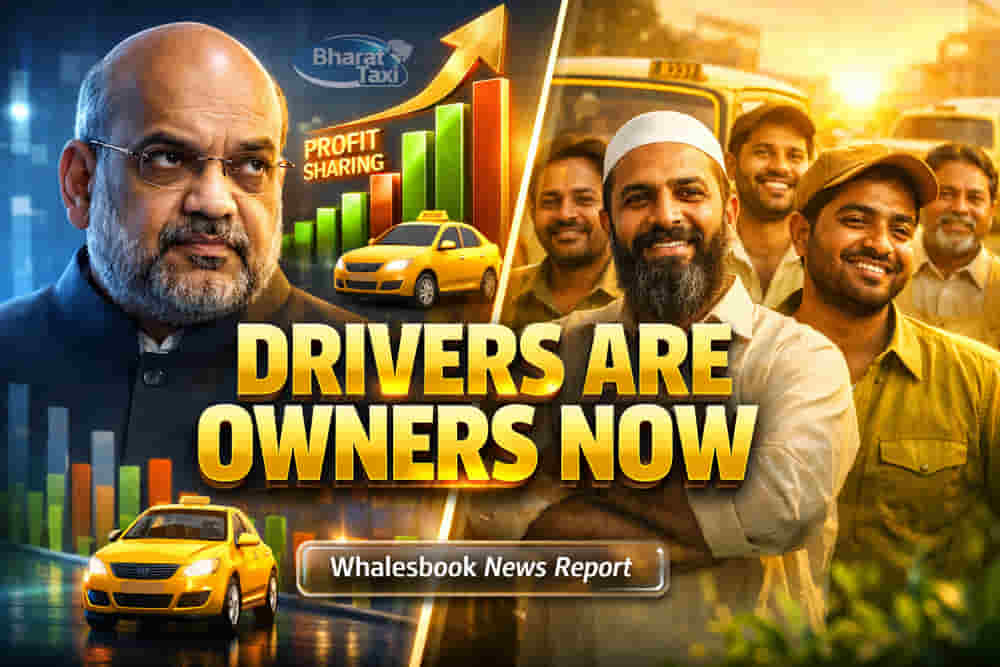
### The Cooperative Catalyst
The nascent Bharat Taxi initiative marks a significant ideological departure from the prevailing gig economy model in India's ride-hailing sector. Spearheaded by Union Home Minister Amit Shah, this platform operates under a cooperative society structure, positioning drivers not as contractors but as integral owners and beneficiaries. Drivers can invest a nominal ₹500 to become shareholders, with a commitment to distributing 80% of profits back to them based on kilometers driven after an initial three-year period. This zero-commission, surge-free pricing model directly confronts the traditional aggregator playbook, which often entails high commission rates and volatile pricing, thereby aiming to foster driver welfare and economic empowerment. The 'Saarthi' identity, encouraging drivers to see themselves as partners, further underscores this shift towards collective ownership and structured earnings. The platform is also focusing on enhancing passenger safety with a forthcoming 'Saarthi Didi' feature for women riders, aiming for greater inclusivity.
### Market Disruption Dynamics
Bharat Taxi's entry is timed against a backdrop of significant financial strain and competitive challenges for market leaders like Ola and Uber. S&P Global Ratings has downgraded Ola's parent company, ANI Technologies, to 'CCC-' with a negative outlook, citing a heightened risk of covenant breach due to diminishing cash reserves and ongoing operating losses. S&P projects a 25-27% year-over-year revenue decrease for ANI Tech in fiscal 2026, with its market share in the four-wheeler segment having dwindled to 20-25% from over 50% previously. While Uber operates with greater financial stability globally, both incumbents face persistent driver dissatisfaction stemming from high commission rates, typically between 20-30%, and declining earnings. Recent regulations allowing aggregators to implement surge pricing up to twice the base fare during peak hours further highlight the operational differences with Bharat Taxi's predictable pricing strategy. The Indian ride-hailing market is projected for continued growth, expected to reach USD 191.2 billion by 2034, but this expansion is increasingly characterized by regulatory scrutiny and a demand for fairer driver economics.
### Operational Pillars and Driver Empowerment
The cooperative framework of Bharat Taxi is built on several pillars designed to empower its 'Saarthis'. Beyond equity participation and profit sharing, the platform offers advantages such as mortgages for taxis through cooperative banks, facilitating access to capital. A nationally set base rate, factoring in operational costs like fuel, aims to ensure stability and a guaranteed minimum profit for drivers. Transparency is a key tenet, with fare changes to be notified at least a week in advance. The cooperative model is also prioritizing social security for drivers, encompassing health insurance, accident insurance, and retirement savings, alongside a dedicated support system. This comprehensive approach aims to provide a dignified livelihood and structured income, diverging from the often precarious nature of gig work.
### The Bear Case: Hurdles to Cooperative Scale
While Bharat Taxi presents a compelling alternative, its path to widespread adoption is not without obstacles. Historically, cooperative models in India, while successful in sectors like dairy and banking, have struggled to gain traction in technology-intensive, highly competitive markets like ride-hailing. The development of a robust, scalable, and user-friendly technological infrastructure that can rival established giants like Ola and Uber presents a formidable challenge. Moreover, attracting and retaining a critical mass of drivers, many of whom engage in 'multi-homing' across various platforms, will require more than just an ownership model; it necessitates consistent service quality and a compelling value proposition that rivals the network effects of incumbents. Balancing commercial viability with cooperative principles, particularly without the dynamic pricing strategies of competitors, could also lead to disincentives for drivers during peak demand periods or scarcity of availability.
### Future Outlook & Sector Trends
The Indian mobility sector is undergoing a significant transformation, with a growing emphasis on driver welfare and sustainable economic models. The government's push for cooperative initiatives across various sectors signals a long-term strategy to empower workers and foster inclusive growth. As Bharat Taxi scales, it will benefit from a broader trend of regulatory evolution in India that seeks to provide greater legal protection and social security for gig economy workers. The overall Indian passenger vehicle market is projected to see continued growth in 2026, driven by economic factors and policy support, creating a conducive environment for evolving mobility solutions. The success of Bharat Taxi will hinge on its ability to overcome operational and scaling challenges while delivering on its promise of a fairer, more equitable future for drivers in the ride-hailing industry.