 Whalesbook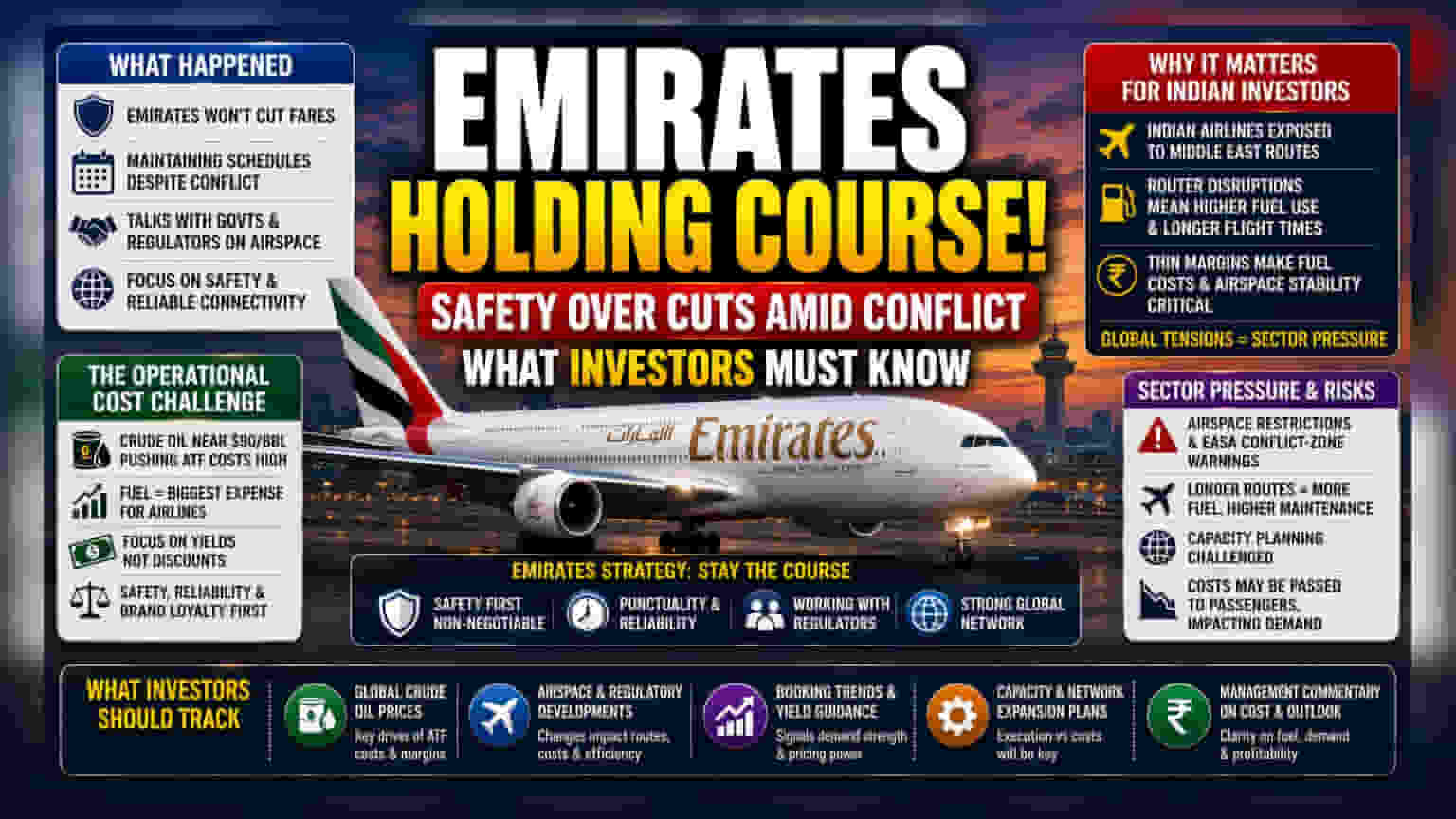


What Happened
Global airline Emirates has outlined its operational strategy in response to the ongoing conflict involving Iran. The airline has decided against lowering ticket prices, choosing instead to focus on maintaining strict safety standards and ensuring reliable travel connections. Despite rising operational costs and regional instability, the company plans to continue its existing flight schedules. The airline is also in talks with regional governments and aviation regulators to improve airspace management and resolve conflict-zone warnings that have complicated routes across the Middle East.
Why This Matters For Indian Investors
While Emirates is a global carrier, the challenges it faces are shared by airlines worldwide, including those in India. Indian aviation companies have significant exposure to the Middle East, with many international routes passing through or terminating in the region. Geopolitical instability often forces airlines to reroute flights, leading to longer travel times and increased fuel consumption.
When global tensions rise, the entire aviation sector feels the pressure. For investors, this situation underscores two major variables: fuel prices and airspace stability. Because airlines operate on thin margins, even minor changes in route efficiency or fuel costs can significantly impact the bottom line. When major hubs face disruption, the ripple effect on operational costs is usually felt across the wider aviation industry.
The Operational Cost Challenge
Airline business models are highly sensitive to crude oil prices. As reported, global oil prices remaining near the $90 a barrel mark create significant upward pressure on the cost of Aviation Turbine Fuel (ATF). Since fuel is a primary expense for any airline, high oil prices reduce the financial flexibility to lower ticket fares.
Companies often prefer to maintain or even increase fares to protect their profit margins rather than slashing prices to attract customers. This 'safety and reliability' strategy used by large carriers is a way to maintain brand loyalty without engaging in a price war that could further damage profitability during periods of high cost. Investors should note that when fuel costs are high and volatile, airlines are less likely to prioritize volume growth through discounts and more likely to focus on yield management and operational efficiency.
Sector Pressure and Risk
Beyond fuel prices, the aviation sector faces recurring risks from regional conflicts. Airspace restrictions and EASA (European Union Aviation Safety Agency) warnings about conflict zones are significant operational hurdles. These restrictions require airlines to invest in longer flight paths, which leads to higher fuel burn and potential maintenance increases.
If the situation in the Middle East persists, airlines may struggle with capacity planning. While some carriers remain optimistic about upcoming travel seasons, the ability to execute this depends heavily on the geopolitical environment. A prolonged period of instability could force airlines to pass these higher costs on to passengers, potentially affecting demand.
What Investors Should Track
Investors monitoring the aviation sector should watch several key factors. First, movements in global crude oil prices remain the most significant indicator for ATF costs. Second, any changes in aviation regulatory warnings or airspace restrictions will directly affect flight efficiency for Indian carriers operating on Gulf routes. Finally, management commentary regarding booking trends and yield guidance will provide insight into whether companies are successfully managing these cost pressures without sacrificing too much demand. Watching how domestic carriers balance capacity expansion against these fluctuating external costs will be essential for understanding the health of the sector.