 Whalesbook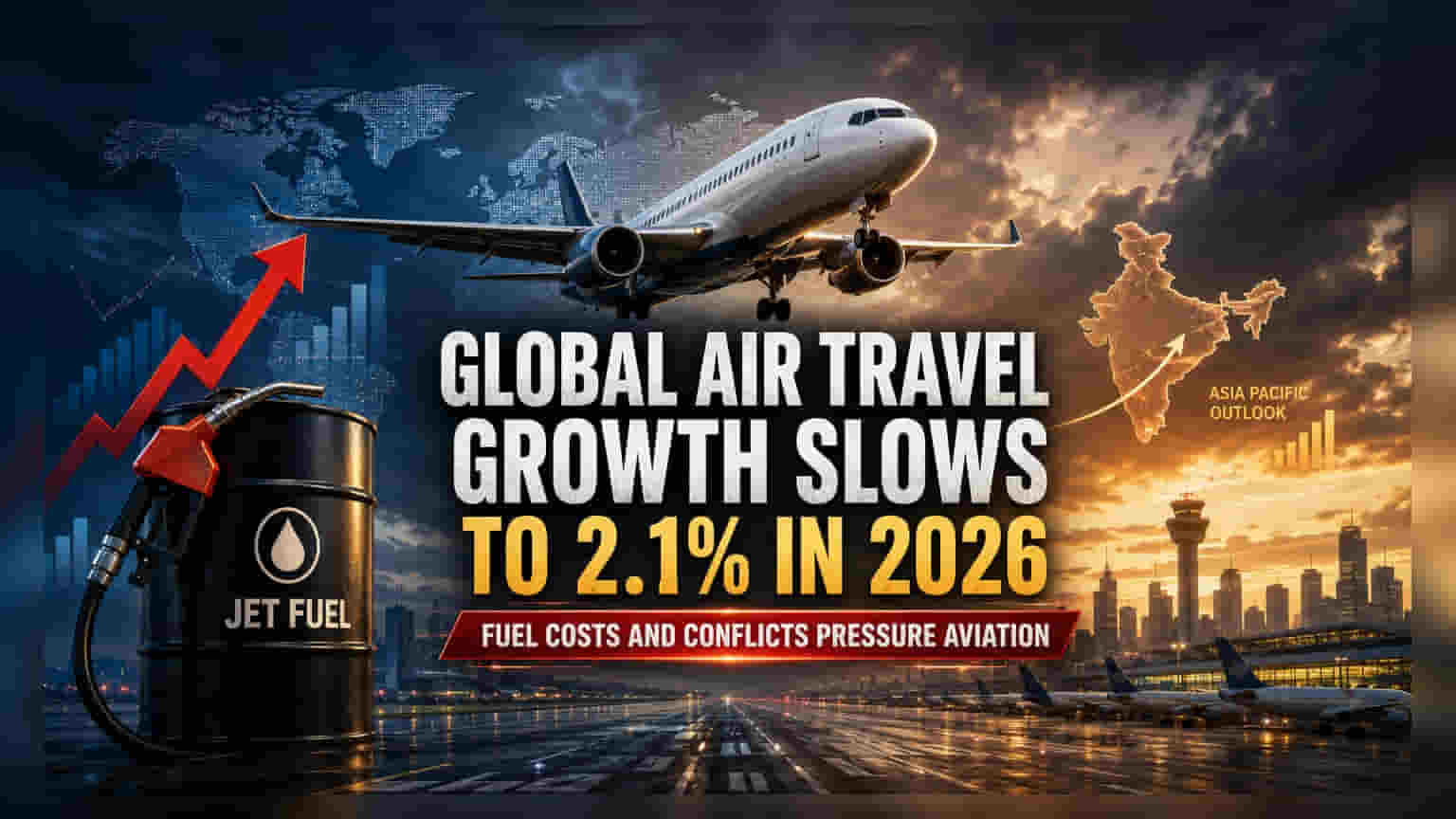


IATA expects global air travel growth to slow to 2.1% in 2026, driven by rising fuel prices and geopolitical tensions. For Indian investors, the focus shifts to how higher oil prices and inflation might pressure airline profit margins and consumer travel demand.
What Happened
The International Air Transport Association (IATA) has issued a cautious outlook for global air travel in 2026, projecting that passenger demand growth will slow to just 2.1% year-on-year. This forecast highlights a significant deceleration compared to recent trends. The association points to multiple challenges, specifically the ongoing conflicts in the Middle East and a resulting surge in energy prices, which are expected to dampen global economic growth and increase inflationary pressure.
Why This Matters for Investors
For stock market investors, the aviation sector is highly sensitive to external shocks, particularly energy costs. Aviation Turbine Fuel (ATF) is a major operating expense for airlines globally, including in India. When oil prices rise, airlines often face a direct hit to their profit margins unless they can successfully pass these costs on to passengers through higher ticket prices. However, if inflation rises, as projected by the IATA, household disposable income may shrink, potentially limiting the airline industry's ability to maintain high ticket prices without hurting demand.
The Indian Aviation Context
The IATA report places India within the broader Asia Pacific region, which is expected to see a 5.1% growth in traffic—outperforming the global average. While this suggests that the local market might remain more resilient than regions like North America or the Middle East, Indian carriers are not immune to global pressures. Investors often look at how Indian airlines like InterGlobe Aviation (IndiGo) or others manage the delicate balance between high capacity and fuel costs. The key for investors is to watch whether the demand in the Indian market remains strong enough to offset the potential rise in operational costs caused by global energy price volatility.
Why Profit Margins Matter
The primary risk in the airline sector is the compression of operating margins during periods of high fuel prices and slowing demand. When global growth slows and travel demand cools, airlines often compete for passengers by lowering fares, even as their own costs remain high. This 'price-cost' squeeze is a common challenge that can lead to lower profits for the entire sector. Investors typically monitor the 'yield'—the average revenue per passenger—to see if airlines are maintaining pricing power in a tough macroeconomic environment.
What Investors Should Track
Investors may want to focus on several key metrics in the coming quarters to understand the impact of these global trends. First, watch for management commentary on fuel price hedging, which is how airlines protect themselves against sudden spikes in oil costs. Second, keep an eye on load factors, which show how full flights are; lower load factors during a slowdown can signal weak demand. Third, observe the trend in ticket pricing relative to ATF costs, as this will determine whether companies can protect their bottom line. Finally, monitor broader economic indicators in India, as domestic air travel demand is closely linked to consumer sentiment and economic growth.
This industry remains cyclical, meaning it is often impacted by economic highs and lows. While the IATA outlook warns of a global slowdown, the actual impact on Indian companies will depend on how they navigate their specific cost structures and competitive positioning.