

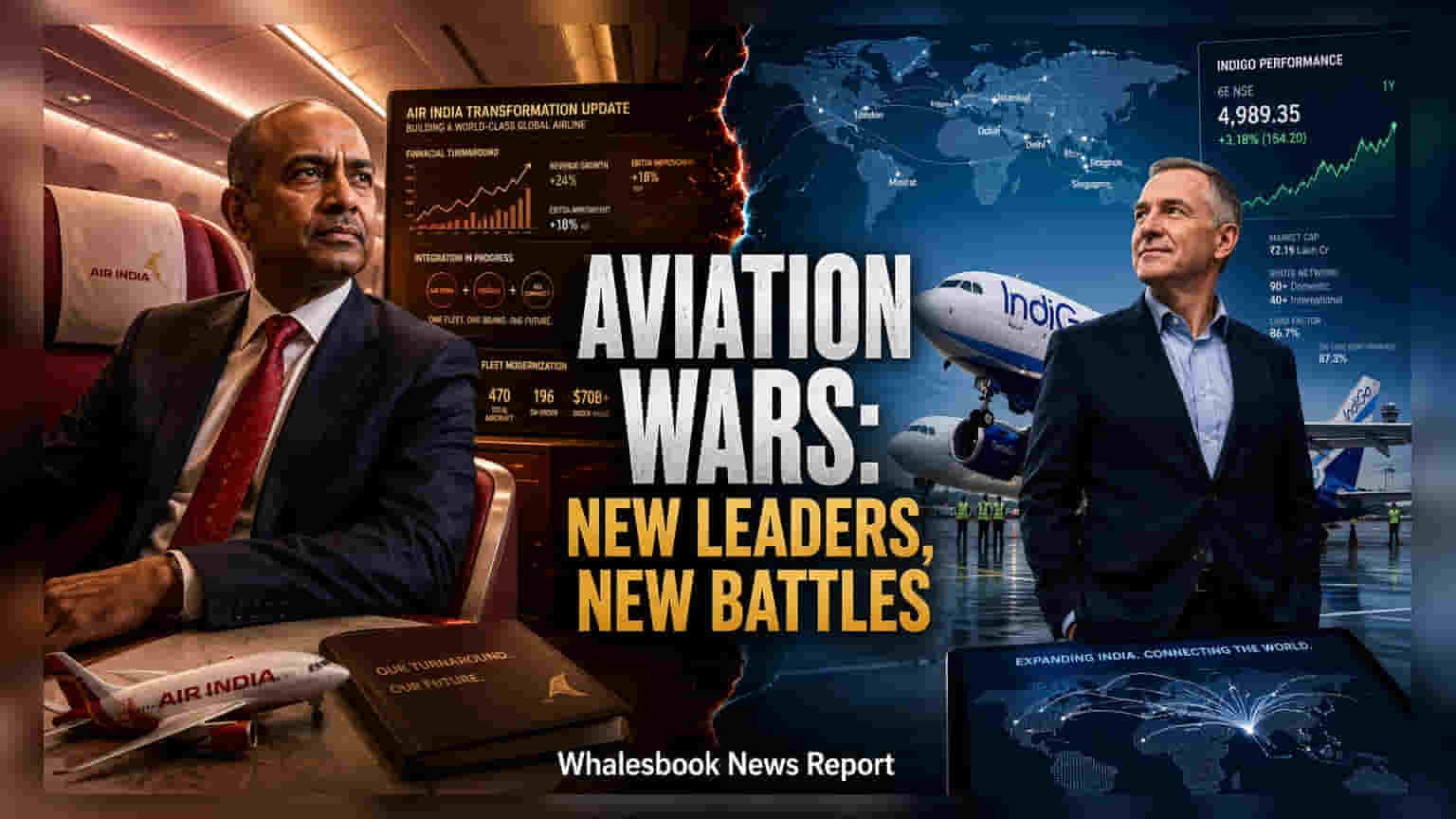
IndiGo and Air India have appointed new CEOs, Willie Walsh and Tewolde Gebremariam, to lead their respective airlines. The leadership transition comes as the two carriers, which control 90% of India's domestic market, face significant industry hurdles including supply chain constraints and volatile fuel costs. Investors are watching how these executives will balance aggressive growth plans with the need for operational profitability.
India's aviation sector is entering a new chapter with fresh leadership at its two largest carriers. On August 3, 2026, Willie Walsh officially took charge as the CEO of IndiGo, succeeding Pieter Elbers. Shortly after, on August 5, 2026, Air India announced that Tewolde Gebremariam had been appointed as its new CEO and Managing Director, taking over from Campbell Wilson. Together, these two airlines hold nearly 90% of the domestic air traffic in India, making these appointments critical for the direction of the local aviation market.
IndiGo’s Strategy Under New Leadership
Willie Walsh joins IndiGo at a time when the airline maintains a dominant market share of over 60% in India. Investors often track IndiGo for its focus on cost management and operational efficiency. The challenge for the new leadership will be to maintain this low-cost advantage while simultaneously expanding the airline's international network. Scaling operations globally often involves higher costs and greater operational complexity. Shareholders will be watching whether the company can continue to deliver strong operating margins while managing the capital intensity required for a larger, more complex fleet.
Air India’s Turnaround and Integration
Tewolde Gebremariam inherits a massive transformation project at Air India. Since the Tata Group acquired the airline in 2022, the focus has been on modernizing the fleet, integrating the group’s various airline brands, and improving service reliability. Air India is currently in a phase where it is balancing large-scale aircraft orders with the need to stabilize its core business operations. For investors and stakeholders, the key priority is the successful integration of its subsidiary airlines and the transition toward sustained profitability, which has remained a difficult hurdle given the historical debt and operational baggage associated with the airline before its privatization.
Sector Challenges and Operational Risks
The aviation industry in India is currently grappling with several structural issues that could impact both airlines. Volatile jet fuel prices remain a constant concern, directly affecting the profit margins of these companies. Additionally, the industry is facing persistent supply chain disruptions. Many airlines are struggling with a shortage of spare engines and parts, which keeps a portion of their fleet grounded and limits their ability to increase capacity to meet rising passenger demand. Furthermore, airport infrastructure constraints in major Indian cities are beginning to limit the scope for adding more flights, putting pressure on airlines to optimize their existing schedules for better profitability.
What Investors Should Track
As these new leadership teams settle in, the focus for the market will be on execution. For IndiGo, the primary indicator will be the balance between maintaining its historical cost leadership and the pressure of global expansion. For Air India, the progress of its turnaround strategy and its ability to improve operational reliability will be the main monitorables. Investors may keep an eye on quarterly results for signs of margin pressure, debt management strategies, and any updates on fleet expansion timelines against the backdrop of ongoing industry-wide supply chain bottlenecks.