 Whalesbook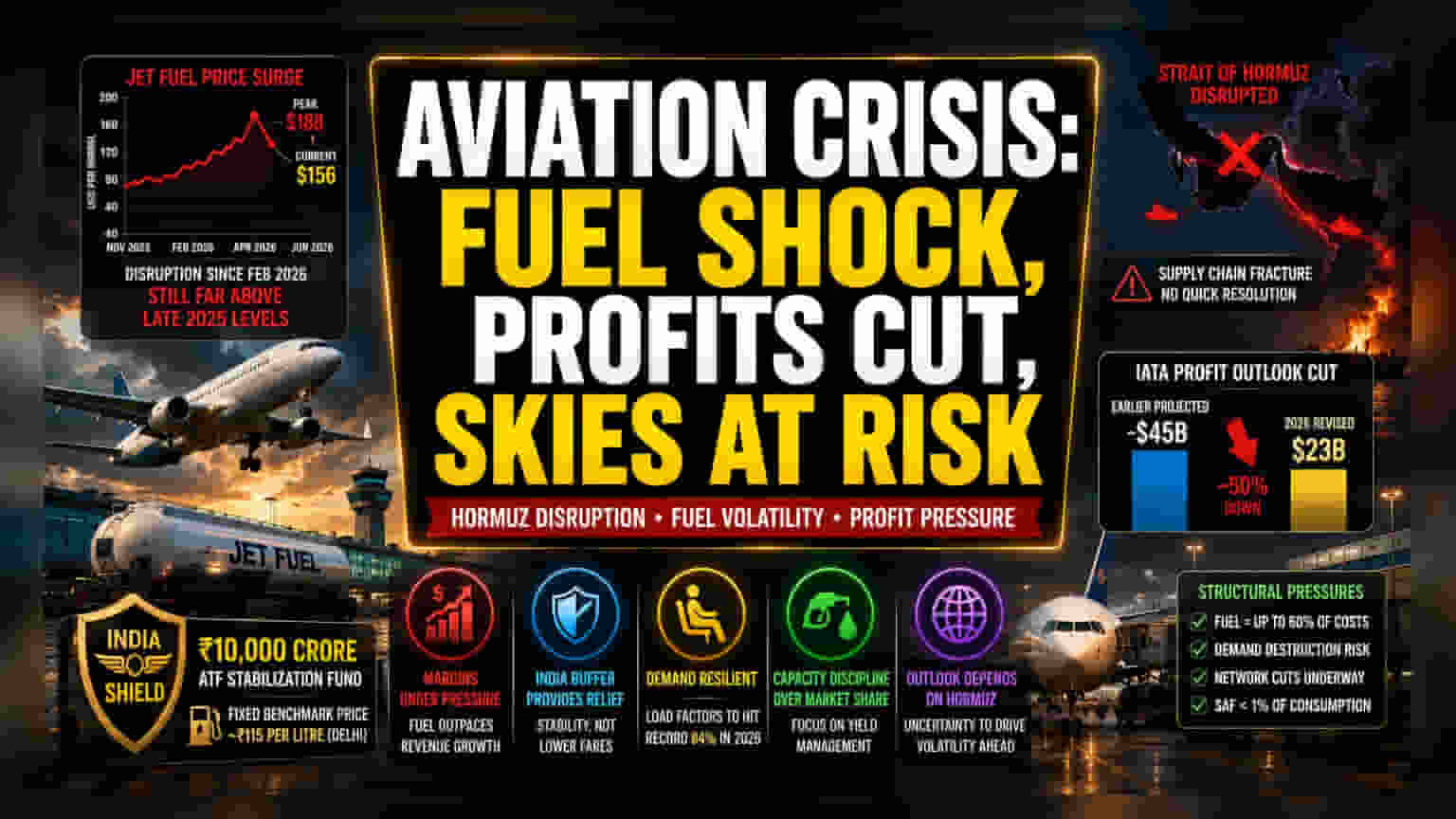


The Economic Strain of Energy Volatility
The aviation sector is currently grappling with a severe energy shock that has significantly eroded profitability margins worldwide. With the disruption of shipping through the Strait of Hormuz since late February 2026, jet fuel prices have experienced a rapid, unprecedented ascent. While prices have retreated slightly from the peak of $188 per barrel recorded in April, they remain elevated around $156 per barrel, drastically outstripping the cost baseline established late last year. This volatility has forced IATA to slash its global airline profit outlook for 2026 to $23 billion, a near 50% reduction from initial projections, as rising fuel expenses consistently outpace revenue growth.
Structural Limitations of India's Buffer
India has responded with a targeted ₹10,000 crore Aviation Turbine Fuel (ATF) price stabilization fund, aimed at shielding scheduled carriers from extreme market fluctuations. By enabling participating airlines to access jet fuel at a fixed benchmark price—set at approximately ₹115 per litre in Delhi—the government intends to mitigate fare spikes and maintain operational continuity. However, analysts suggest that this mechanism serves more as a shock absorber for operational volatility rather than a pathway to lower consumer airfares. While the fund provides critical breathing room for carriers like IndiGo and the Tata-owned Air India group, it does not alleviate the fundamental structural pressure caused by the global supply-chain fracture.
The Forensic Bear Case: Profitability vs. Resilience
The industry faces a classic "demand destruction" scenario, where elevated costs must inevitably be passed to the consumer or absorbed through capacity reductions. Unlike previous cycles, the current crisis is exacerbated by regional geopolitical instability that shows few signs of short-term resolution. Carriers with limited leverage headroom or heavy exposure to disrupted corridors are particularly vulnerable. With jet fuel representing up to 60% of operating expenditures during peak volatility, airlines are forced to prioritize profitability over market share, resulting in the temporary but significant curtailment of flight networks globally. Furthermore, the industry's green transition, specifically the adoption of Sustainable Aviation Fuel (SAF), remains a distant aspiration, with production levels failing to clear even 1% of total consumption, leaving airlines tethered to volatile fossil fuel markets.
Future Outlook and Sector Guidance
Looking ahead, the resilience of passenger traffic remains a bright spot, with industry load factors projected to reach record highs of 84% in 2026. However, the divergence between resilient demand and deteriorating macroeconomic conditions suggests a challenging transition period. Analysts expect airlines to maintain rigorous capacity discipline through the latter half of the year, focusing on yield management to recoup increased expenses. Success in the current landscape will likely depend on the duration of the Strait of Hormuz disruptions and the ability of individual carriers to manage cost bases without sacrificing essential connectivity.