

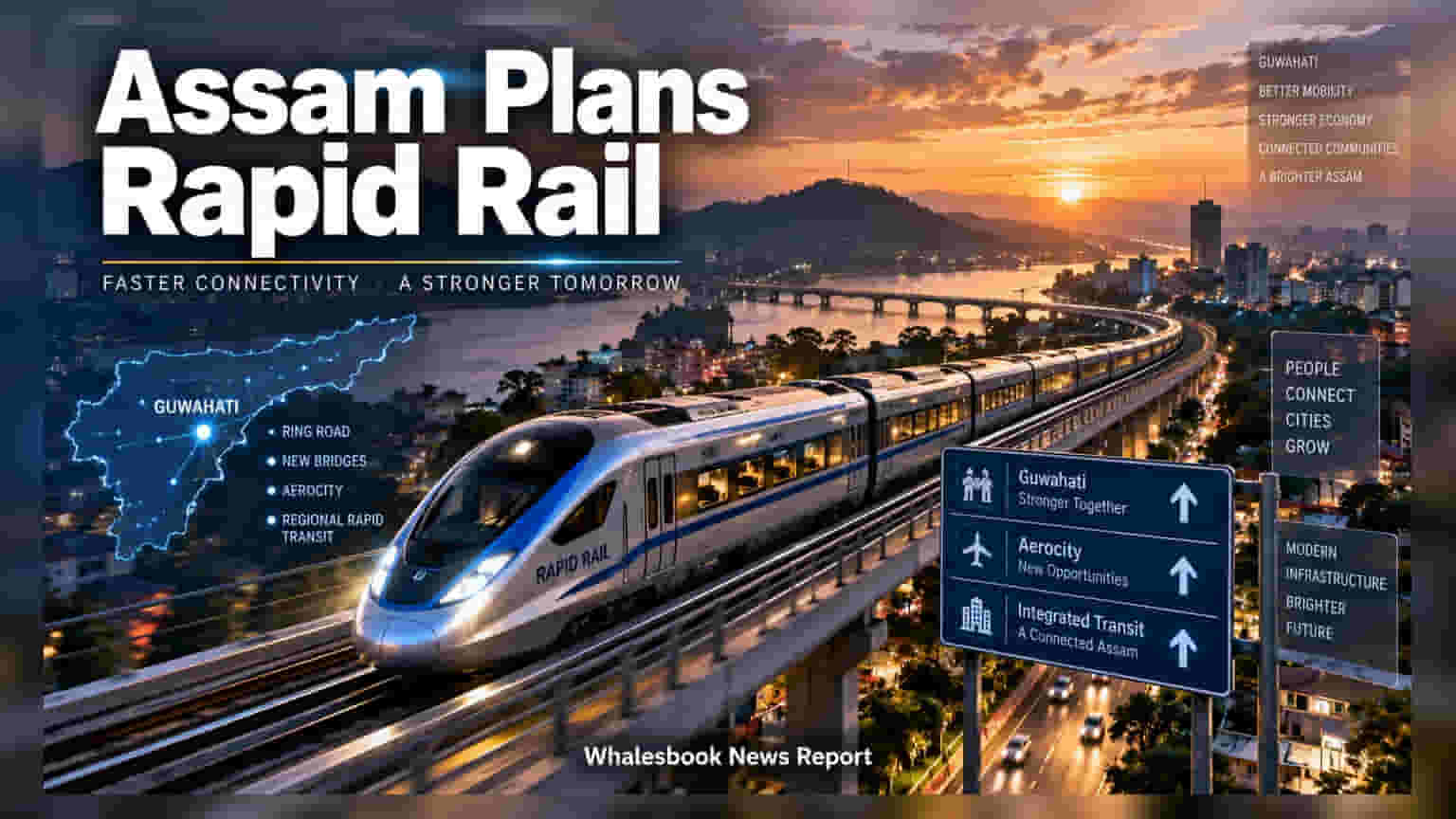
Assam has begun preliminary talks with the Asian Development Bank to develop a high-speed regional rail system inspired by the Delhi-Meerut corridor. This early-stage project aims to enhance connectivity around Guwahati and support emerging urban infrastructure like satellite townships. Investors should note that the plan is currently in the feasibility phase, with no official funding or construction timelines yet confirmed.
The government of Assam is evaluating the feasibility of a high-speed Regional Rapid Transit System to upgrade its transport network. Chief Minister Himanta Biswa Sarma confirmed that the state has started early-stage discussions with the Asian Development Bank to create a framework for this transit project. The proposal seeks to emulate the operational model of the Delhi-Meerut Regional Rapid Transit System, known as Namo Bharat, which connects urban hubs with frequent, high-speed commuter rail service.
The initiative is part of a larger plan to address traffic and connectivity challenges in the Guwahati metropolitan region. State planners are looking to align this transit corridor with other major infrastructure projects, including a proposed Ring Road, new bridges, and planned satellite townships like the proposed Aerocity. By integrating rail with road connectivity, the government aims to support the region's expanding industrial and economic footprint.
Infrastructure Planning and Execution
The current engagement with the Asian Development Bank focuses on technical feasibility and the preparation of a formal blueprint. For investors monitoring infrastructure, these early-stage talks highlight the government's shift toward multi-modal transport solutions. However, large-scale rail infrastructure projects often involve complex challenges, including land acquisition, technical execution in specific terrain, and significant capital requirements. Since the project is in the initial discussion phase, there are no details on project costs, funding structures, or potential construction tenders.
While the Delhi-Meerut RRTS model provides a benchmark for design and speed—operating at up to 160 kilometers per hour—applying such systems in different states depends on local demographic density, route viability, and long-term traffic projections. Similar large infrastructure developments in India have historically faced hurdles related to cost overruns and delays in project timelines. Consequently, the progress of this proposal will depend heavily on the final feasibility reports and the ability of the state to secure long-term funding from international institutions like the Asian Development Bank.
Investors tracking the regional infrastructure sector may find it useful to monitor future government disclosures regarding funding commitments, the appointment of technical consultants, and updates on the project’s scope. The transition from a conceptual plan to an active construction phase usually involves several regulatory steps, including project approval and tender processes, which will define the potential impact on regional construction and engineering firms.