

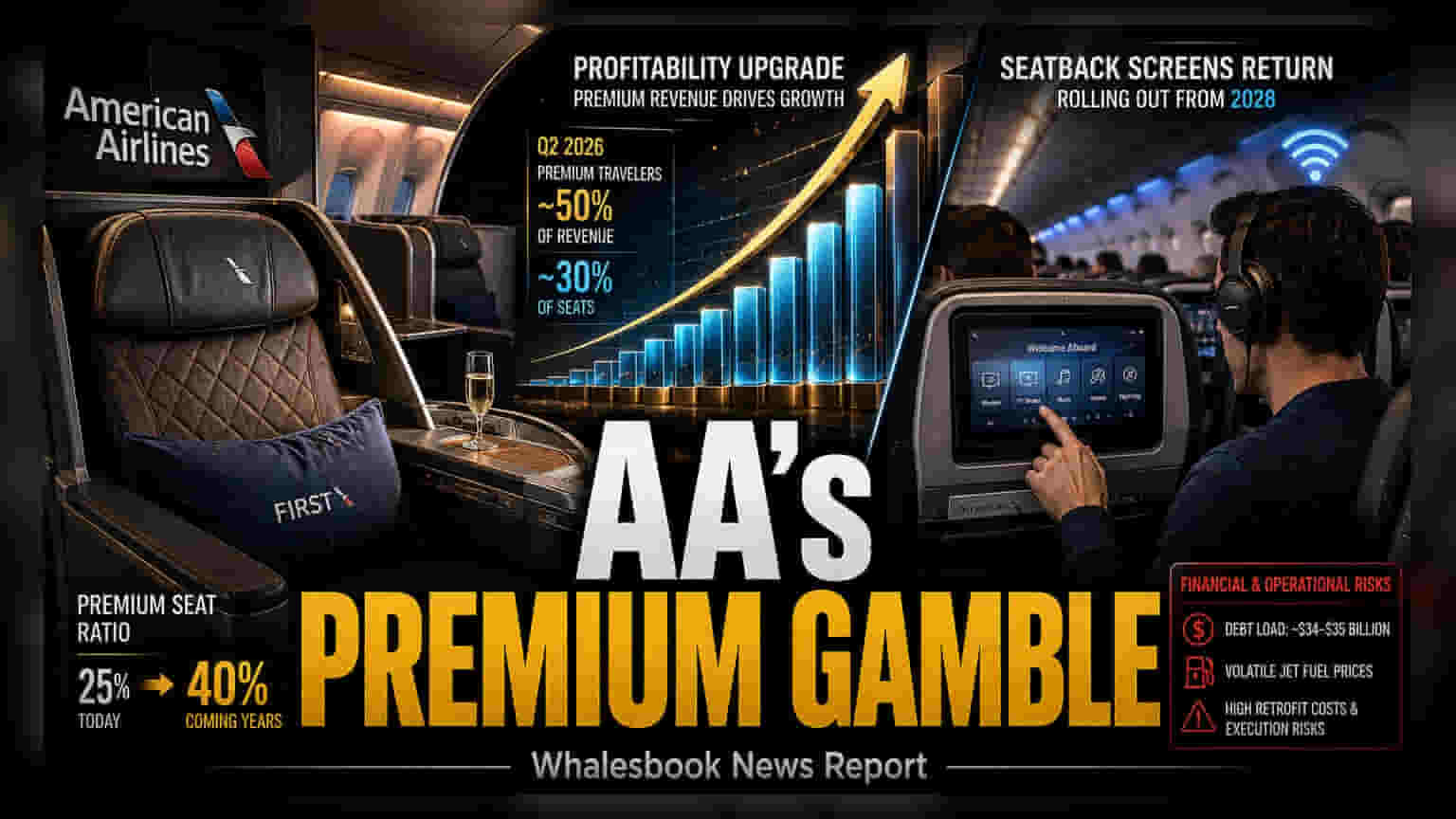
American Airlines is set to increase premium seating to 40% of its narrowbody fleet and bring back seatback entertainment screens starting in 2028. The plan aims to close a profitability gap with competitors like Delta and United, though high debt and heavy capital spending remain significant concerns for the carrier.
American Airlines (NASDAQ: AAL) has announced a significant strategy shift to upgrade its narrowbody fleet, aiming to capture more high-spending travelers. The airline plans to increase the ratio of premium seating from roughly 25% today to 40% in the coming years. Additionally, the carrier is reversing a decade-old decision by reintroducing seatback entertainment screens, with the rollout scheduled to begin in 2028 on both new aircraft deliveries and retrofitted existing planes.
Chasing Profitability and Premium Travelers
The move is primarily a response to a persistent profitability gap compared to industry peers like Delta Air Lines and United Airlines. Premium cabin travelers are a key source of earnings for major carriers, and American Airlines reported that these passengers generated nearly half of its ticketed revenue in the second quarter of 2026, despite occupying only about 30% of the seats. By reconfiguring its cabin layouts to offer more first-class and 'main cabin extra' seating, the company hopes to improve its margins and better compete for high-value customers who prioritize comfort and connectivity.
While the company is banking on this strategy to drive long-term revenue, the program comes with notable financial and operational risks. The airline is carrying a substantial debt load, reported in the range of $34 billion to $35 billion in recent quarters. This debt, combined with fluctuating jet fuel costs and recent downward revisions to its full-year earnings outlook, puts pressure on the company’s cash flow.
Execution and Financial Risks
For investors, the success of this plan will depend heavily on the company's ability to balance this capital-intensive upgrade with its existing financial obligations. The process of retrofitting over 800 narrowbody aircraft is a long-term, multi-year project that involves complex logistics and significant money spent on expansion and maintenance. Any delays in this upgrade or failure to see the expected revenue gains from the premium cabin expansion could create further pressure on the company’s bottom line.
Furthermore, the aviation sector continues to grapple with external headwinds, including volatile fuel prices and a competitive environment where rivals are also aggressively updating their fleets to attract passengers. The management team, which has recently undergone restructuring, is under pressure from investors and labor groups to demonstrate that this new strategy will lead to improved financial health rather than just higher operational costs.
The key monitorables for stakeholders in the coming quarters will be management’s commentary on capital spending plans, updates on debt reduction, and the airline's ability to maintain or improve profit margins while funding these cabin upgrades. Investors will also look for signs that the increased premium capacity is actually driving the intended revenue growth in a challenging macroeconomic environment.