

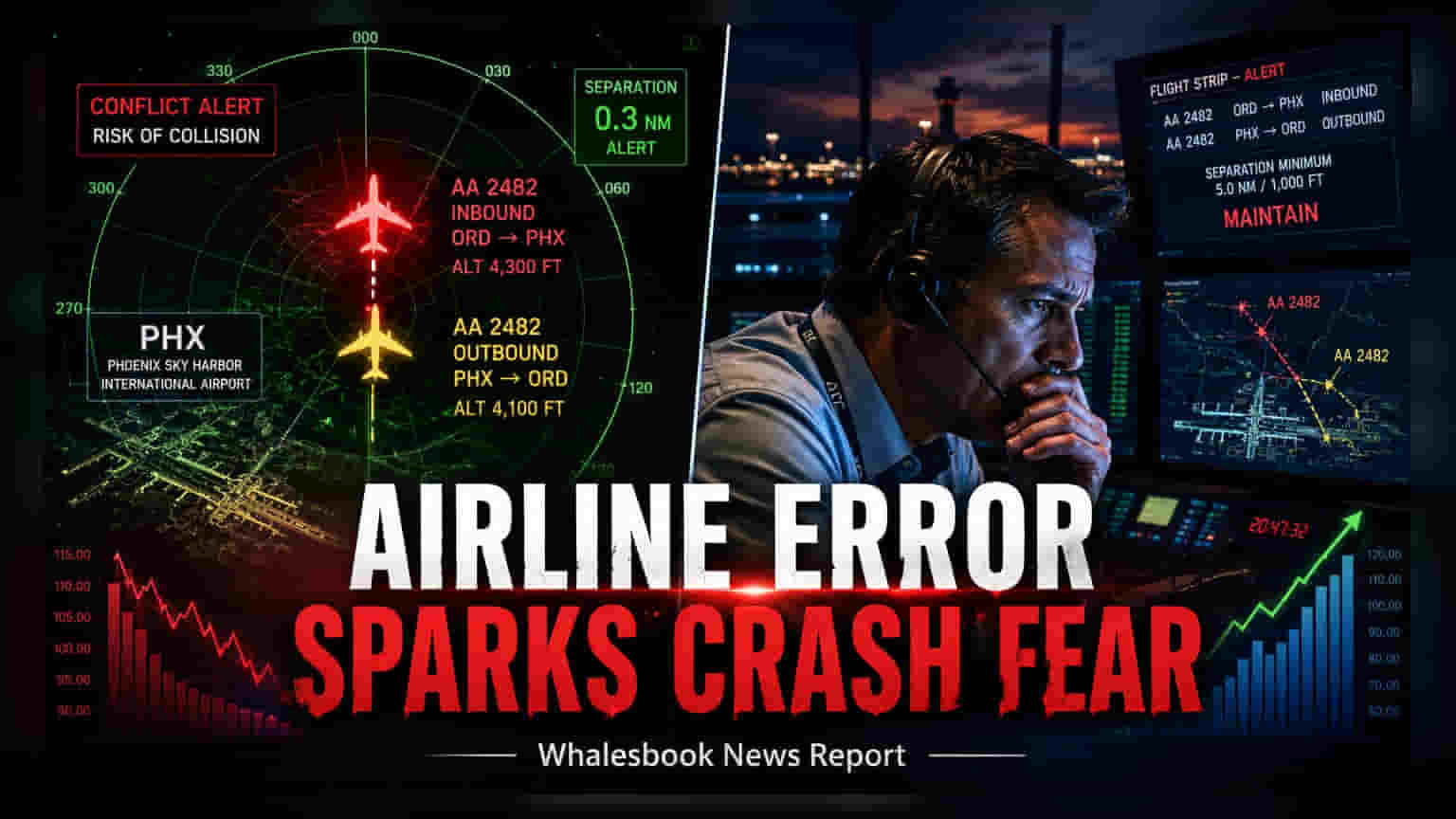
Two American Airlines jets narrowly avoided a collision near Phoenix Sky Harbor Airport after an operational error caused them to share the same flight number. While both aircraft landed safely, the incident has drawn regulatory attention and highlighted potential operational risks, leaving investors to monitor the outcome of the ongoing safety investigation.
On Friday, August 14, 2026, an air traffic controller at Phoenix Sky Harbor International Airport intervened to prevent a potential collision between two American Airlines jets operating under the same flight number, 2482. The confusion arose after a delayed inbound flight from Chicago and an outbound flight departure were both assigned the same call sign, a rare scheduling error that placed both aircraft on converging paths.
The air traffic controller’s immediate response was critical to maintaining safety. By manually identifying the two aircraft as separate entities on the radio, the controller ensured that both pilots maintained the required altitude and separation. Both flights subsequently landed or departed without further incident, and no injuries were reported.
Operational and Financial Context
For investors, this incident highlights potential weaknesses in internal dispatch systems. While the event was resolved safely, such operational errors can lead to increased scrutiny from aviation regulators. American Airlines has been navigating a challenging environment in 2026, characterized by high operating costs, particularly in fuel, and substantial debt levels.
Profit margins in the airline sector remain under pressure, and shareholders have been closely watching the company's ability to maintain efficient operations while managing its financial obligations. Incidents that require regulatory investigation can sometimes lead to additional compliance requirements or system upgrades, which may impact capital spending and operational flexibility.
Investor Monitorables
Beyond the immediate safety concerns, the primary focus for stakeholders will be the findings of the investigation by the Federal Aviation Administration. Any evidence of systemic dispatch failures could affect the company's reputation and lead to deeper reviews of its operational procedures.
Investors may also track how the airline manages any potential fallout, including public perception and internal system corrections. Continued operational challenges can influence investor confidence, which has already been tested by volatility in the airline's share price and ongoing sector-wide struggles to improve profitability and reduce debt. The company's future quarterly communications may provide insight into whether this event leads to changes in dispatch or scheduling software, and if such changes carry any financial impact.