 Whalesbook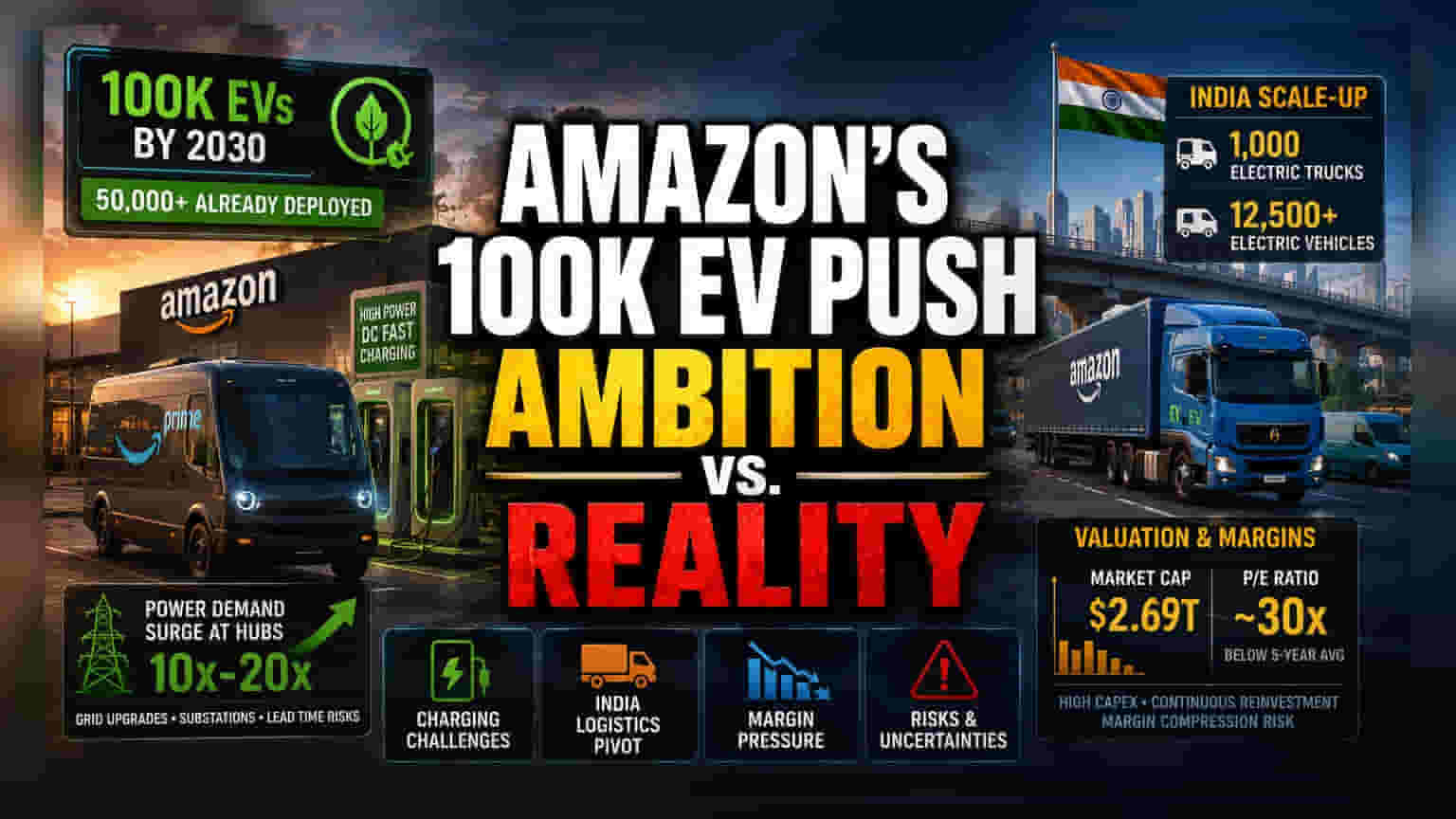


The Infrastructure Bottleneck
Amazon’s ambitious drive to deploy 100,000 electric delivery vehicles by 2030 is currently at a midpoint, with 50,000 units already in circulation. While the headline figures highlight a commitment to sustainability, the operational reality involves complex hurdles. Scaling this fleet requires massive investments in proprietary charging infrastructure, as existing public grids often lack the capacity to support the high-density power demands of multiple delivery hubs. Each site integration can spike local power demand by 10 to 20 times, necessitating extensive upgrades to cabling and substations that introduce significant lead-time risks and capital drag.
The Indian Logistics Pivot
In India, the strategy is shifting from small-scale pilots to industrial-grade deployment, evidenced by the rollout of 1,000 electric trucks alongside its existing fleet of over 12,500 electric vehicles. Unlike the U.S. and European markets, where suburban and urban layouts are more standardized, the Indian operation must navigate a highly fragmented logistics environment. The reliance on short-haul trips between fulfillment centers and micro-hubs is a calculated attempt to optimize for range, but success remains tied to the reliability of local original equipment manufacturer (OEM) partnerships and the availability of specialized charging hardware that can minimize turnaround times in congested urban corridors.
The Valuation and Margin Pressure
Investors are scrutinizing these green initiatives against a backdrop of thin retail margins. Despite a market capitalization of approximately $2.69 trillion, Amazon’s retail segment remains inherently cost-intensive. The company continues to trade at a P/E ratio near 30x, which sits below its five-year historical average, suggesting that the market is cautious about the profitability of high-capex infrastructure investments. While cloud services often provide the cushion for retail-related expenditure, the company’s retail business model requires continuous, heavy reinvestment into its transportation network to maintain competitive delivery speeds. There is growing concern that as e-commerce scales globally, the financial burden of retrofitting legacy distribution networks will continue to compress operating margins.
The Bear Case
From a risk-averse perspective, the aggressive electrification timeline poses a classic 'first-mover' risk. Management has previously noted that the industry’s lack of standardized charging solutions and the unpredictability of regional utilities can lead to operational inefficiencies. Furthermore, the company’s reliance on third-party delivery service providers (DSPs) adds a layer of complexity; forcing these smaller partners to adopt electric fleets may increase service costs or cause supply chain instability. With rising regulatory scrutiny on big tech firms and the inherent volatility in global energy markets, the capital allocation toward long-term carbon neutrality may provide long-term ESG benefits at the cost of short-term earnings volatility.