 Whalesbook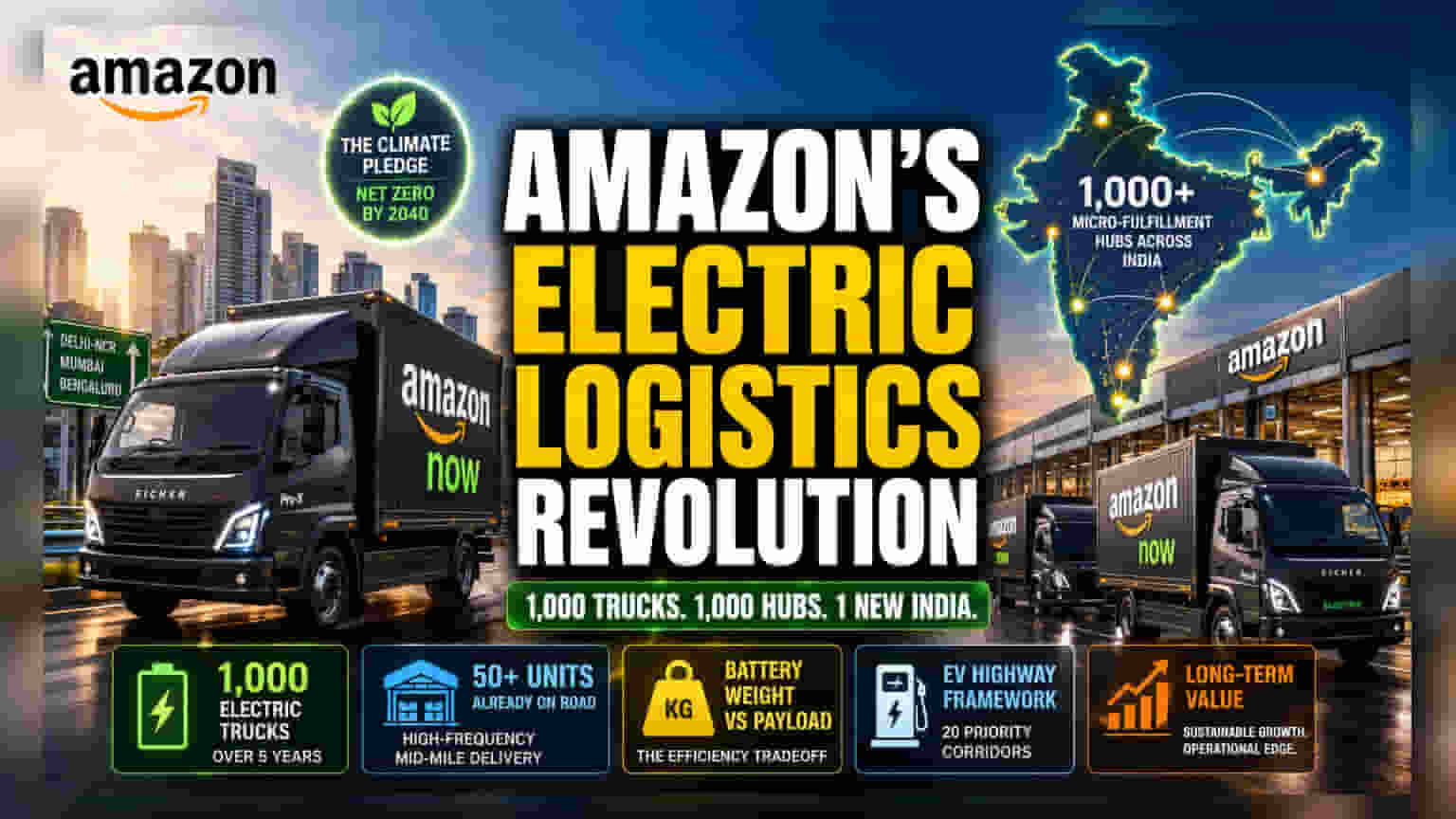


The Operational Pivot
Amazon is scaling its Indian logistics footprint by integrating 1,000 light and medium-duty electric trucks into its network over the next five years. This transition is not merely an environmental commitment but a tactical response to the logistical requirements of its quick-commerce platform, Amazon Now. Unlike last-mile delivery, which relies heavily on two-wheelers, these trucks will manage the higher-frequency, mid-mile movement of goods between urban outskirts and micro-fulfillment hubs. With roughly 50 units already active, the rollout targets metropolitan centers like Delhi-NCR, Mumbai, and Bengaluru, supporting an expansion plan that envisions a network of over 1,000 micro-fulfillment sites across India.
Scaling Against Sector Constraints
While Amazon boasts over 50,000 electric delivery vans globally, the Indian logistics sector remains in a volatile state. Recent industry data indicates a strain on the broader trucking industry due to weak freight demand and rising operational costs. The shift to electric heavy-duty vehicles (EHDVs) faces significant friction; these vehicles must balance energy density against payload requirements. Battery weight significantly impacts the cargo capacity of electric trucks, creating a tradeoff that does not exist for traditional diesel-powered fleets. Furthermore, while the government has introduced the National EV Highway Guidance Framework to encourage charging infrastructure along 20 priority corridors, progress remains incremental, leaving long-haul electrification dependent on private-sector collaboration and test projects like the Bengaluru-Chennai corridor.
The Forensic Bear Case
Investors should remain cautious regarding the cost-efficiency of this transition. While Amazon’s commitment to 'The Climate Pledge' is an essential marketing and ESG differentiator, the logistics sector in India continues to grapple with inadequate charging infrastructure and inconsistent freight demand. Unlike its U.S. operations, where scale has driven down the cost per delivery, the Indian market requires massive capital expenditure for EV infrastructure that has yet to demonstrate a clear path to profitability. Furthermore, the reliance on high-frequency, short-haul electric trucking for quick commerce introduces exposure to regulatory changes and potential margin compression if charging utility costs rise or if grid instability disrupts fulfillment timelines. Management must navigate these challenges while competing with aggressive local entrants who are also optimizing for the same limited urban infrastructure.
Market Outlook and Valuation
Trading at a trailing P/E ratio of approximately 29.4x, Amazon is priced more like a disciplined, high-quality compounder than the speculative growth vehicle of previous decades. Analysts are increasingly focused on the margin trajectory of the company’s retail operations versus the cloud-driven profitability of AWS. While vertical integration—such as designing custom-built Eicher Pro-X trucks—may reduce long-term operational costs, the immediate focus for investors remains on whether these capital-intensive sustainability investments can translate into consistent net income growth without diluting overall corporate margins.