

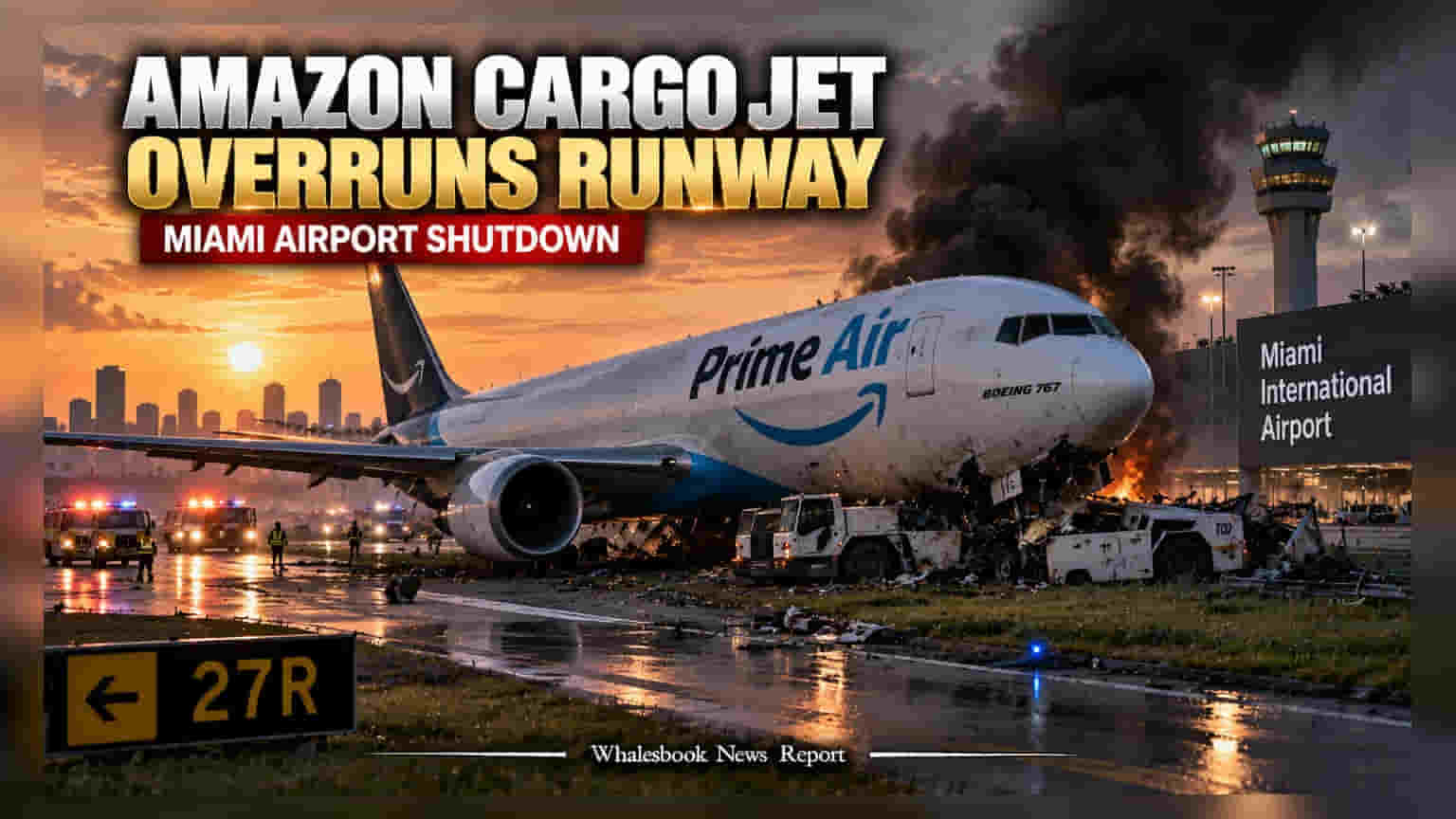
A Boeing 767-300 cargo plane operating for Amazon Prime Air overran a runway at Miami International Airport on September 6, 2026, leading to a total airport shutdown. The incident, which resulted in a fire and collision with ground vehicles, is currently under investigation by the FAA, disrupting regional logistics operations.
A cargo jet operating for Amazon Prime Air overran a runway at Miami International Airport on Sunday, September 6, 2026, resulting in a complete operational shutdown of the facility. The Boeing 767-300 aircraft, identified as Flight 7598, arrived from Luis Muñoz Marín International Airport in Puerto Rico. Upon landing at approximately 2:00 p.m. ET, the jet failed to stop, breached the runway perimeter, and collided with multiple ground vehicles before catching fire.
Operational Impact on Logistics
The incident triggered an immediate ground stop, with the Federal Aviation Administration (FAA) closing all runways and taxiways at the airport. This shutdown created significant delays and flight diversions, affecting regional logistics distribution. Miami serves as a key hub for Amazon’s air cargo network, and the restriction of operations at the facility may temporarily disrupt delivery schedules for goods moving through the region.
While Amazon utilizes a massive fleet to maintain its rapid delivery promise, the incident underscores the operational risks inherent in managing complex logistics chains. This specific flight was operated by 21 Air, a Miami-based cargo airline, rather than directly by Amazon. The use of third-party operators is common in the logistics sector to maintain scalability, but it also means the company relies on the safety and maintenance standards of various external partners.
Safety and Maintenance Risks
Investors and stakeholders often monitor the maintenance and age of logistics fleets, as older aircraft can present higher risks regarding reliability and safety. The aircraft involved in the incident was reportedly over 32 years old. The FAA has initiated a formal investigation into the crash to determine whether human error, weather conditions, or mechanical failure were responsible.
The outcome of this investigation will be important for understanding potential liability and any necessary regulatory or safety improvements required for the fleet. As cleanup operations continue and safety inspectors assess the tarmac, the timeline for the airport to return to full, normal capacity remains a key monitorable. The disruption to the Miami hub highlights the sensitivity of global e-commerce supply chains to localized operational incidents.