

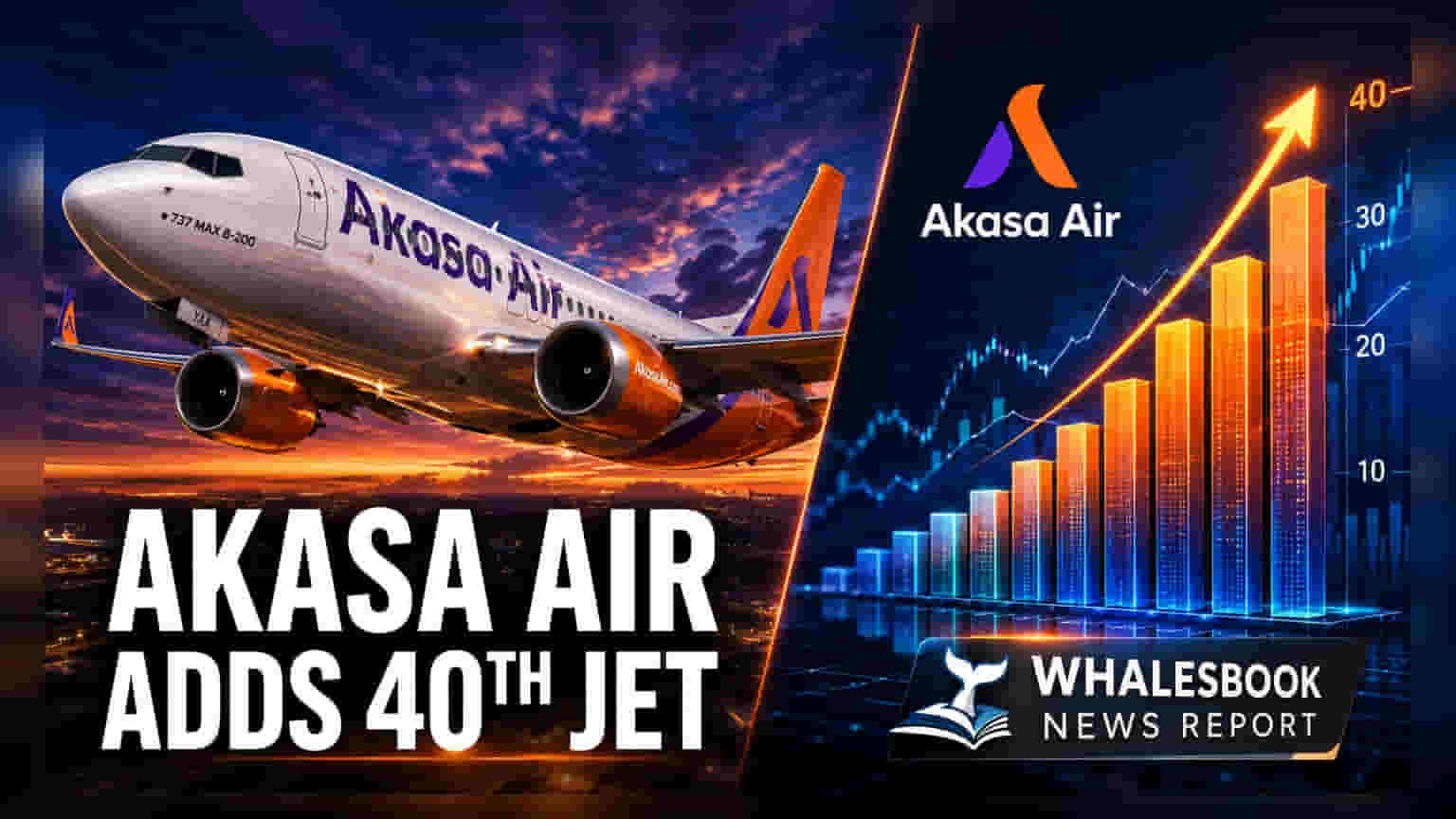
Akasa Air has added its 40th aircraft, a Boeing 737 MAX 8-200, to its growing fleet. This delivery marks a significant step in the airline’s plan to fulfill a total order of 226 Boeing aircraft as it expands its domestic and international network.
What Happened
Akasa Air has officially inducted its 40th aircraft into its fleet, a Boeing 737 MAX 8-200 registered as VT-YBQ. The aircraft arrived in Bengaluru after a delivery flight from Seattle, USA, with stops in Reykjavik and Cairo. This delivery is the ninth aircraft addition for the airline in the current year, bringing its total operating fleet to 40 planes. The airline, which started operations in August 2022, is currently using these aircraft to service 28 domestic and seven international destinations.
Fleet Growth and Strategy
The arrival of the 40th aircraft is a core part of the airline’s strategy to scale its operations rapidly. With a total order book of 226 Boeing 737 MAX aircraft, Akasa Air is working toward a long-term goal of significantly increasing its market presence. By focusing on a single aircraft type—the Boeing 737 MAX—the company aims to simplify maintenance, pilot training, and operational costs. However, such aggressive fleet expansion requires consistent passenger demand to maintain high seat occupancy rates, which directly impacts the profitability of aviation companies.
The Financial Context of Aviation Expansion
For airline companies, expanding a fleet is a capital-intensive process that involves significant lease liabilities or aircraft purchase payments. While a larger fleet allows an airline to add more routes and improve its market share, it also increases fixed costs. Investors typically watch how quickly new aircraft are put into active service, as idle planes on the ground can lead to cash flow pressure. In the Indian aviation sector, airlines often face stiff competition regarding pricing and seat capacity, making operational efficiency a vital monitorable for long-term health.
Sector Challenges and Risks
The aviation sector in India is highly sensitive to external pressures, including fluctuations in aviation turbine fuel (ATF) prices, foreign exchange volatility, and maintenance costs. While Akasa Air is scaling up, the industry remains prone to intense price competition from established players like IndiGo and the Tata Group airlines. Additionally, any global supply chain delays from manufacturers like Boeing could potentially impact the planned delivery timeline for the remaining aircraft in the airline's 226-plane order book.
What Investors Should Track
Because Akasa Air is a private entity, its financial performance is not directly tradeable on stock exchanges. However, the expansion of a major private carrier affects the overall capacity and pricing dynamics of the Indian aviation sector, which impacts listed competitors. Key monitorables for those tracking the sector include the airline's route expansion success, its ability to fill seats on new international paths, and its overall financial stability relative to its aggressive debt-heavy fleet acquisition strategy.