

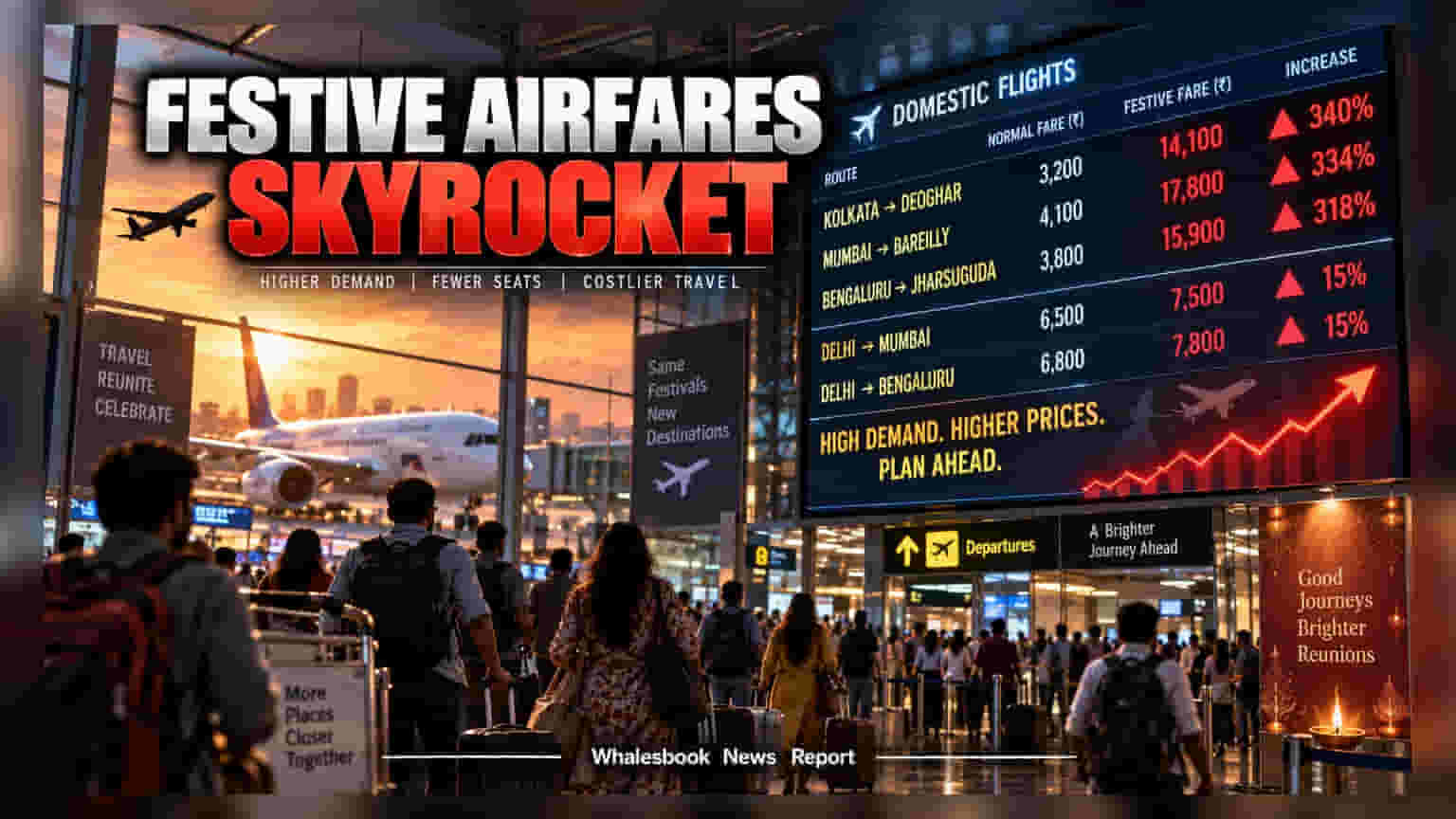
Domestic festive airfares have jumped by up to 340% on certain regional routes, sparking Supreme Court scrutiny over 'exploitative' pricing. While airlines cite capacity constraints and rising fuel costs, investors should monitor the potential impact of incoming government regulations on dynamic pricing models.
Festive travel demand has triggered a sharp rise in domestic airfares, with ticket prices on specific regional routes climbing as much as 340%. The steep increase is largely concentrated on corridors with limited carrier competition, such as Kolkata-Deoghar, Mumbai-Bareilly, and Bengaluru-Jharsuguda, where travelers are paying significantly higher premiums compared to normal periods.
In contrast, high-traffic trunk routes, such as Delhi-Mumbai and Delhi-Bengaluru, are experiencing more moderate price increases of around 15%. These corridors typically have higher flight frequencies and multiple airline operators, which acts as a natural check on extreme dynamic pricing.
Regulatory Scrutiny and Operational Risks
The current fare surge has drawn the attention of the Supreme Court of India, which is hearing a Public Interest Litigation (PIL) challenging the volatility in airfares. The court has characterized some of these pricing practices as 'exploitative' and has requested the government to provide regulatory clarity. This is a critical development for the aviation sector, as the government is currently in the process of finalizing new aviation rules under the Bharatiya Vayuyan Adhiniyam, 2024.
For investors, the primary concern is whether these new regulations will introduce price ceilings or stricter transparency requirements for dynamic pricing. Historically, airlines have relied on dynamic pricing models—where fares adjust automatically based on real-time demand—to maximize yields. Any move by the regulator to limit this flexibility could impact airline revenue and profit margins.
Capacity and Cost Factors
The surge in prices also reflects broader operational challenges. Domestic seat capacity in India fell by approximately 5.6% as of September 2026, with major carriers like IndiGo reducing capacity by 4.5% to manage fleet and maintenance issues. When flight availability is low, dynamic pricing models naturally push fares higher to balance demand with the limited supply of seats.
Furthermore, rising fuel costs continue to pressure the industry. Aviation Turbine Fuel (ATF) remains a significant expense, accounting for 30% to 40% of operating costs. While the industry is seeing a trend of narrowing net losses—projected to improve from ₹170-180 billion in FY2026 to ₹110-120 billion in FY2027—airlines remain vulnerable to volatile fuel prices and global geopolitical tensions. InterGlobe Aviation, which trades around ₹5,000, reflects the broader sector sentiment as it navigates these operational headwinds. The key monitorable for the coming months will be the finalization of the government’s new aviation rules and whether they impose any material constraints on the airlines' ability to pass on costs to passengers.