

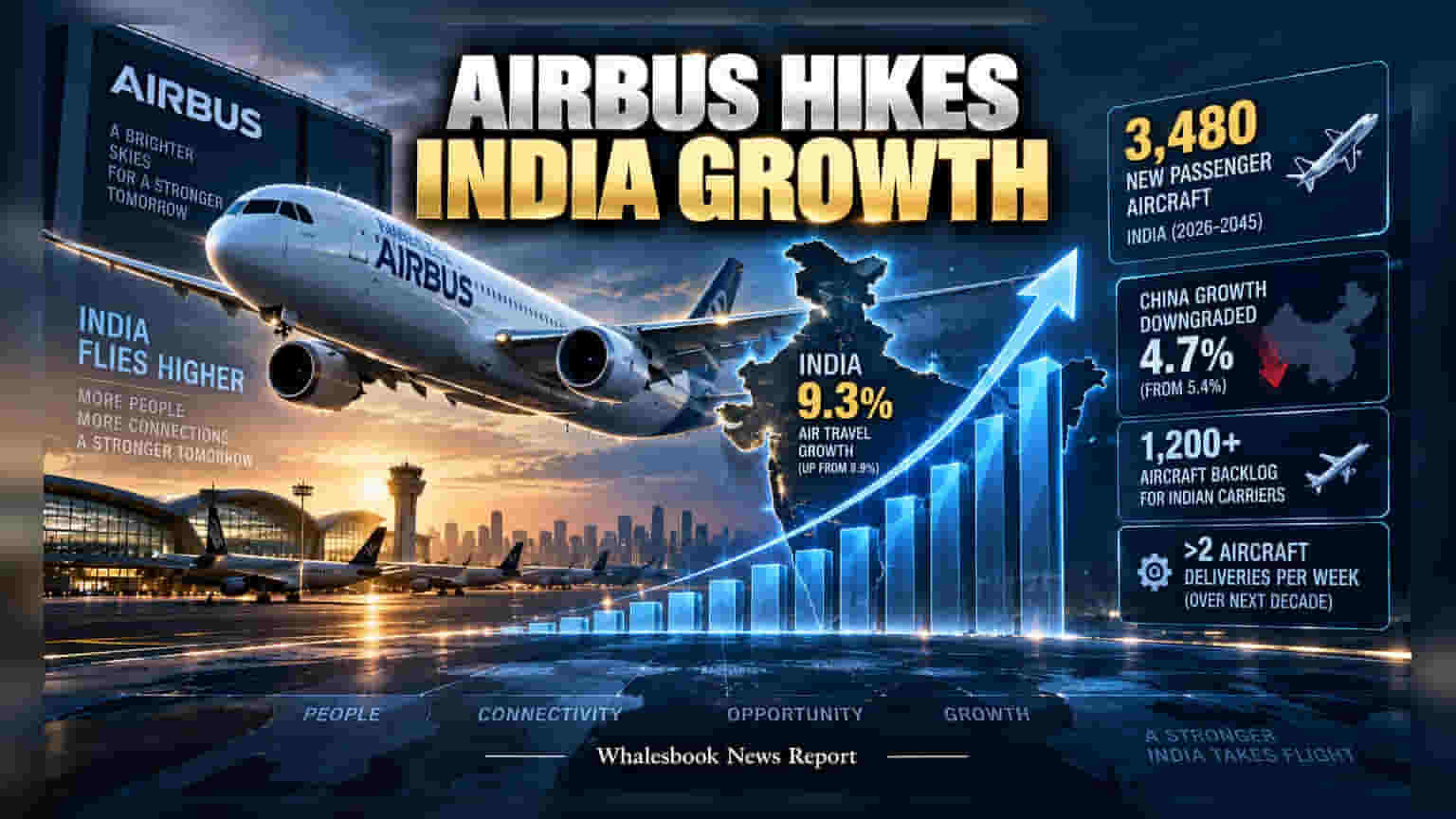
Airbus has increased its forecast for domestic air travel in India to 9.3%, reflecting the country's status as a premier aviation growth market. The company projects demand for 3,480 new passenger aircraft over the next two decades. This outlook signals a divergence from China’s slower growth, highlighting a major opportunity for the Indian aviation ecosystem.
Airbus has upwardly revised its long-term domestic air travel growth forecast for India to 9.3%, up from its previous projection of 8.9%. This adjustment underscores India’s role as one of the most critical growth engines in the global aviation sector. As part of its latest 2026-2045 Global Market Forecast, the aircraft manufacturer estimates that the country will require 3,480 new passenger aircraft over the next two decades to meet rising consumer demand.
This positive outlook for India arrives at a time when the broader Asia-Pacific region is recalibrating its aviation priorities. In contrast to the optimistic view on India, Airbus has lowered its growth forecast for China’s domestic air travel to 4.7%, down from 5.4%. This shift in projections highlights a structural change in where global manufacturers expect the next wave of airline fleet expansion to occur.
For the Indian aviation sector, the numbers translate into a concrete order book. Airbus currently holds a backlog of more than 1,200 aircraft destined for Indian carriers. The company aims to sustain a steady flow of deliveries, targeting an average of over two aircraft per week for the Indian market over the coming decade. This sustained demand is driven by a growing middle-class population and the aggressive fleet modernization plans of major domestic airlines, which are expanding routes to capture higher traffic volumes.
However, the path to fulfilling this demand involves significant logistical and operational hurdles. Airbus, like other major manufacturers, continues to face persistent supply-chain constraints that have slowed down global delivery timelines. While the company has maintained a full-year 2026 delivery target of approximately 870 commercial aircraft, any further disruption in manufacturing or logistics could impact these targets.
From the perspective of Indian investors, the aviation story extends beyond aircraft manufacturers. The rapid induction of thousands of new planes into the Indian fleet creates a ripple effect across the entire aviation value chain. This includes the need for expanded airport infrastructure, increased fueling capacity, and a robust Maintenance, Repair, and Overhaul (MRO) ecosystem. At the same time, Indian airlines operate in a market defined by high fuel costs, competitive fare structures, and sensitivity to currency fluctuations, all of which remain critical risks to long-term profitability.
Investors tracking this sector may monitor the actual delivery pace of these aircraft, as it serves as a leading indicator of airline expansion. Future updates regarding the expansion of airport capacity and the ability of Indian carriers to maintain financial stability amid high operating costs will be essential in determining how effectively the market can absorb this projected fleet growth.