

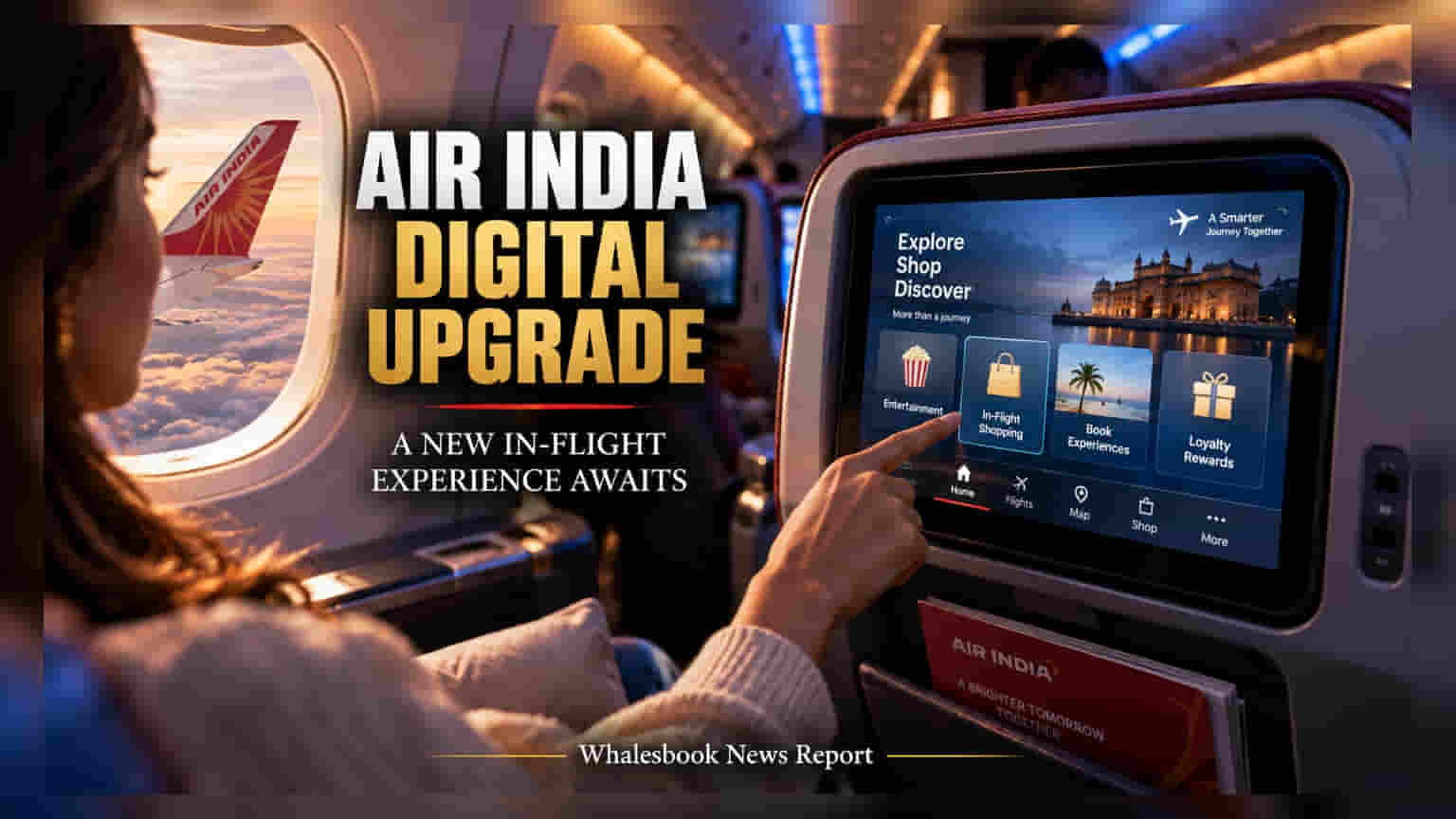
Air India will introduce its 'Vista Digital Platform' in late 2027, turning seat-back screens into retail hubs. The airline aims to increase profits by selling services and products directly to passengers during flights, leveraging its massive new aircraft order book.
Air India has announced plans to deploy a proprietary digital ecosystem named the Vista Digital Platform, with a scheduled rollout starting in the second half of 2027. The project aims to integrate entertainment, passenger loyalty programs, and retail commerce into a single in-flight digital system. By utilizing artificial intelligence, the platform will offer services such as in-flight shopping and booking local experiences, effectively turning seat-back screens into a retail hub.
The core objective behind this move is to generate ancillary revenue. In the aviation industry, ancillary revenue refers to money earned from sources other than standard ticket sales, such as preferred seating, baggage fees, food, and on-board retail. Because airline operating margins are often squeezed by high fuel costs and intense pricing competition, these extra income streams are vital for long-term profitability. By capturing the attention of passengers during their flight, the airline hopes to improve its financial margins.
The deployment strategy is closely tied to the airline’s ongoing fleet modernization. Air India has placed massive orders for roughly 600 new aircraft, and this digital system will be a standard feature on new wide-body jets as they are inducted into the fleet. This approach is more cost-effective than attempting to retrofit the technology into older aircraft that are already in service. The company plans to use this digital interface to offer a consistent, personalized experience for passengers, such as allowing them to save their entertainment progress across different flights.
From a business perspective, the success of this initiative will depend on several factors beyond the technology itself. While the concept of in-flight retail is not new, widespread passenger adoption remains a challenge. Investors will monitor whether passengers actually engage with in-flight shopping features or if they continue to rely on their own personal mobile devices for entertainment and commerce. Additionally, there are inherent execution risks, such as potential delays in software development or the integration of complex retail systems across a large fleet of new aircraft.
Furthermore, the airline sector is sensitive to macroeconomic conditions, which can impact discretionary spending by passengers. If economic growth slows, passenger spending on non-essential services may decline, which could limit the revenue generated from such a platform. As Air India works toward the 2027 launch, the market will likely track the company’s ability to manage its massive capital expenditure on new planes while successfully operationalizing new revenue streams like the Vista platform.