 Whalesbook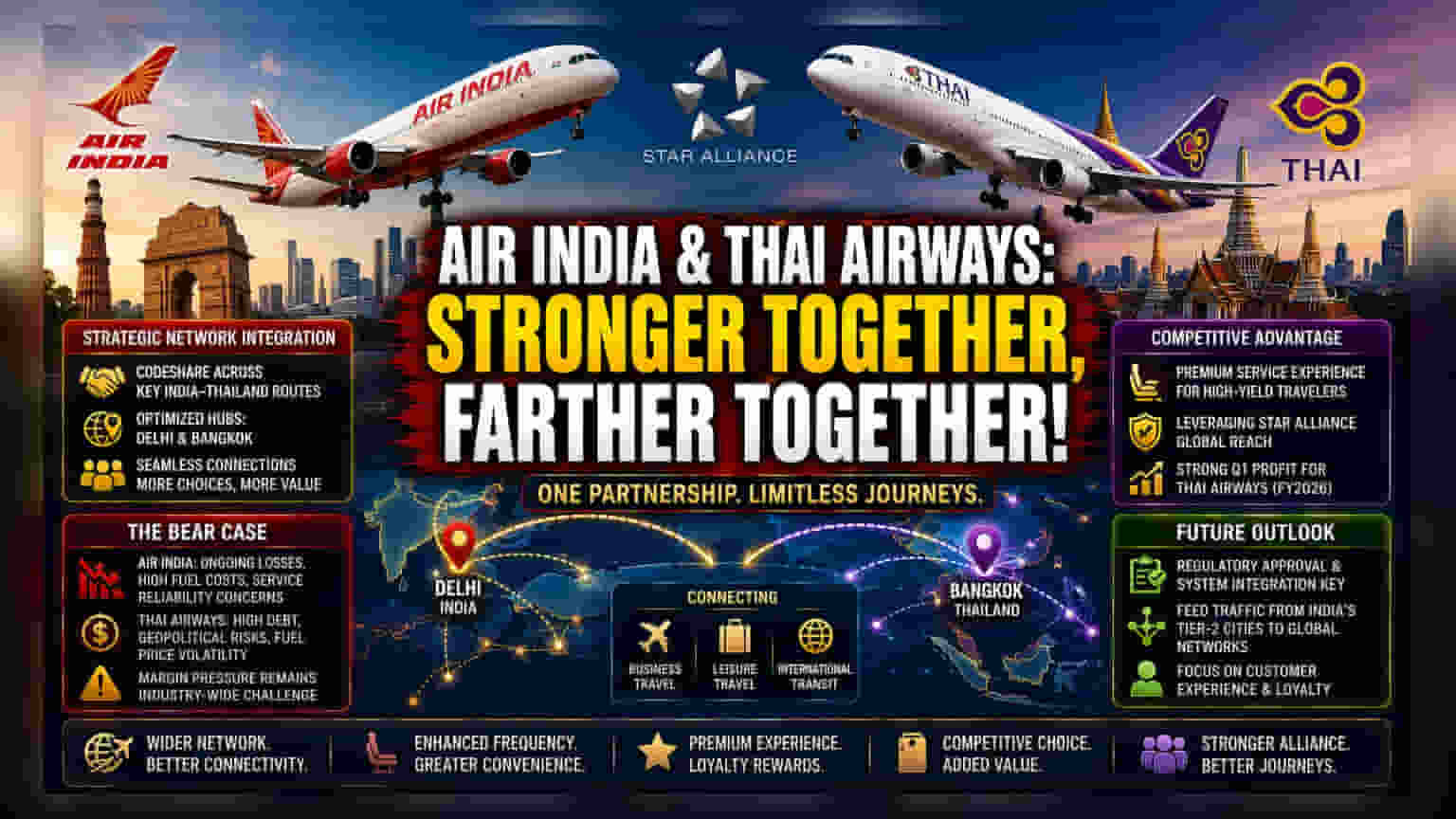


Strategic Network Integration
The partnership between Air India and Thai Airways, formalized on the sidelines of the IATA Annual General Meeting in Rio de Janeiro, represents a calculated attempt to maximize network utility for two legacy carriers facing intense pressure from low-cost operators. By leveraging their shared status within the Star Alliance, both airlines intend to overlay their flight codes on key routes connecting India and Thailand. This move is less about capacity expansion and more about frequency and hub-optimization, allowing both carriers to redirect traffic through their primary gateways in Delhi and Bangkok.
The Competitive Pressure
This shift arrives as both airlines contend with structural challenges. Air India is currently undergoing an intensive, five-year transformation roadmap, Vihaan.AI, which prioritizes premium positioning and global network connectivity to combat the rapid growth of domestic rival IndiGo. Meanwhile, Thai Airways, which recently reported a strong first-quarter profit for 2026, continues to navigate the complexities of its post-rehabilitation era. The carrier is aggressively managing cost-curbs to offset fuel price volatility and the impact of regional airspace disruptions. Unlike their low-cost competitors—such as Thai AirAsia X, which has seen load factors climb toward 90% on India-bound routes—these legacy carriers are utilizing the codeshare to offer a seamless, full-service value proposition to capture high-yield business and international transit travelers.
The Forensic Bear Case
Despite the optimistic tone, structural risks persist for both entities. Air India continues to grapple with the integration of multiple subsidiary platforms and has faced scrutiny regarding service reliability and recent ground-handling incidents. The airline's profitability remains under significant strain, with projections for the 2026 fiscal year indicating substantial losses exacerbated by soaring jet fuel costs. For Thai Airways, the risk is rooted in its heavy debt load and the dependency on the global economic environment, which remains fragile due to geopolitical tensions in the Middle East. While the codeshare agreement provides an operational shield, it does not solve the fundamental margin compression issues caused by the industry-wide struggle to pass on rising fuel surcharges to price-sensitive consumers. Any further downturn in global travel demand or significant spike in oil prices would likely blunt the competitive advantage this partnership seeks to provide.
Future Outlook
Looking ahead, the success of this collaboration will hinge on the speed of regulatory approval and the airlines' ability to synchronize their digital ticketing interfaces. Analysts expect the carriers to utilize this arrangement to feed traffic from Tier-2 Indian cities into Thai Airways’ international long-haul network, while providing the Thai carrier with deeper access to the growing Indian outbound market. The specific implementation timeline remains fluid, but the focus remains on enhancing the passenger experience to differentiate their service from the cost-focused strategies of regional budget airlines.