

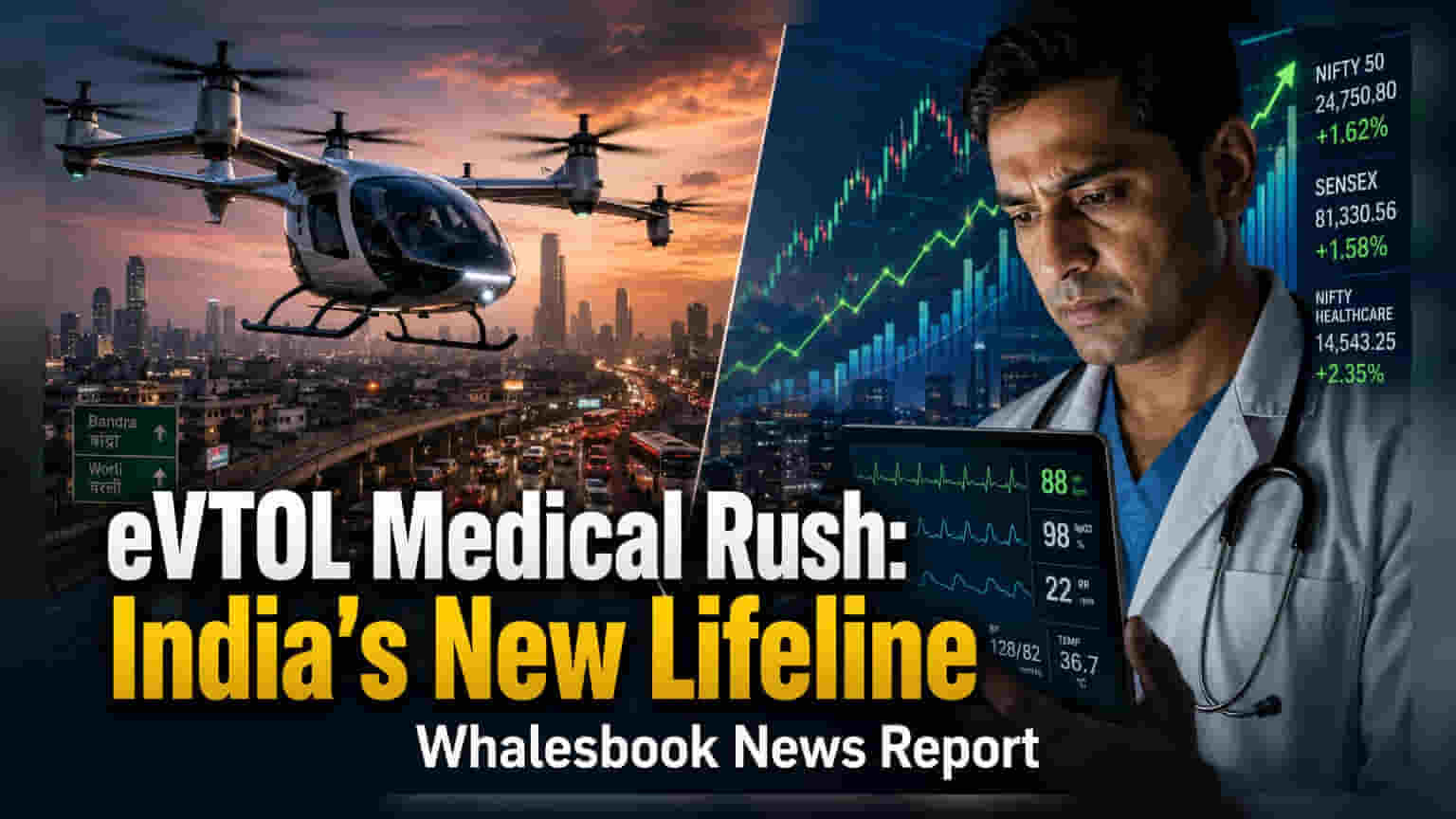
Air India, Suzuki, and Japan’s SkyDrive have signed an initial agreement to explore using electric vertical take-off and landing (eVTOL) aircraft for medical logistics in India. The collaboration aims to bypass heavy urban traffic to ensure the rapid delivery of critical medical supplies. Investors should monitor this as a long-term feasibility project rather than an immediate revenue driver.
Air India Limited has announced a strategic partnership with Japanese eVTOL developer SkyDrive Inc. and Suzuki Motor Corporation to evaluate the feasibility of using electric vertical take-off and landing aircraft for medical logistics in India. This collaboration seeks to address the persistent challenge of urban traffic congestion, which often delays the transport of time-critical medical supplies and personnel in major metropolitan areas.
Strategic Objectives and Roles
Under this initial agreement, the three entities will combine their respective strengths to create a framework for potential operations. SkyDrive will provide its expertise in eVTOL technology, while Air India plans to leverage its existing cargo operations, airport infrastructure knowledge, and industry relationships. Suzuki Motor Corporation, which already maintains a collaborative relationship with SkyDrive, intends to use its deep understanding of the Indian market to help navigate local operational requirements. Ramesh Mamidala, Head of Cargo at Air India, noted that the application of this technology focuses on reducing transit times for emergency medical needs, where speed is essential for patient outcomes.
Understanding the eVTOL Context
eVTOL aircraft are designed to take off and land vertically like helicopters but operate using electric propulsion, which theoretically offers a quieter and more sustainable mode of aerial transport. While the technology is gaining global interest, its commercial implementation in India faces significant regulatory and infrastructural hurdles. The current initiative is a feasibility study, meaning it is in the early research phase. Consequently, there is no immediate impact on the financial statements, order books, or debt profiles of the companies involved.
Regulatory and Execution Risks
For investors, it is important to distinguish between experimental projects and established business operations. The adoption of eVTOL technology in India is subject to strict aviation safety regulations and air traffic management protocols, which are still evolving for such autonomous or semi-autonomous aircraft. Furthermore, setting up landing infrastructure (vertiports) and ensuring consistent operational safety remain significant challenges. While the project aligns with Suzuki's corporate philosophy of optimizing resource usage and Air India’s strategy to modernize its cargo services, the path to commercial viability is long. The primary monitorable for investors will be any future updates regarding regulatory clearances, successful pilot testing programs, or capital allocation toward full-scale infrastructure development, which could influence the company’s future cash flow and investment requirements.