 Whalesbook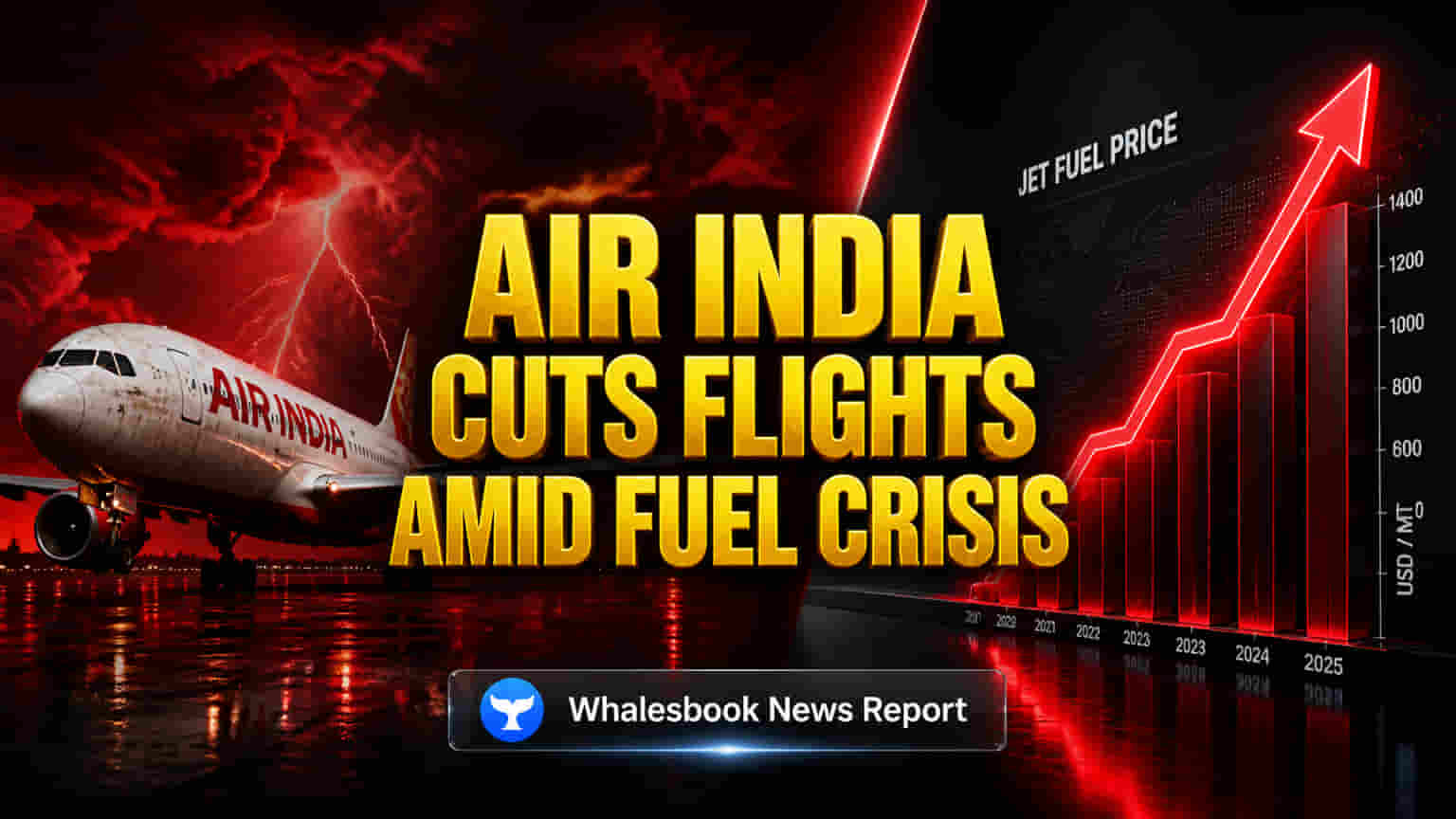


Air India Cuts Flights Amid Soaring Costs and Disruptions
Air India will scale back its international flight schedule through July. This decision stems from soaring jet fuel costs and longer flight paths required because of airspace restrictions in the Middle East. CEO Campbell Wilson informed staff that the current environment makes many international routes unprofitable. The adjustment reflects significant pressure on the airline's operations and highlights its severe financial difficulties.
Soaring Fuel Costs and Airspace Issues Force Flight Cuts
The cost of Aviation Turbine Fuel (ATF) for international carriers has continued to climb, increasing by 5% to $1,511.86 per kilolitre in Delhi on May 1, 2026. State-run oil companies are passing on global energy price surges. While international carriers pay full market rates, domestic airlines get moderated prices. These cost pressures, worsened by Middle East tensions, force airlines onto longer, more fuel-intensive routes, adding flight hours and significantly increasing fuel use. The Federation of Indian Airlines (FIA), representing major carriers including Air India, has warned of potential operational halts if government relief is not provided, noting that fuel now accounts for 55-60% of operating expenses.
Air India Faces Massive Financial Losses
These external factors are impacting an airline already struggling with large financial deficits. The Air India Group is estimated to have lost over Rs 22,000 crore in the fiscal year ended March 31, 2026. This marks a sharp decline in its financial performance, following a Rs 9,800 crore loss in FY25 and a projected Rs 16,000 crore loss for the first nine months of FY26, despite strong revenue. Turnaround efforts since Air India's privatization in 2022 have struggled to convert strong market demand into profits, pointing to deep structural problems rather than temporary market dips.
Wider Aviation Sector Under Pressure
Air India's challenges occur within a broader context of significant stress across the Indian aviation sector. Combined losses for Indian carriers are expected to reach Rs 17,000–18,000 crore in FY26. While competitor IndiGo shows strong financial health, rival SpiceJet continues to face severe financial distress, with liabilities exceeding Rs 4,500 crore and ongoing debt restructuring. Air India, despite ambitious fleet plans and investment, faces long-standing inefficiencies, an older fleet, and operational hurdles that worsen the impact of current market conditions. Its on-time performance of 68% for FY24-25 lags the industry average, reflecting ongoing operational difficulties.
Structural Issues and Leadership Changes Compound Challenges
The decision to cut flight schedules is further complicated by ongoing regulatory scrutiny and a recent leadership change. CEO Campbell Wilson, who led the turnaround efforts, has announced his intention to step down. This comes at a critical time, as the airline has faced safety concerns, including operating planes without airworthiness certificates and regulatory warnings about crew duty hours. The airline was also ranked worst for safety issues in the aviation regulator's most recent audit. These widespread problems, along with huge financial losses, show an airline struggling with basic operational efficiency and financial stability, making its recovery path very difficult.
Outlook: A Difficult Path to Profitability
With projected losses exceeding Rs 22,000 crore for FY26 and persistent operational pressures, Air India's immediate future depends on major investment from its owners, Tata Group and Singapore Airlines. A new CEO will be appointed to navigate a difficult restructuring. Without significant improvements in operations and a lasting cut in core costs, the airline risks worse financial decline, which could affect travel options and the wider Indian aviation industry.