 Whalesbook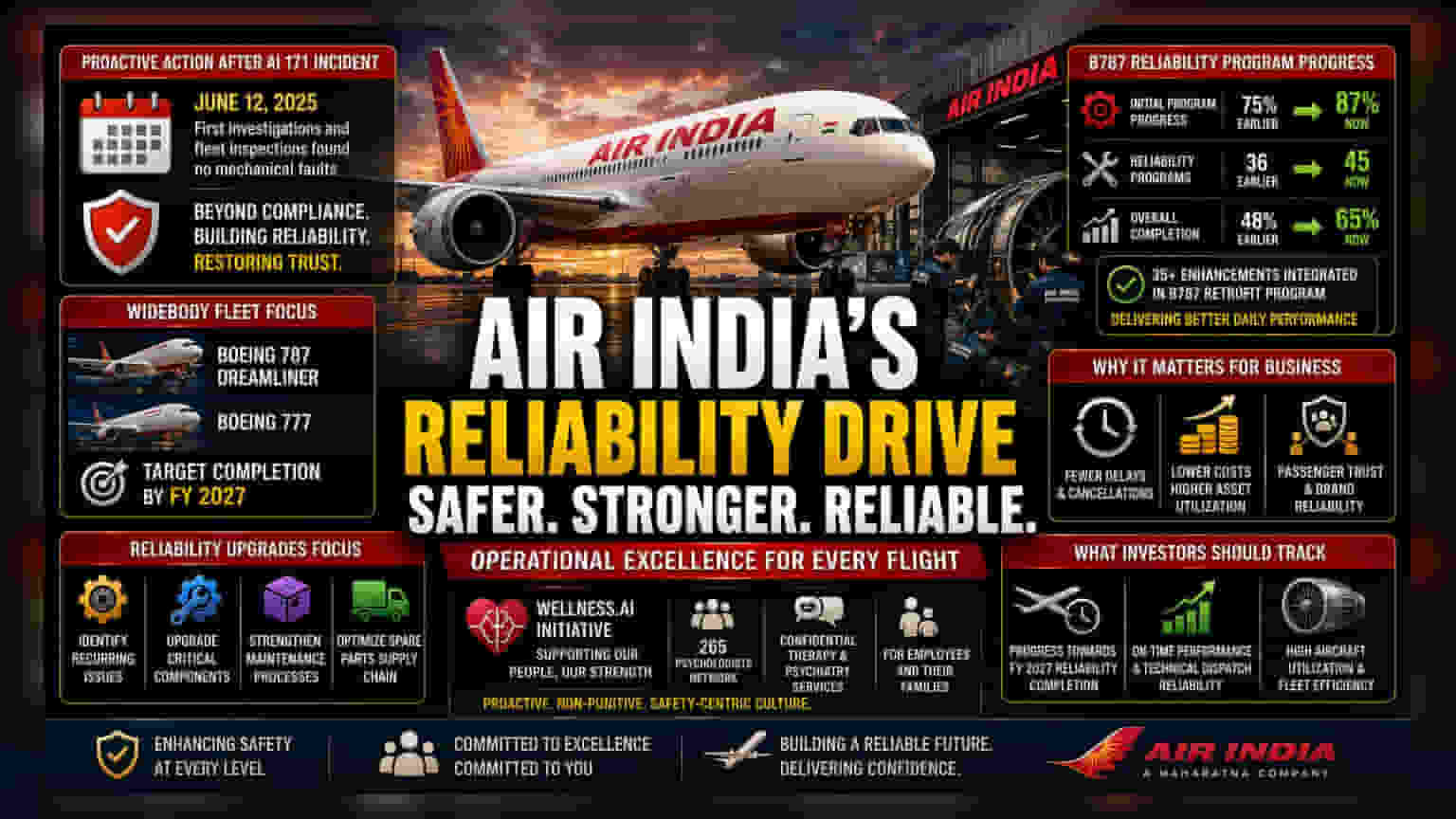


Air India is accelerating reliability programs for its B787 and B777 fleets, targeting full completion by FY 2027. The move follows the AI 171 incident and focuses on reducing technical delays and improving overall operational efficiency to support long-term business goals.
What Happened
Air India has launched a comprehensive operational reliability program for its widebody aircraft, specifically the Boeing 787 Dreamliner and the Boeing 777 fleets. This initiative follows the AI 171 accident that occurred on June 12, 2025. While the airline has clarified that initial investigations, including a temporary fleet inspection, did not uncover mechanical faults, the carrier is now proactively focusing on enhancing fleet performance to prevent technical interruptions, delays, and cancellations.
The airline has stated that these measures go beyond standard regulatory compliance. The program is designed to identify recurring mechanical issues, upgrade specific components, and improve the efficiency of maintenance and spare parts supply chains. This strategy is part of a broader effort to boost operational consistency and reliability, with a targeted completion date for these widebody upgrades by FY 2027.
Improving Fleet Efficiency
The scope of these reliability enhancements has grown significantly over the past year. For the B787 fleet, the progress of initial programs has risen to nearly 87%, up from 75%. The airline has also expanded the number of distinct reliability programs from 36 to 45, with the overall completion rate increasing from 48% to 65%. Additionally, more than 35 specific enhancements have been integrated into the ongoing B787 retrofit project, which the airline reports has already contributed to better daily operational performance.
Why This Matters for Business
For a major airline, operational reliability is directly tied to financial performance and brand reputation. Frequent technical delays or cancellations lead to increased costs related to passenger compensation, crew scheduling disruptions, and underutilization of expensive assets. By investing in these reliability programs, the airline aims to maximize the time its aircraft spend in the air and reduce the need for unscheduled maintenance, which is both costly and disruptive.
Furthermore, this move serves as a critical effort to rebuild and maintain passenger trust following the high-profile AI 171 incident. Consistent on-time performance is a key competitive advantage in the aviation industry, helping the airline compete more effectively with global carriers.
Human Performance and Support
Beyond technical fleet upgrades, the airline has also strengthened its human performance and mental health framework. Following the accident, the carrier introduced the "Wellness.AI" initiative, which provides tailored psychological support to employees. This includes a network of 265 psychologists and access to confidential therapy and psychiatry services for staff and their families. The company describes this as a proactive and non-punitive approach to building a safety-first culture.
Operational and Execution Risks
While the airline’s focus on reliability is positive, executing large-scale retrofit programs across a major fleet comes with inherent challenges. Managing the logistics of removing aircraft from service for retrofits requires precise planning to avoid disrupting flight schedules. Any delays in the supply chain for parts, or technical hurdles during the upgrade process, could lead to cost overruns or missed targets. Additionally, the global aviation sector continues to face challenges such as high fuel costs and volatile demand, which can pressure margins despite operational improvements.
What Investors Should Track
The most important monitorable for stakeholders will be the progress of these reliability programs toward the FY 2027 completion target. Observers will also track the airline's on-time performance and technical dispatch reliability metrics, which indicate how effectively these investments are reducing flight cancellations and delays. Finally, the airline's ability to maintain high utilization rates for its B787 and B777 aircraft will be a key indicator of the long-term success of this operational strategy.