

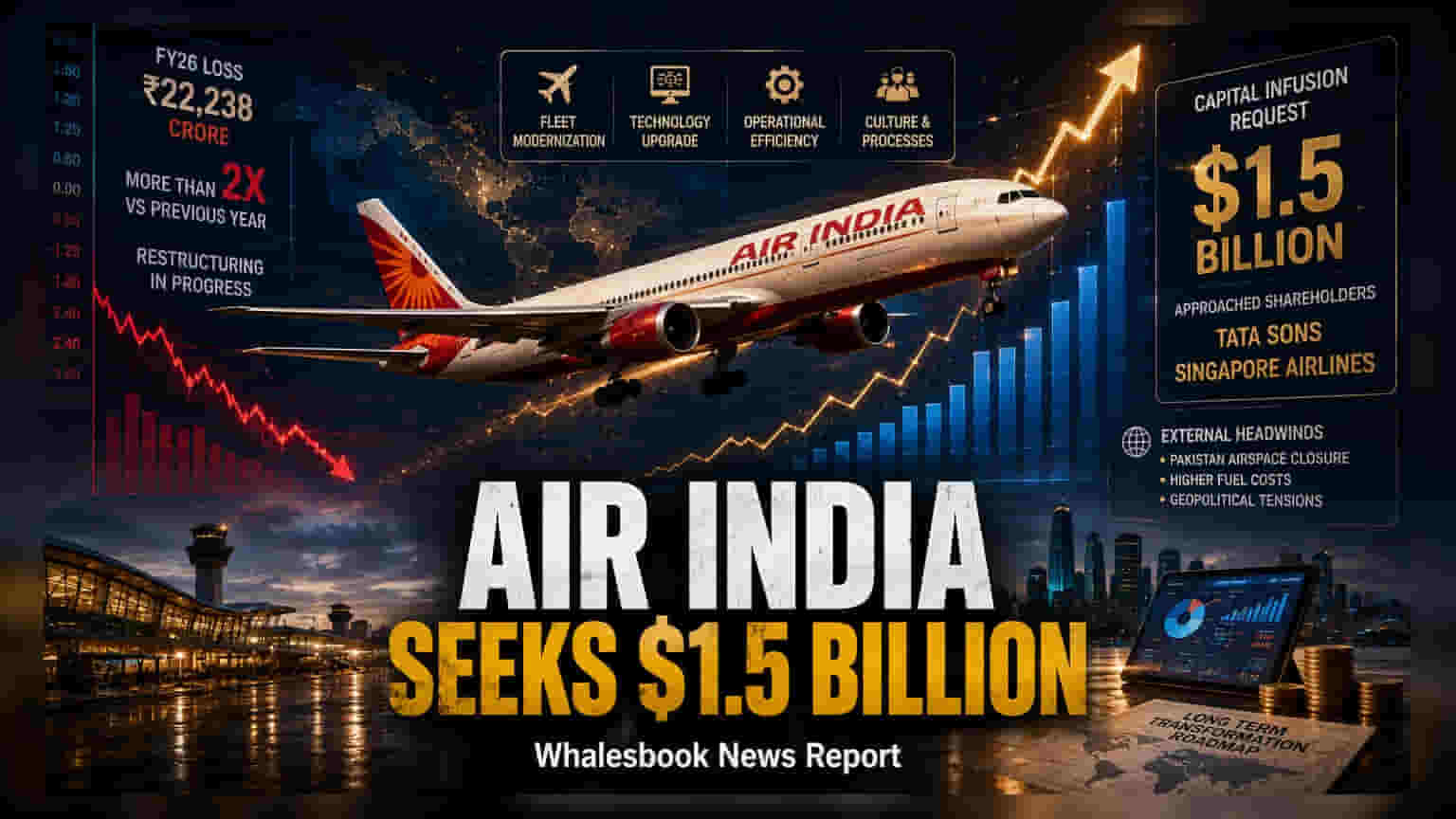
Air India has requested a $1.5 billion equity boost from shareholders Tata Sons and Singapore Airlines to fund its ongoing transformation. This move follows a difficult fiscal year 2026, where the airline reported a combined loss of Rs 22,238 crore, highlighting the significant costs of upgrading its fleet and technology.
Air India has approached its shareholders, Tata Sons and Singapore Airlines, for a fresh capital infusion of $1.5 billion. This request comes as the airline works to stabilize its finances during a complex, long-term restructuring process. The funds are expected to be deployed in phases to support the carrier's efforts to modernize its operations.
The request follows a challenging fiscal year 2026. During this period, Air India and its subsidiary, Air India Express, reported a combined loss of Rs 22,238 crore. This figure is more than double the loss recorded in the previous year, reflecting the heavy spending required to overhaul the airline since the Tata Group reacquired it in 2021.
High Costs of Modernization
The capital is intended to support the carrier’s fleet refurbishment and the replacement of aging legacy technology systems. Building a competitive modern airline requires significant upfront investment. Beyond buying new aircraft, the company must spend heavily to update outdated software, improve corporate culture, and refine operational processes that have hindered efficiency for years.
Operational and Geopolitical Headwinds
Beyond internal costs, the airline faces several external pressures. Management has acknowledged that achieving a full turnaround is a long-term goal that may take up to a decade. A major hurdle remains the closure of Pakistani airspace to Indian carriers, which has been in place since last April. This restriction forces the airline to take longer flight paths for routes to North America and the Middle East, leading to higher fuel consumption and operating costs. Additionally, recent geopolitical tensions in the Middle East have created further operational hurdles for long-haul connectivity.
Looking Ahead
The airline's management is balancing these urgent cash flow needs with the necessity of maintaining its transformation timeline. The proposed equity infusion aims to bridge the gap between the airline's current financial reality and its long-term modernization goals. The next important updates for stakeholders will be the progress on fleet integration and the company’s ability to improve operational efficiency despite the ongoing geopolitical disruptions affecting international routes.