

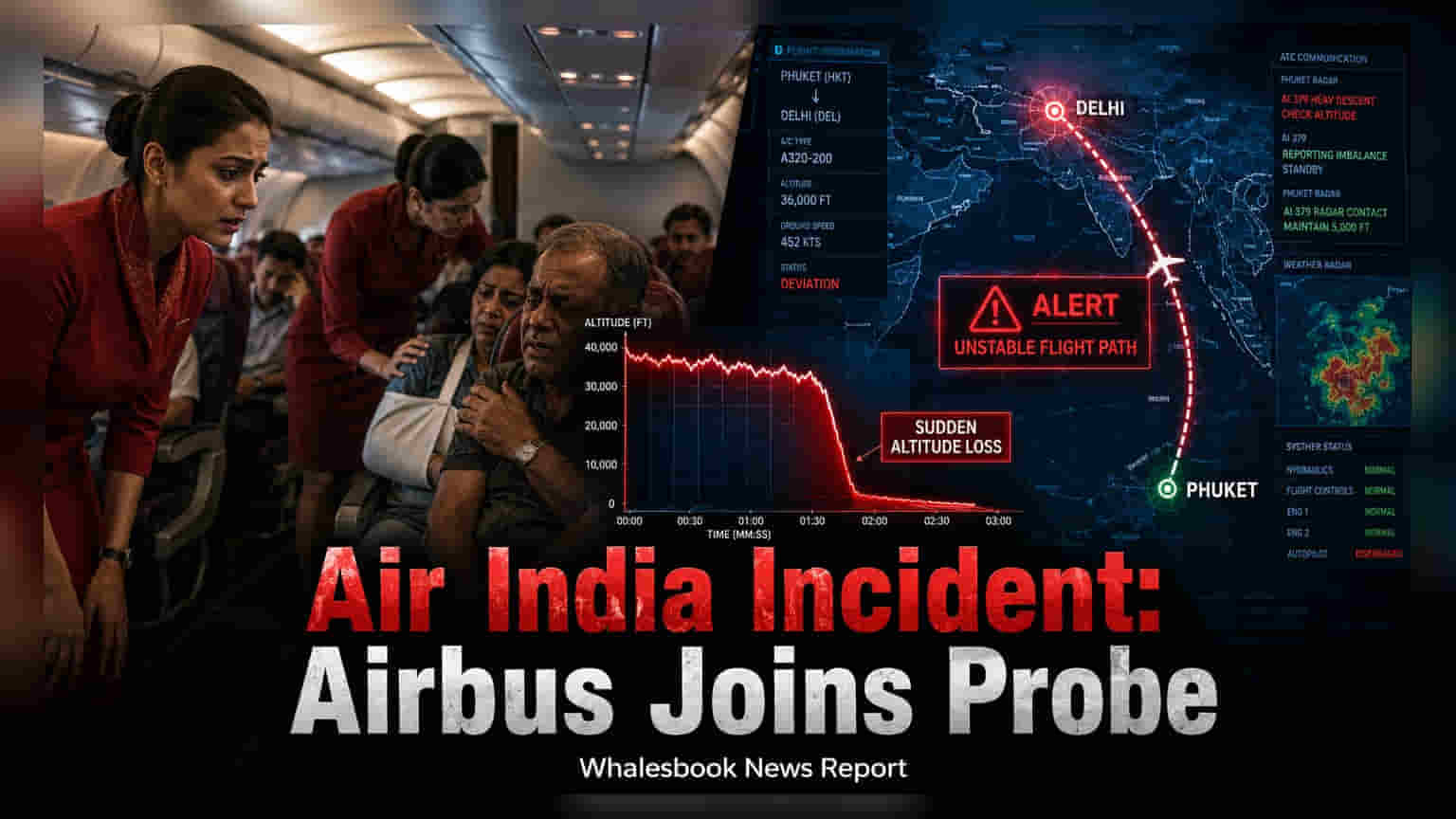
Global aviation authorities, including France's BEA and Airbus, are assisting India's AAIB in investigating a mid-air incident involving an Air India flight from Phuket to Delhi. The flight experienced a sudden 300-foot altitude drop, causing 17 injuries. The pilot-in-command is also awaiting confirmatory results following a preliminary drug screening test.
A formal investigation is underway into a serious incident involving Air India flight AI2379, which occurred on August 4, 2026. The flight, an Airbus A320neo, was traveling from Phuket to Delhi when it experienced a sudden loss of altitude of approximately 300 feet during its cruise phase. While the aircraft landed safely in Delhi, the incident resulted in injuries to 13 passengers and four crew members. All injured individuals received necessary medical attention.
India's Aircraft Accident Investigation Bureau (AAIB) is leading the inquiry into the event. In a move to ensure a thorough examination of the incident, France's Bureau d'Enquêtes et d'Analyses (BEA)—the national aviation safety investigation authority—and aircraft manufacturer Airbus have joined the probe. The participation of international bodies like the BEA is standard in aviation safety procedures under ICAO guidelines when major incidents occur. The technical investigation aims to determine whether the altitude loss was caused by atmospheric conditions, technical malfunctions, or other factors.
Alongside the technical probe, the airline's operational safety protocols are under scrutiny. The pilot-in-command of the flight returned a non-negative result during a mandatory screening for psychoactive substances. The pilot is currently undergoing confirmatory laboratory testing to verify these preliminary findings. Air India has removed both pilots involved in the flight from active flying duty while the investigation and testing processes remain ongoing.
For investors and stakeholders, this event draws attention to the broader operational challenges facing the airline. Tata Sons, the parent company of Air India, has been working on a complex multi-year turnaround strategy to integrate its fleet, modernize legacy systems, and address supply chain constraints. In the fiscal year 2026, the airline reported widened losses of ₹22,238 crore, reflecting the high costs of scaling operations and professionalizing service delivery. The company has previously indicated that it expects a 5 to 10-year timeline to fully complete its transformation and stabilize financial performance.
The immediate monitorable for the market and regulators will be the findings of the investigation and the results of the pilot's confirmatory medical tests. Any evidence of systemic safety or operational lapses could lead to increased regulatory oversight, impacting the airline's operational efficiency and reputation as it continues its long-term expansion efforts.