 Whalesbook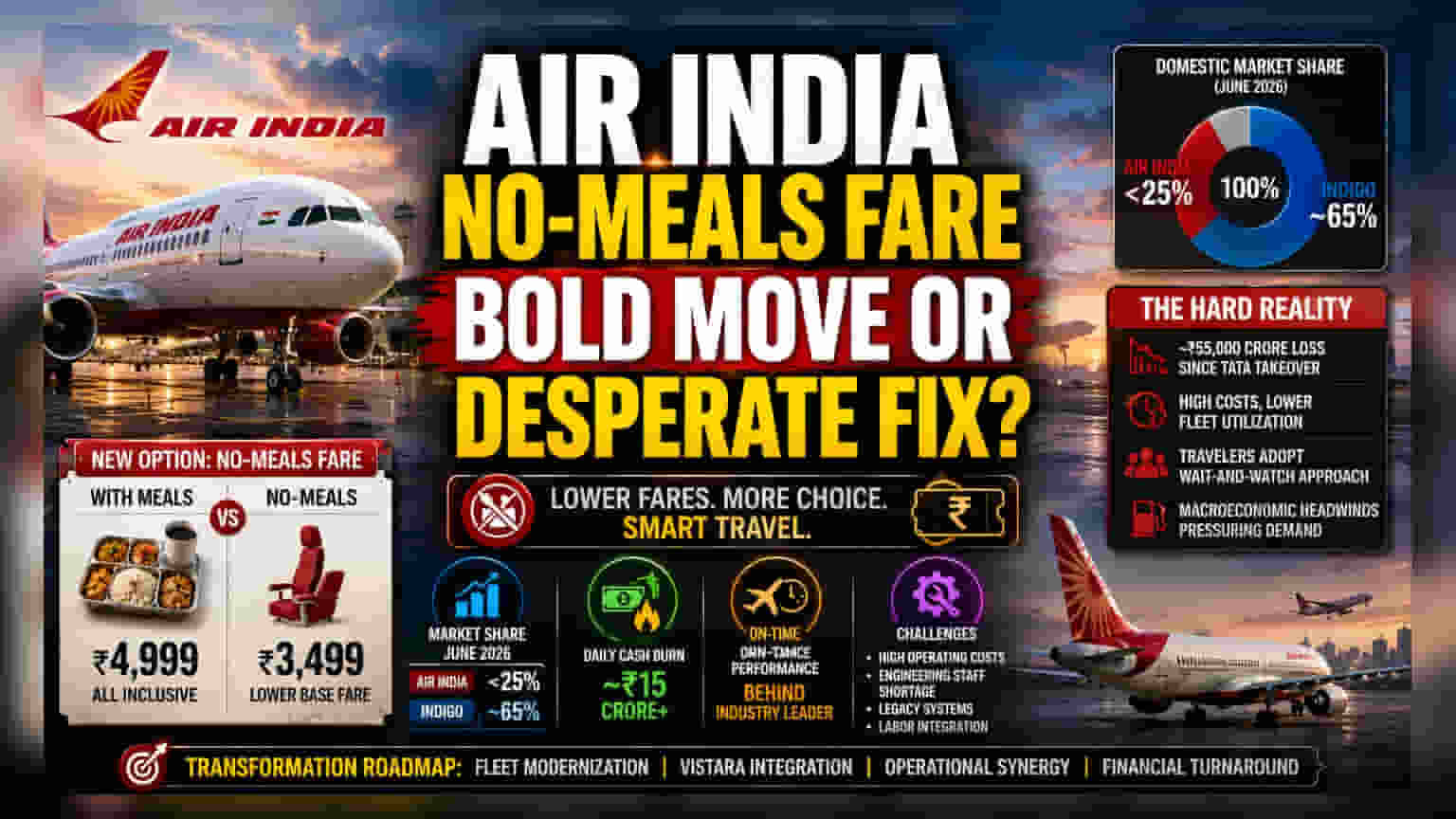


The Unbundling Pivot
Air India is signaling a shift toward granular fare unbundling, contemplating a 'no-meals' ticket option for its domestic network. By stripping away complimentary onboard catering, the airline aims to lower base ticket prices, a move designed to better align its offerings with the cost-sensitive preferences of the domestic flyer base. This shift reflects a broader global trend where carriers are increasingly moving toward a retailer-style model, trading bundled services for lower, more flexible entry-level price points.
The Competitive Reality
This initiative arrives at a critical juncture for the Tata-owned carrier. As of June 2026, Air India’s domestic market share has faced downward pressure, dipping below the 25% threshold, while arch-rival IndiGo continues to solidify its dominance with a market share nearing 65%. While Air India is currently executing a five-year transformation roadmap, the carrier has been plagued by operational hurdles, including a staggering daily cash burn and intermittent on-time performance issues that consistently lag behind the industry leader. The decision to trial this fare category suggests a defensive strategy to stop the erosion of its passenger base to more affordable, efficiency-focused operators.
The Forensic Bear Case
Despite the management’s efforts, the airline faces structural and financial headwinds that suggest a difficult path to profitability. The carrier has reportedly faced losses totaling roughly ₹55,000 crore since the Tata takeover, with high operational costs and a shortage of engineering staff impacting fleet utilization. Unlike its leaner competitors, which have perfected the art of high-frequency, low-cost operations, Air India’s transition to a high-efficiency model is hindered by legacy system complexities and ongoing labor integration challenges. Furthermore, the Indian aviation sector is currently witnessing a 'wait-and-watch' approach from travelers due to macroeconomic headwinds, which could dampen the uptake of any new pricing strategy if consumer sentiment remains weak.
Future Outlook
Moving forward, the success of the 'no-meals' pilot will likely hinge on the carrier's ability to maintain service quality elsewhere while successfully segmenting its customer base. Analysts remain divided on whether these incremental changes will suffice to turn the tide against IndiGo’s entrenched scale. While fleet modernization and the consolidation of Vistara into the Air India group provide long-term potential for operational synergy, the immediate focus remains on stemming the daily financial bleed and restoring competitive parity in the domestic market.