

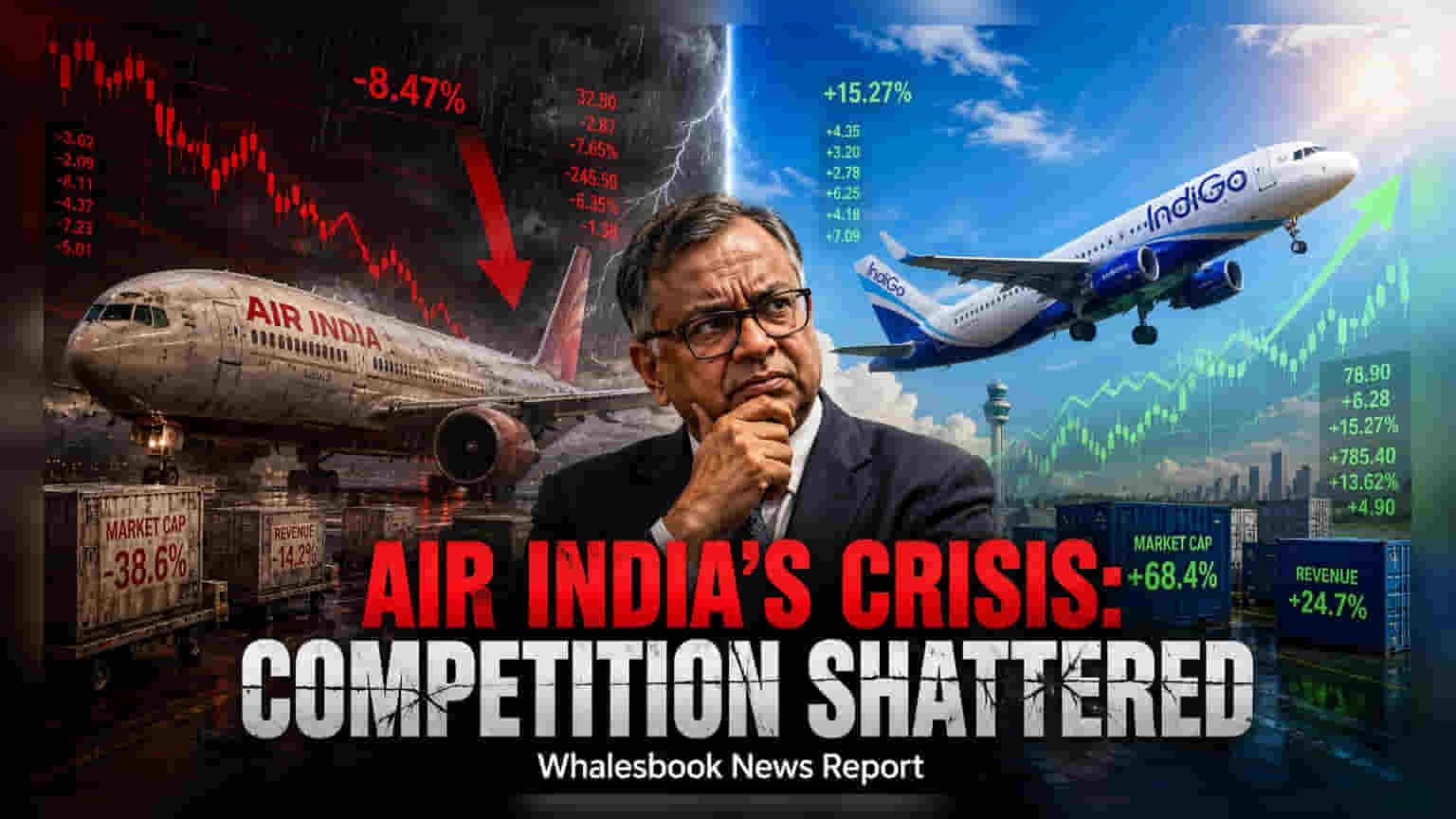
Air India's domestic market share fell to 23.9% in June 2026, even as parent Tata Group pursues a multi-year turnaround. With IndiGo capturing a record 66.3% share, the competitive gap in India's aviation sector is widening. Investors should track the impact of persistent supply chain delays and operational integration hurdles on the airline's financial recovery and long-term expansion plans.
Detailed Coverage
The aviation industry in India is currently witnessing a stark divergence in performance between its two largest players. Recent data from the Directorate General of Civil Aviation for June 2026 confirms that IndiGo has expanded its domestic market share to a record 66.3%. Meanwhile, the Air India group, which includes Air India and Air India Express, has seen its share slip to 23.9%, down from 27% earlier this year in February.
Challenges in the Turnaround Journey
Since acquiring the carrier in January 2022, the Tata Group has been working to modernize the airline's aging fleet and integrate multiple subsidiaries, including Vistara and AirAsia India. However, Tata Sons Chairman N. Chandrasekaran has indicated that the full revival of the airline is a complex, long-term project that may take up to a decade to complete. The company is currently managing the difficult task of merging different corporate cultures, upgrading legacy technology systems, and retraining a large workforce while simultaneously trying to improve daily operational efficiency.
Supply Chain and Operational Hurdles
Fleet expansion, a cornerstone of the airline's growth strategy, is facing significant pressure from global supply chain disruptions. Delayed deliveries from major aircraft and engine manufacturers have hampered the group's ability to induct new planes, which are essential for reducing operating costs and improving service reliability. These external factors, combined with challenges such as fluctuating fuel prices and foreign exchange volatility, have contributed to ongoing financial losses. The intensity of these challenges led to a change in leadership structure, with the Tata Sons Chairman now directly overseeing weekly operational reviews to navigate these difficulties.
Implications for Aviation Competition
In the aviation sector, scale is a critical driver of profitability, as larger networks allow for better bargaining power with suppliers and more efficient aircraft usage. IndiGo’s increasing dominance has essentially created a market environment where competitive discipline—often provided by a strong second player—is softening. A weakened Air India may be forced to prioritize survival and consolidation over aggressive expansion. For the broader market, this trend suggests that the expected increase in competitive intensity has not yet materialized, which may influence route growth and fare structures across the industry.
Next Steps for Investors
Looking ahead, the primary monitorables for stakeholders include the pace of aircraft inductions, the successful completion of the entity consolidation process, and the ability of management to stabilize profit margins despite the current operational headwinds. Investors should also track whether the airline can improve its capacity utilization and capture more market share in the coming quarters to better challenge the dominant leader in the domestic skies.