

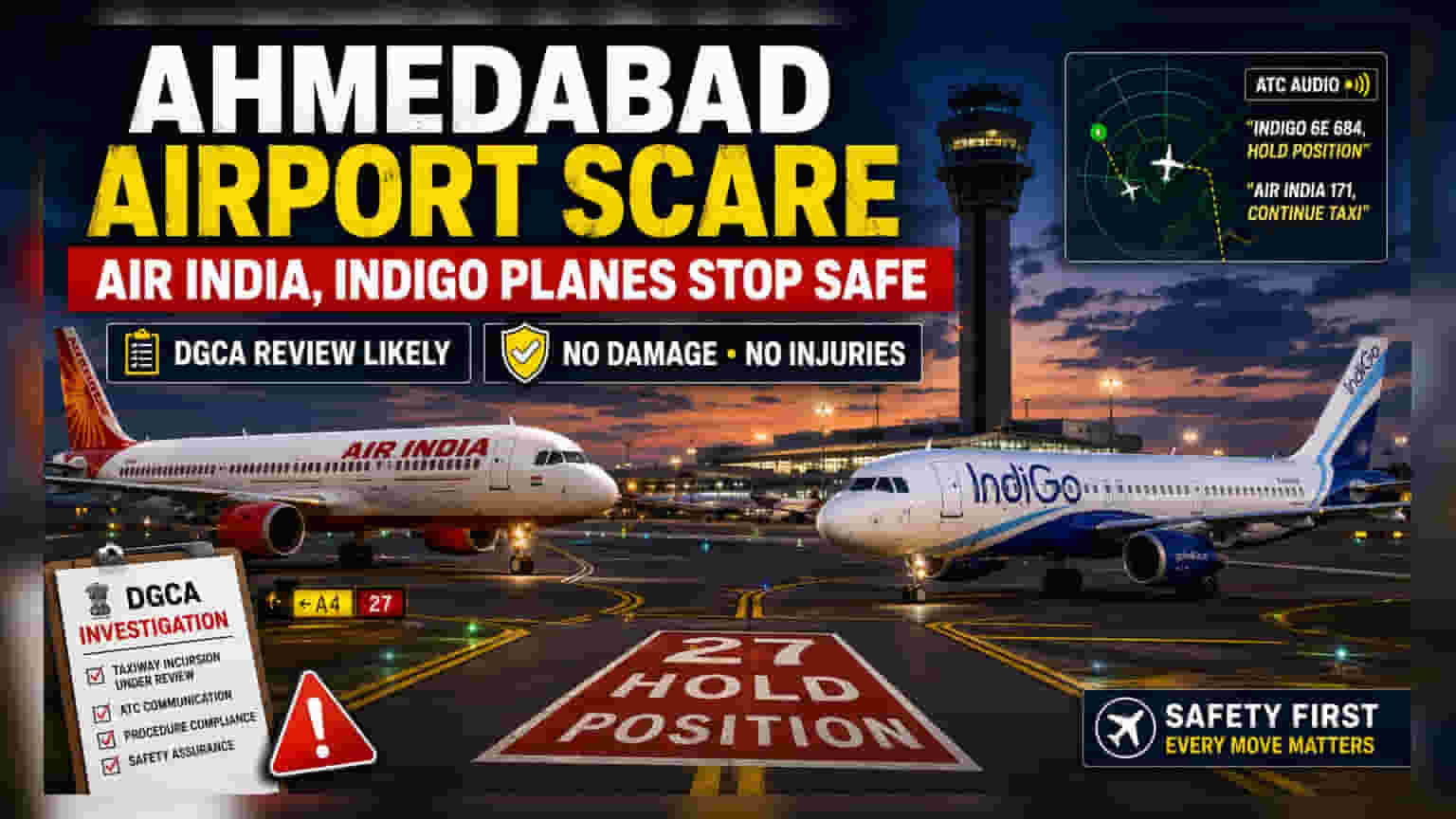
An Air India flight and an IndiGo aircraft were involved in a ground incident at Ahmedabad airport, narrowly avoiding a collision on a taxiway. Both planes halted safely, but such events typically draw scrutiny from aviation regulators. Investors monitor these incidents as they relate to operational safety standards and regulatory compliance.
What Happened
On Wednesday evening, a ground incident occurred at Ahmedabad airport involving an Air India aircraft and an IndiGo plane. According to reports, the Air India flight maneuvered onto a taxiway designated for the IndiGo aircraft, which was preparing for takeoff. Both aircraft were able to come to a complete stop, maintaining a safe distance from one another. No injuries or damage to the aircraft were reported, and operations at the airport continued.
The Role of Aviation Regulators
In India, the Directorate General of Civil Aviation (DGCA) is the primary regulatory body responsible for investigating aviation safety incidents. When taxiway incursions or near-misses occur, regulators typically initiate a formal review to determine the root cause. This investigation often focuses on communication protocols between the flight crew and the Air Traffic Control (ATC), adherence to ground movement procedures, and any potential fatigue or training-related factors.
For investors, the primary concern is not the specific incident itself, but the regulatory outcome. The DGCA has the authority to issue safety directives, impose penalties, or mandate additional training for pilots and ground staff. Compliance with these directives is essential for maintaining an airline’s operational license and safety ratings.
Operational Safety and Business Impact
Safety is the cornerstone of the aviation business. For large carriers like IndiGo and Air India, maintaining a robust safety management system is vital for long-term sustainability.
IndiGo, as the market leader in domestic aviation, operates a high-frequency network, while Air India, under the Tata Group, is currently undergoing a massive fleet expansion and service transformation. Rapid expansion in the aviation sector often increases the strain on ground infrastructure and ATC staff. Investors generally assess how companies manage this growth without compromising on safety protocols. While isolated incidents are part of airline operations, frequent or systemic safety lapses can lead to reputational damage, increased insurance premiums, and heightened regulatory oversight, which may affect operational efficiency.
What Investors Should Track
Investors may keep an eye on potential follow-up announcements from the DGCA or the respective airlines. Key monitorables include:
- Regulatory findings or reports issued by the DGCA regarding the cause of the incident.
- Any operational changes or safety directives mandated by authorities following the review.
- Any comments from management regarding safety protocol enhancements.
While this incident was resolved without damage, the primary concern for stakeholders is ensuring that safety protocols are strictly followed as both airlines continue to scale their operations in a competitive and growing market.