

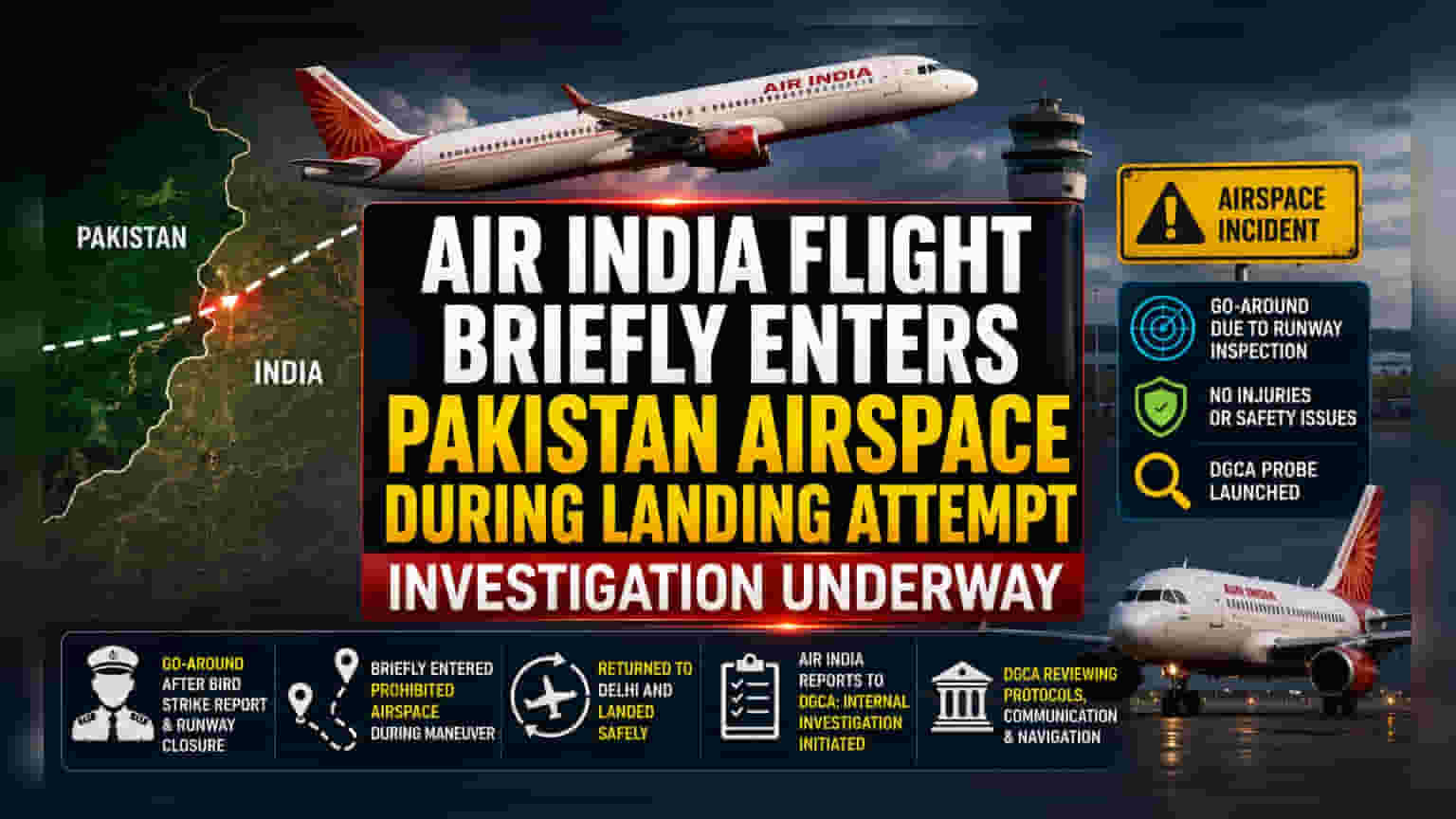
An Air India flight from Delhi to Amritsar briefly strayed into Pakistan airspace on June 22 during a go-around maneuver. The aircraft returned to Delhi safely. The Directorate General of Civil Aviation (DGCA) has launched an investigation into the incident, which occurred after a runway inspection at Amritsar airport.
What Happened
On June 22, Air India flight AI479, traveling from Delhi to Amritsar, briefly entered Pakistan's airspace during a landing attempt. The incident occurred while the crew was performing a 'go-around' maneuver—a standard safety procedure where a pilot aborts a landing and circles back to attempt it again. In this case, the pilot was forced to execute the maneuver because the Amritsar runway was temporarily closed for inspection following a report of a bird strike.
The Airbus A321 aircraft briefly traversed into prohibited airspace before the crew maneuvered the plane away. The flight subsequently returned to Delhi and landed without any injuries or safety issues for the passengers or crew. Air India has officially confirmed the event, stating that the airline has initiated an internal investigation and reported the matter to the Directorate General of Civil Aviation (DGCA).
Regulatory Scrutiny and Safety Protocols
Incidents involving airspace infringement are treated with high priority by aviation regulators due to national security sensitivities. The DGCA is now reviewing the sequence of events to determine why the aircraft drifted into foreign airspace during the vectoring process. This investigation will focus on whether the flight crew followed all standard operating procedures for the go-around and if air traffic control guidance was sufficient during the runway closure.
The DGCA's primary goal in such probes is to identify if there was a technical, communication, or human error. While these incidents are often technical in nature, they require strict compliance reporting to ensure that navigation systems and communication protocols between air traffic control and pilots are functioning correctly, especially near sensitive border regions.
The Aviation Operational Context
For the aviation sector, safety and operational discipline are the most significant benchmarks for management quality and brand reputation. With the Indian aviation market undergoing rapid consolidation and fleet expansion, maintaining high safety standards is critical for airline operators. Even minor deviations, while often resulting in no physical harm, trigger intensive audits and regulatory reviews.
For a major player like Air India, which is currently undergoing a massive operational overhaul under the Tata Group, maintaining error-free operations is vital. Operational incidents of this nature can lead to increased regulatory oversight, which may involve mandatory training sessions for crew, upgrades to navigational software, or more frequent reporting requirements. These steps, while necessary for safety, can influence the efficiency of day-to-day operations.
What To Track Next
The most important monitorable for this incident is the outcome of the DGCA’s final report. Investors and stakeholders in the aviation sector should look for updates regarding any punitive measures, such as fines, or corrective actions, like mandatory pilot retraining or revised air traffic control coordination protocols, that the regulator may recommend.
The airline's management response and its ability to demonstrate that this was an isolated operational issue—rather than a systemic weakness in its flight safety culture—will be crucial. Any follow-up statements from the Ministry of Civil Aviation or changes in flight path protocols for the Delhi-Amritsar route would also be relevant developments.