

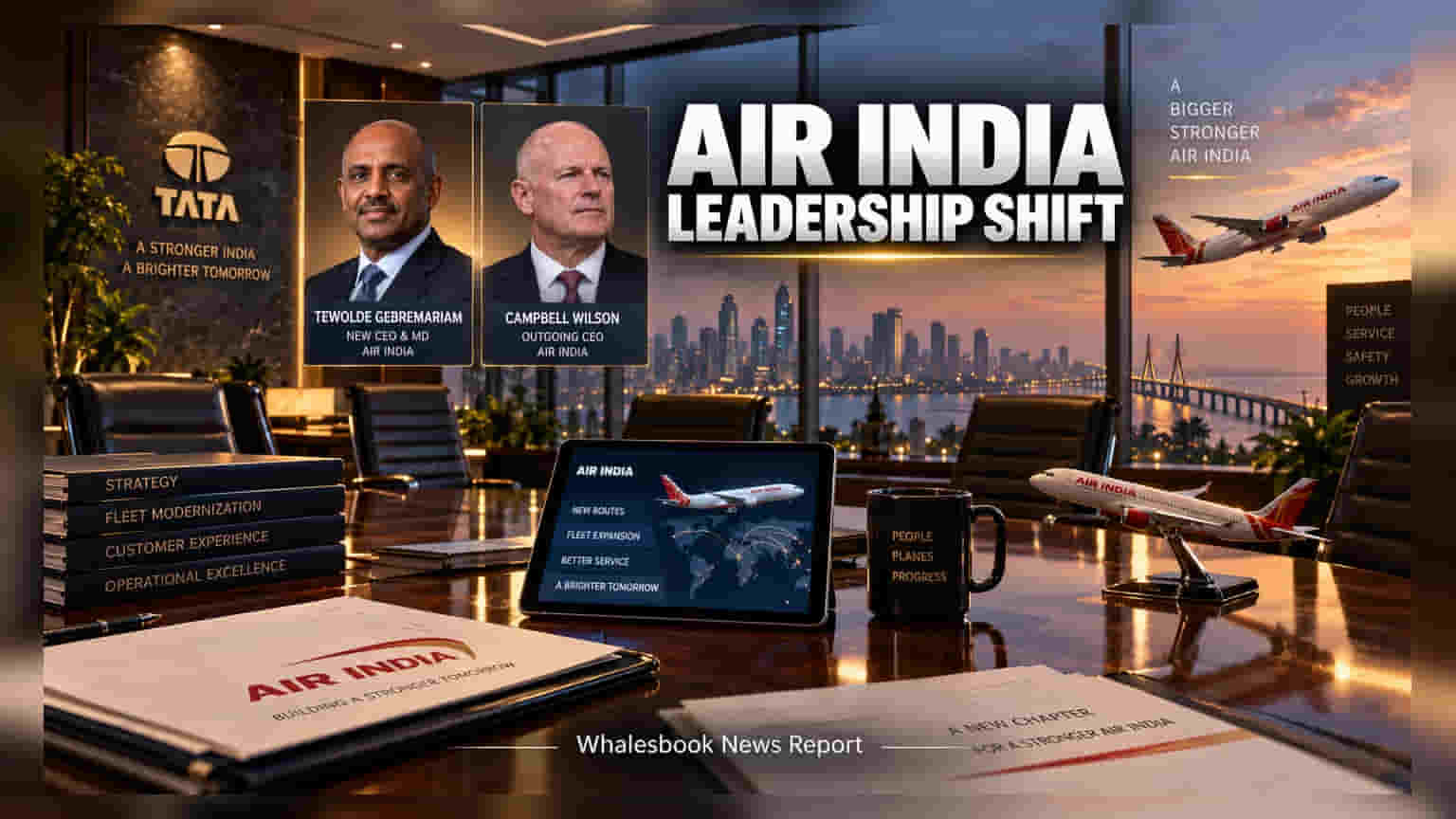
Air India’s board met in Mumbai to confirm the leadership handover from Campbell Wilson to new CEO Tewolde Gebremariam. The change marks a fresh phase for the airline as it pushes forward with aggressive digital transformation and operational repairs. Observers are looking for signs of stability as the carrier navigates complex merger integration and post-accident safety concerns.
Air India’s board of directors met at the Tata Group headquarters in Mumbai on Tuesday to formalize the transition of its top leadership. N. Chandrasekaran, Chairman of Tata Sons, led the proceedings to finalize the appointment of Tewolde Gebremariam as the new Chief Executive Officer and Managing Director. Gebremariam, who previously led Ethiopian Airlines Group, is set to officially take the helm later this month, replacing Campbell Wilson, who has guided the airline since July 2022.
The leadership change comes as Air India navigates the next stage of its complex transformation. Since being acquired by the Tata Group, the airline has been working to modernize its aging fleet and unify its business processes. Gebremariam has already begun engaging with staff, emphasizing a 'Make Air India Great Again' initiative that focuses on operational discipline, safety, and reliability. These are critical areas for the company as it works to improve its reputation and competitive standing in both domestic and international markets.
AI Integration and Operational Overhaul
Beyond personnel changes, the airline is heavily focused on using technology to fix long-standing service issues. Air India has expanded its use of Salesforce’s Agentforce AI platform to automate customer support across its network. The goal is to reduce manual workload and speed up service. For instance, the company has reported that refund processing times have improved significantly, moving from a two-week cycle to roughly four hours. Similarly, the time required for passenger name changes has been reduced from three days to 30 minutes.
This digital shift is part of a broader push to lower operational costs and improve the customer experience. The system uses automated tools to validate eligibility and handle simple requests, with human staff reserved for more complex cases. While these efficiency gains are useful, the effectiveness of this digital overhaul will depend on its implementation across the airline’s various legacy systems.
Challenges and Risks Ahead
While the company is modernizing, it faces significant hurdles. The airline is still dealing with the aftermath of the June 2025 AI171 accident, which heightened scrutiny regarding safety and operational protocols. Restoring passenger and regulatory trust remains a priority. Furthermore, the carrier is managing the complex integration of the Vistara merger and the consolidation of its low-cost operations, both of which are capital-intensive and operationally demanding.
Macroeconomic factors also continue to create pressure. Geopolitical tensions, volatile fuel costs, and potential airspace closures pose ongoing risks to profitability and scheduling. The success of the new leadership will be measured by its ability to balance this aggressive expansion and modernization with the need for stable, safe, and efficient day-to-day operations. Stakeholders and industry watchers will be tracking the company’s progress in stabilizing its post-merger structure and maintaining its safety record in the coming quarters.