

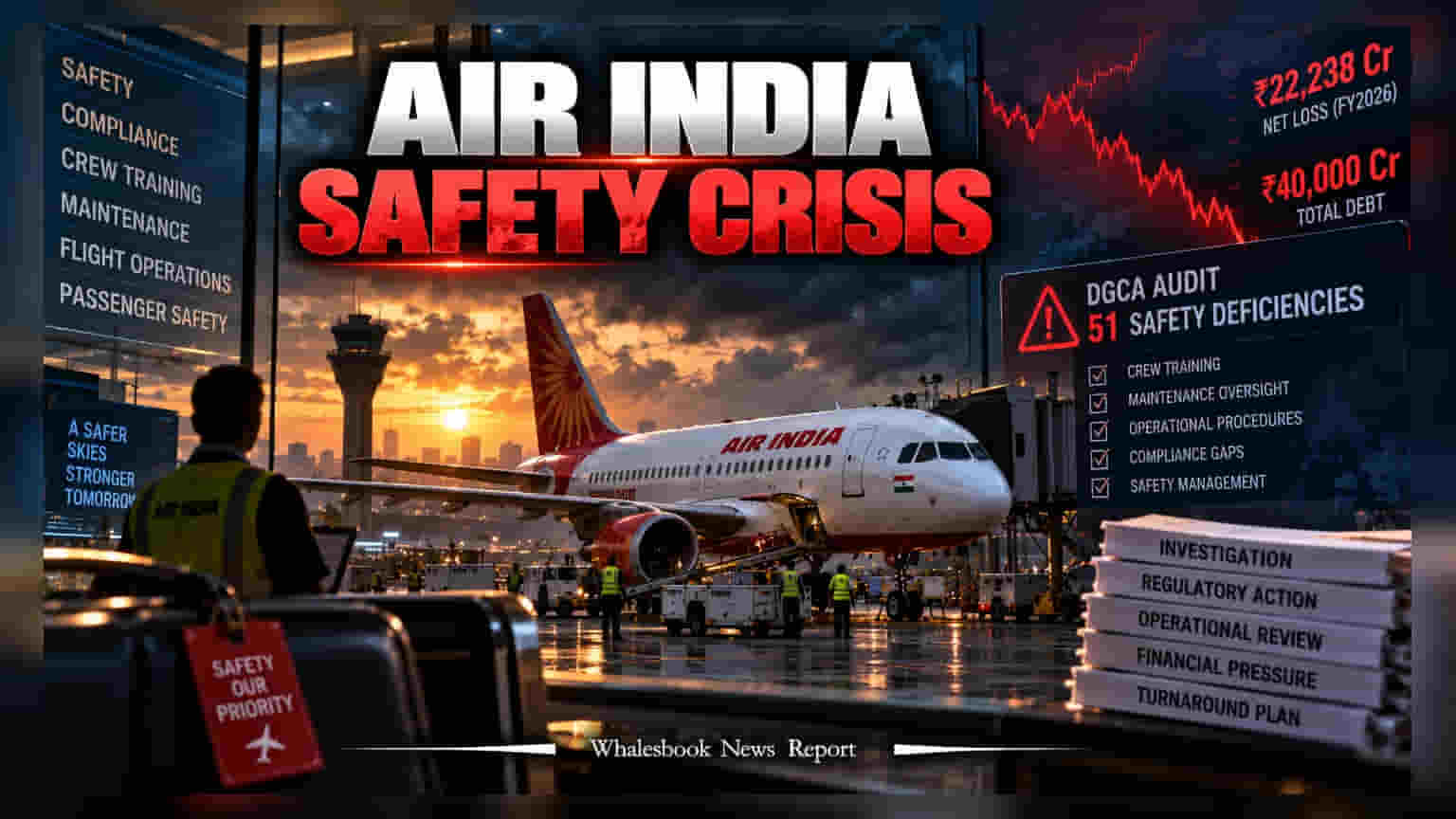
Air India is under intense regulatory scrutiny following a series of safety incidents and a recent audit by the aviation regulator. The airline reported a net loss of ₹22,238 crore for FY26. While Tata Sons has approved a fresh capital infusion of over ₹10,000 crore to aid its long-term turnaround, the airline must now address urgent safety findings to restore stability and trust.
Air India is navigating a difficult period as it manages both operational challenges and significant financial pressure. The Directorate General of Civil Aviation (DGCA) recently flagged 51 safety-related deficiencies during an audit, ranging from crew training issues to maintenance oversights. This regulatory scrutiny follows an incident on August 4, 2026, when flight AI2379—an Airbus A320neo—suffered a 300-foot altitude drop and hydraulic system failures, resulting in injuries to passengers and crew.
Beyond the operational issues, the airline is dealing with substantial financial stress. For the financial year ending 2026, Air India and its subsidiary, Air India Express, reported a combined net loss of ₹22,238 crore. With total debt estimated around ₹40,000 crore, the financial burden remains a core concern. This loss is significantly higher than the previous year’s figures, reflecting the high costs associated with fleet expansion, integration of assets, and business modernization.
Safety and compliance are now the central focus for the airline’s leadership. The recent discovery of a pilot testing positive for a psychoactive substance during a flight operation has intensified the focus on crew compliance. While the airline has terminated the pilot and implemented mandatory drug testing, these events have complicated the carrier's efforts to project operational stability. Additionally, a ₹1 crore penalty was recently imposed on the airline for operating commercial flights without valid airworthiness documentation.
To support the ongoing 5-to-10-year transformation plan, Tata Sons has committed to a fresh capital infusion of over ₹10,000 crore. This funding is intended to keep the fleet modernization project on track despite current setbacks. The primary challenge for the management team is to ensure that these large investments are matched by immediate improvements in safety culture and operational accuracy, which are necessary to regain passenger trust.
The airline's ability to resolve the DGCA’s safety findings and improve its operational consistency will be a key area for stakeholders to monitor. Future updates regarding the status of the modernization program, the effectiveness of new safety protocols, and the company's progress in narrowing its losses will define the success of the turnaround strategy.