

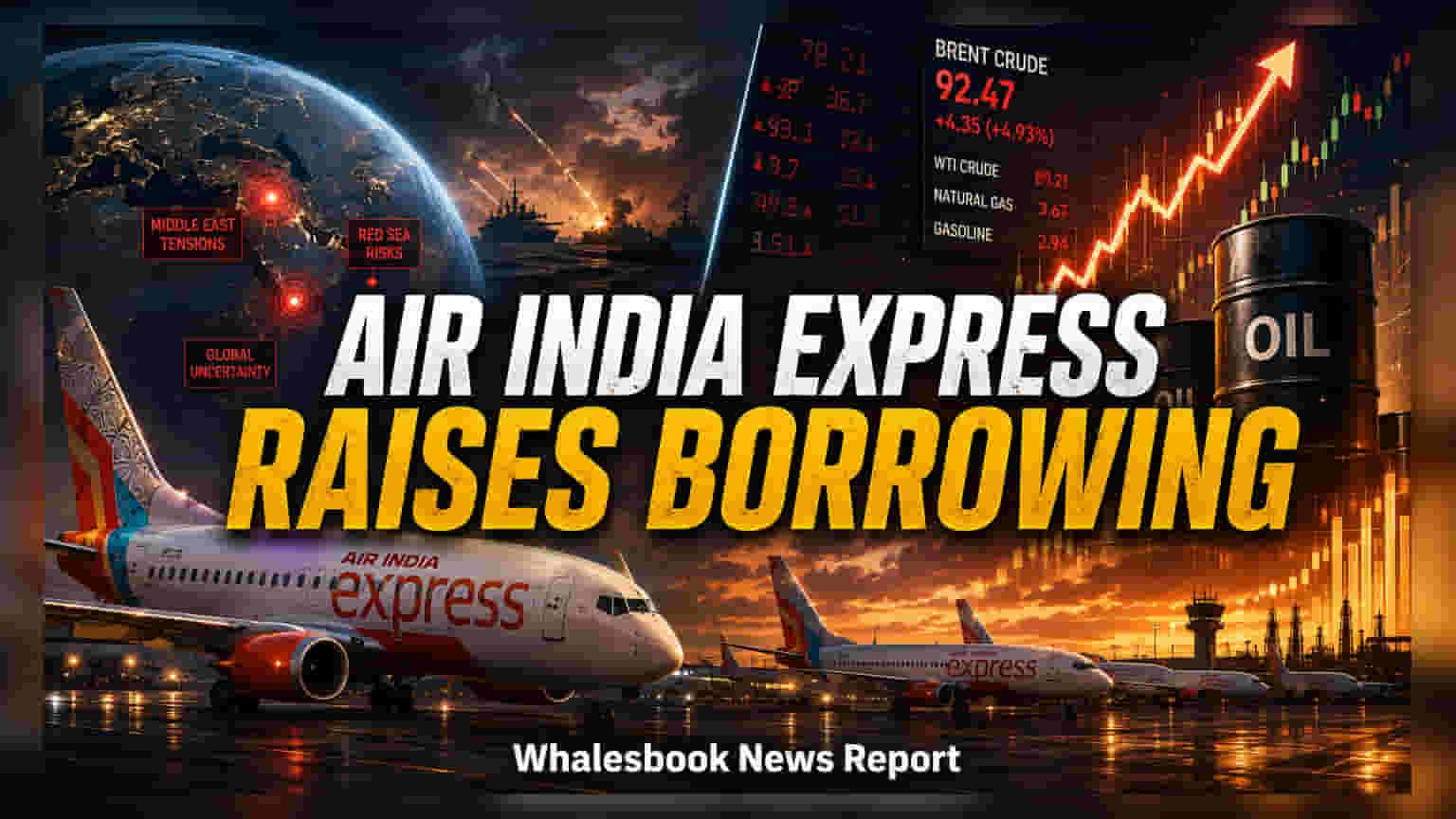
Air India Express has raised its borrowing limit to ₹20,000 crore to secure operational liquidity. The decision follows a challenging fiscal year 2026, where the carrier faced significant pressure from rising fuel costs and geopolitical tensions. While the Tata-owned airline pursues a long-term turnaround strategy, the increased debt capacity highlights the financial strain of managing legacy operations and fleet modernization.
Air India Express, a subsidiary of the Tata-owned Air India group, has nearly doubled its borrowing capacity to ₹20,000 crore. This move, which received shareholder approval on July 15, is designed to provide the airline with greater financial flexibility as it navigates a difficult operating environment characterized by high fuel prices and global geopolitical uncertainty.
The airline's need for capital has grown rapidly over the past year. The borrowing limit has been adjusted upward multiple times, moving from ₹11,600 crore in October 2024 to the current ₹20,000 crore cap. According to filings, this capital is intended to support day-to-day business operations and manage the liquidity risks posed by external disruptions, such as airspace restrictions in West Asia.
This expansion of credit lines takes place during a difficult period for the Air India group. Financial data from the Tata Sons Annual Report for fiscal year 2025-26 revealed that Air India and Air India Express incurred a combined net loss of ₹22,238 crore, a significant increase from the previous year's loss of ₹10,859 crore. During this period, the group's revenue also declined by nearly 9% to ₹71,870 crore. These figures demonstrate the substantial costs involved in the group’s ongoing efforts to modernize its fleet and network.
Tata Sons management has characterized the transformation of the airline into a competitive, efficient carrier as a 5 to 10-year process. The group is currently managing several complex challenges, including global supply chain disruptions for aircraft parts and the integration of different airline operations. Regulatory oversight has also intensified following recent safety incidents, adding to the operational load.
In the wider Indian aviation sector, the financial contrast between carriers is becoming more pronounced. Listed peer InterGlobe Aviation, which operates IndiGo, remains the market leader. While IndiGo also faced financial challenges, including a net loss driven by currency fluctuations, its operational scale and liquidity position differ from the Tata group's current turnaround phase. Other new entrants like Akasa Air have also relied on increased borrowing to fuel rapid fleet growth, though for different strategic reasons.
For those watching the aviation sector, the next phase will depend on the airline's ability to balance its aggressive expansion plans with the need to stabilize financial margins. The company's future performance will depend on its success in managing fuel costs, streamlining operations, and reducing its reliance on external debt as its long-term turnaround plan matures.