

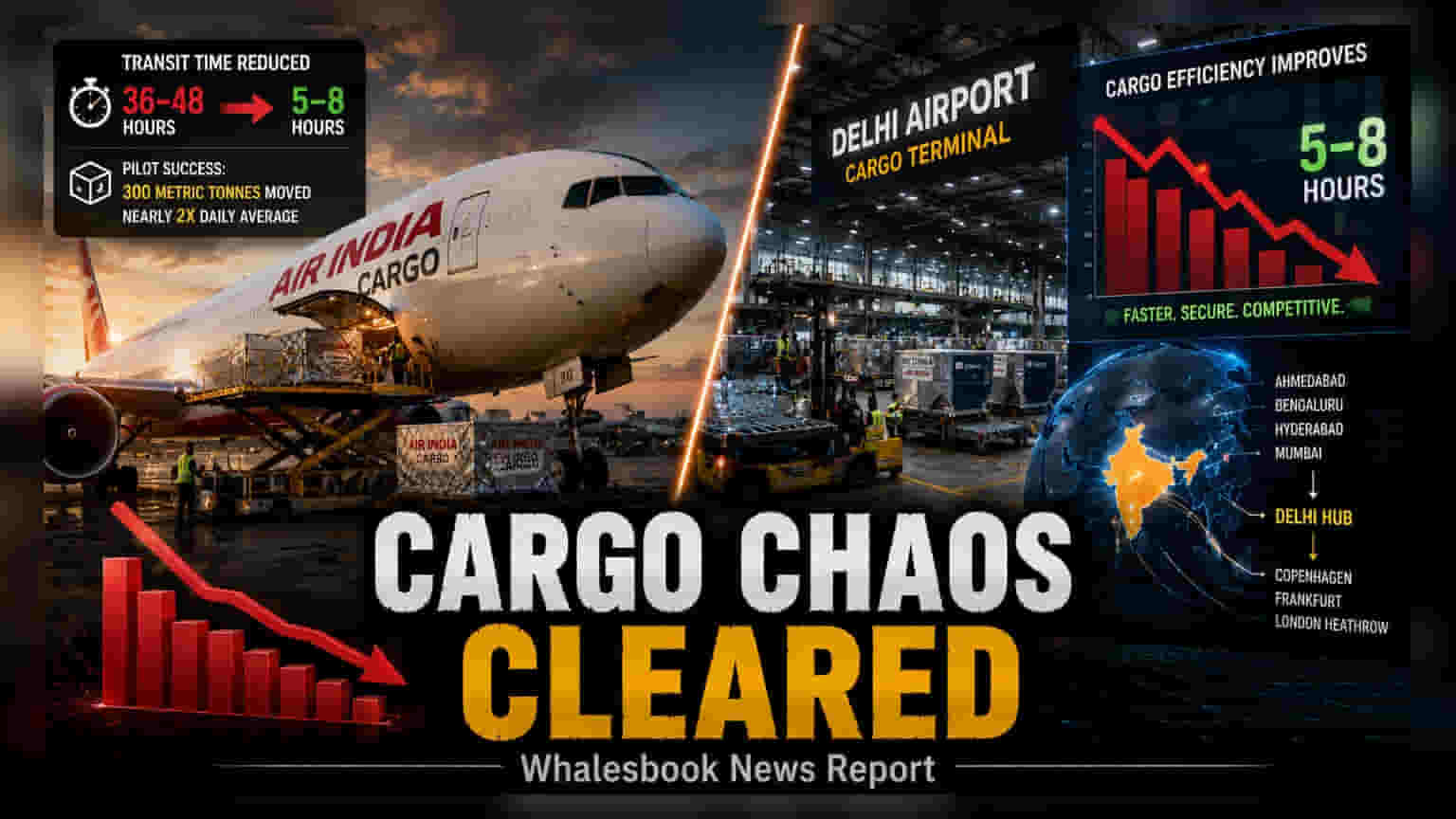
Air India has successfully reduced cargo transit times at Delhi Airport from nearly two days to under eight hours by eliminating unnecessary re-screening. While this operational efficiency improves logistics, the airline continues to face significant financial hurdles, reporting a net loss of ₹22,238 crore in FY26 as it works on a multi-year turnaround strategy.
Air India has implemented a new cargo transshipment policy at Delhi Airport, significantly reducing the time required to transfer goods between flights. By securing cargo shipments to avoid individual package re-screening, the airline has managed to cut transit times from 36–48 hours down to a window of 5–8 hours. This change follows a successful pilot program on the Chennai–Delhi–Frankfurt route, where the airline moved approximately 300 metric tonnes of cargo, nearly doubling the daily average volume on that corridor.
The airline now plans to apply this faster, more secure model to more destinations. It intends to connect shipments originating from Ahmedabad, Bengaluru, Hyderabad, and Mumbai to international hubs like Copenhagen, Frankfurt, and London Heathrow via Delhi. This move is designed to make Indian airports more competitive by capturing transit cargo that might otherwise go to airports in other regions.
While this improvement helps logistics efficiency and could potentially increase revenue by better utilizing the cargo space in the lower part of its planes, the broader financial picture for the airline remains difficult. It is important to note that Air India is not a publicly listed company; it is owned by the Tata Group and Singapore Airlines. As a result, there is no stock price for investors to trade. The company is currently in the midst of a massive, long-term financial restructuring.
In its latest performance reports, Air India recorded a net loss of ₹22,238 crore for FY26. Management has indicated that the path to full financial stability is a long-term goal, likely taking 5 to 10 years. The company relies on capital support from its parent entities to cover these ongoing losses and fund its operations.
The company also faces external challenges that could impact its performance. Geopolitical tensions in West Asia and airspace restrictions have created obstacles for flight planning and operations. Additionally, the global supply chain, which directly impacts cargo volume, remains unpredictable. The airline is also managing a leadership transition as it looks to solidify its turnaround strategy.
For those monitoring the aviation and logistics sector, the key developments to watch will be whether Air India can successfully scale this cargo model across more airports and routes. Additionally, the company’s ability to manage its high debt and operational losses will remain the most critical factor in its long-term viability, given the heavy reliance on continued funding from its shareholders.