 Whalesbook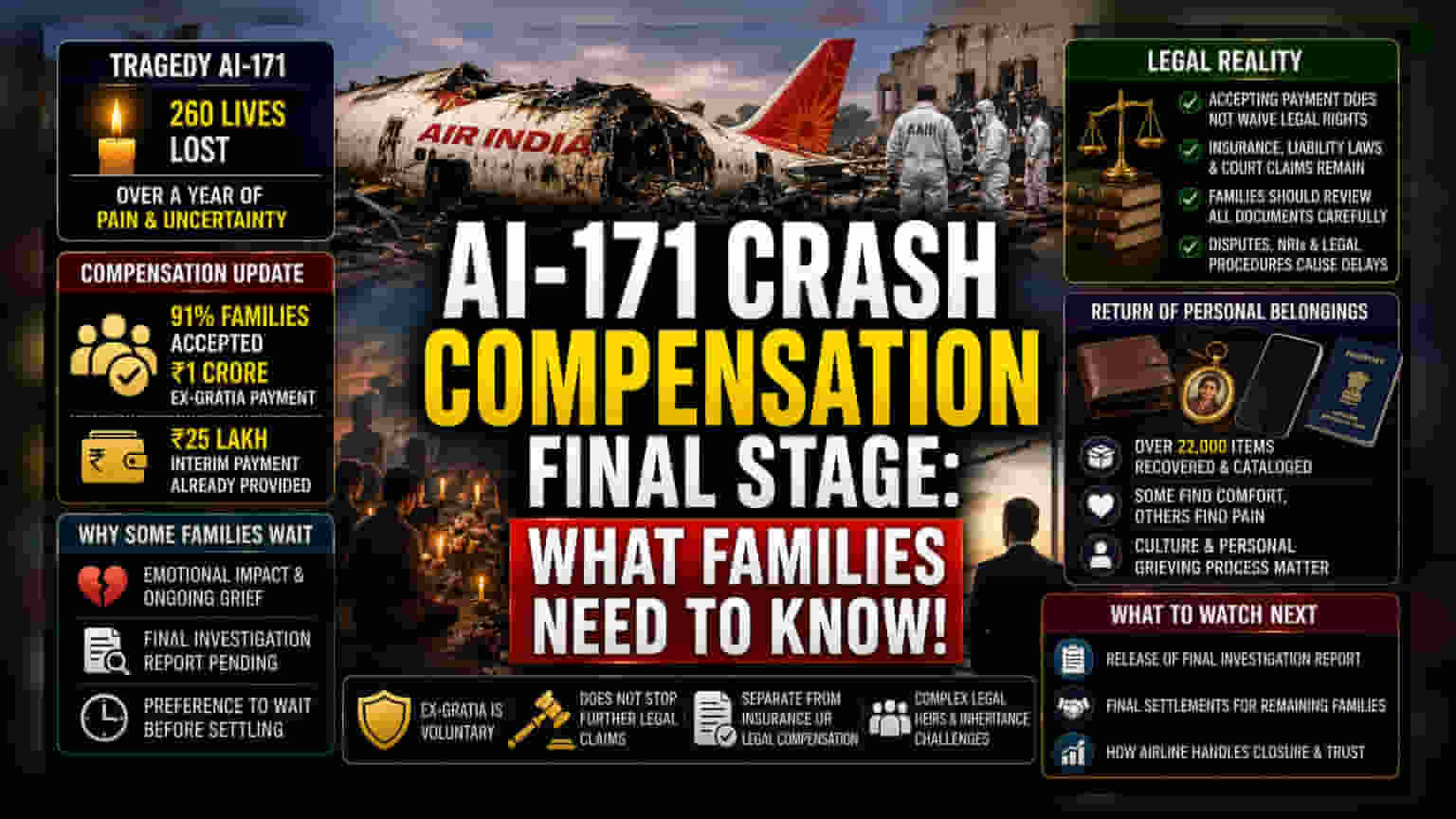
More than a year after the AI-171 crash, 91% of victim families have accepted the Rs 1 crore ex-gratia payment. A small group of families is holding off, waiting for the final investigation report and navigating legal complexities regarding compensation and personal belongings.
What Happened
More than a year has passed since the AI-171 crash, which resulted in the loss of 260 lives. The process to provide compensation and return recovered personal items to the families of the victims is currently in its final stages, though not yet fully complete. According to official reports, the Tata Group, which owns Air India, has reached an agreement with 91% of the affected families, who have accepted an ex-gratia payment of Rs 1 crore. Additionally, the airline had previously provided an interim payment of Rs 25 lakh to help these families cover immediate financial needs.
Why Some Families Delay Compensation
While the majority of families have accepted the financial support, a small fraction has chosen not to do so. There are several reasons for this, ranging from the emotional impact of the tragedy to practical legal challenges. For many, the grief remains profound, and engaging with financial and legal formalities immediately after such a loss is often overwhelming.
Another significant factor is the status of the investigation. The final report into the cause of the crash is still pending. Some families have indicated they prefer to wait for the official findings of this investigation before finalizing any settlement or financial agreement. This wait is intended to ensure they have full clarity on the circumstances of the incident.
Legal Reality for Families
It is important to understand the nature of these payments. Aviation insurance specialists note that accepting an ex-gratia payment is a voluntary process and does not necessarily stop families from pursuing further legal claims later. These payments are separate from compensation that might be available through insurance policies, aviation liability laws, or court-mandated settlements. Legal experts typically advise families to carefully review all settlement documents before signing them to understand their rights and what they might be agreeing to.
Beyond simple acceptance, there are complex legal hurdles that can delay the process. These include disputes among different legal heirs, the presence of family members living in other countries, and issues related to the inheritance process. These complications are common in incidents where a large number of victims are involved, as establishing the rightful beneficiaries requires thorough verification.
The Handling of Personal Belongings
A sensitive aspect of the aftermath involves the return of personal items. Air India and the Tata Group have cataloged over 22,000 recovered items, including electronics, jewelry, and documents. Reports indicate that a small number of families have opted not to collect these belongings. For some, these items bring comfort as a connection to their loved ones, while for others, they serve as painful reminders of the tragedy. Cultural factors and the personal process of grieving also play a significant role in these decisions.
What Investors May Watch Next
The ongoing resolution process remains a key monitorable for stakeholders. The timeline for the release of the final crash investigation report is a critical factor, as its findings could influence further legal discussions and the finalization of remaining compensation claims. Investors and observers will likely watch how the airline manages these final settlements and whether the conclusion of these processes helps in resolving the outstanding legal and emotional matters for all involved parties.