

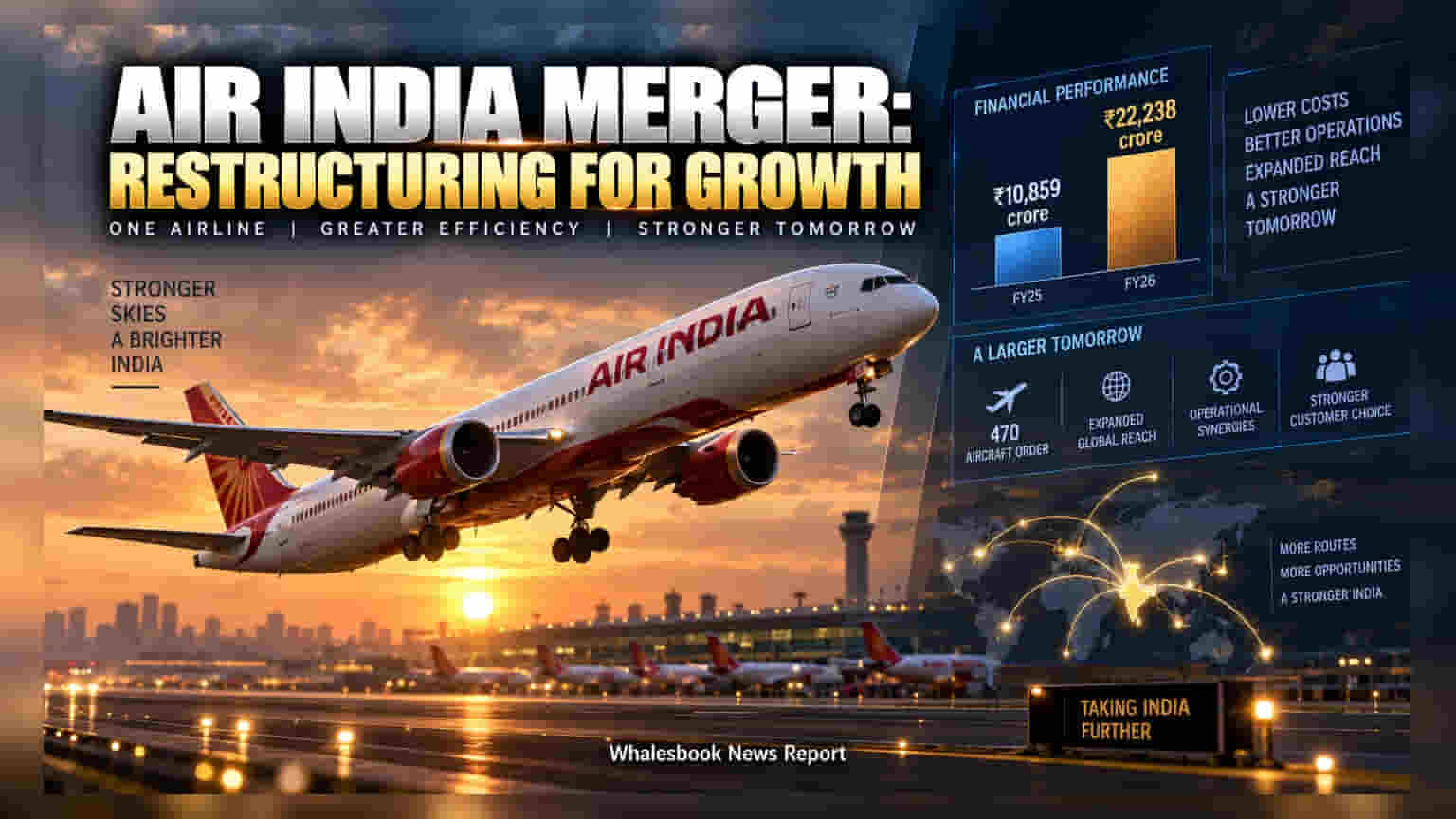
Air India is planning to merge its low-cost unit, Air India Express, with its full-service operations under one license. The company reported a net loss of ₹22,238 crore in the 2026 financial year, creating an urgent need to streamline its business structure and reduce costs.
Air India is exploring a plan to merge its low-cost unit, Air India Express, with its full-service brand. The proposal aims to bring both services under a single operating permit to reduce redundant costs and improve the way the airline functions. While the airline intends to keep the individual brand names for customers, it wants to combine back-end operations, such as maintenance, human resources, and flight scheduling.
This move comes as the airline deals with rising financial pressure. In the 2026 financial year, Air India reported a net loss of ₹22,238 crore, which is a significant increase from the ₹10,859 crore loss recorded in the previous year. The management believes that a more unified structure could stop the increase in operational losses and make better use of its current assets.
Leadership and Strategic Change
The strategy is being driven by CEO Tewolde Gebremariam, who recently joined the company. He is known for overseeing major expansion projects during his time at Ethiopian Airlines. His mandate is to help the company recover and meet the goals set in its Vihaan.AI roadmap, which includes growing its domestic market share and expanding international routes.
Potential Risks and Challenges
While the plan to combine operations is intended to save money, it carries risks. Integrating two different airlines often leads to complex human resources and labor challenges, as staff from different structures must be combined. There is also the operational risk of service disruption or technical hurdles when merging IT systems. Furthermore, the airline faces the delicate task of maintaining distinct service levels for its low-cost and premium customers while sharing resources.
With a massive order for 470 aircraft waiting to be delivered, the ability to manage a larger fleet efficiently is essential. The success of this merger will likely depend on how well the company handles the integration process without hurting its current service quality or employee morale. The next steps for the company will include waiting for regulatory approval and then managing the actual transition of operations, which will be the primary focus for tracking the potential recovery in its financial performance.