 Whalesbook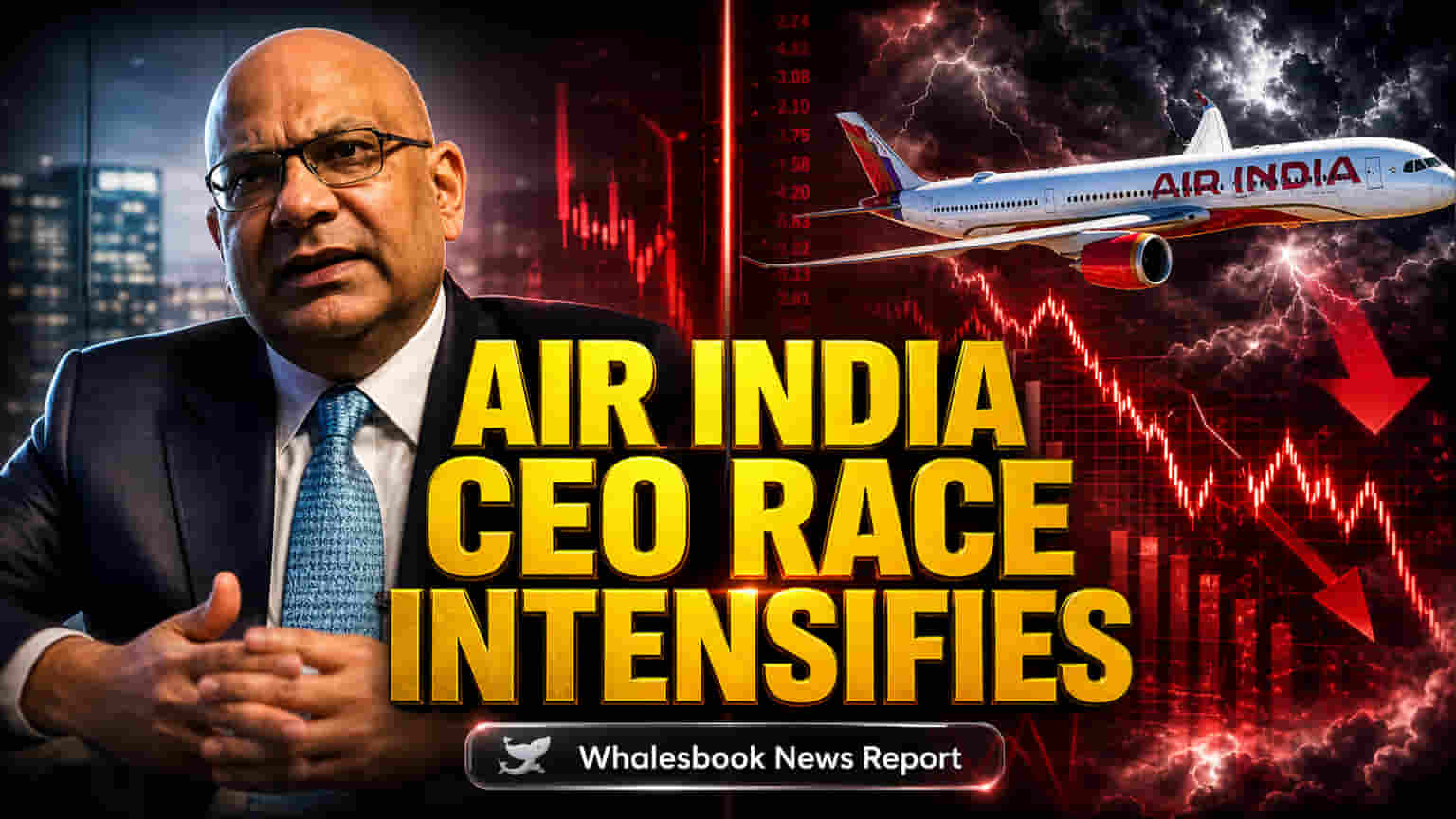


Leadership Change Amid Financial Challenges
Air India is set for a leadership transition as CEO Campbell Wilson prepares to depart. This move comes at a critical time, with the airline facing significant financial and operational hurdles in a challenging global aviation market.
New CEO to Take Over Amid Deep Financial Strain
Tata Sons is nearing a decision on a replacement for Air India CEO Campbell Wilson, who plans to step down in 2026. Nipun Aggarwal, the airline's Chief Commercial and Transformation Officer and Chairman of Air India Express, is among the candidates. Wilson, who took charge after Air India's privatization in July 2022, will oversee a handover amid severe financial difficulties. Air India is now expected to report losses exceeding ₹20,000 crore for fiscal year 2026, a forecast significantly higher than initial projections.
Industry-Wide Losses and Rising Costs Pressure Airlines
The Indian aviation sector as a whole is expected to incur losses between ₹17,000–₹18,000 crore in FY26, according to ICRA, which has issued a negative outlook for the industry. Rising Aviation Turbine Fuel (ATF) prices, influenced by geopolitical tensions in West Asia, have added to costs, with ATF prices increasing 18.2% year-on-year as of April 1, 2026. Global conflicts are also causing major airspace disruptions, forcing airlines like Air India to use longer, more expensive flight routes, particularly for services to Europe and North America. These detours increase fuel and crew expenses, making international flights much harder to profit from.
Air India's Mounting Losses and Operational Issues
Air India's financial performance since its acquisition by Tata Sons shows persistent losses. The projected FY26 losses of over ₹20,000 crore are ten times the initial estimate and follow a substantial loss of ₹10,864 crore in FY25. Efforts to turn the airline around have not yet led to consistent profits. Operational challenges also remain significant. The airline faces scrutiny following a fatal crash in Ahmedabad in June 2025, which led to warnings from regulators about widespread problems in managing crew fatigue and training. These issues, combined with increased costs from geopolitical instability and longer flight paths, create a difficult operational outlook. The airline's reliance on extended routes due to airspace closures adds to these expenses.
Tata's Long-Term Strategy Faces Testing Times
Despite the major financial and operational difficulties, Tata Group's commitment to reviving Air India long-term is clear, shown by investments in fleet upgrades and restructuring. However, the scale of current losses and ongoing external pressures mean that reaching break-even, a goal previously set for within five years, is now much further off. The incoming CEO faces the huge job of dealing with these long-standing problems and finding a clear way to become profitable in a highly competitive and volatile market.