 Whalesbook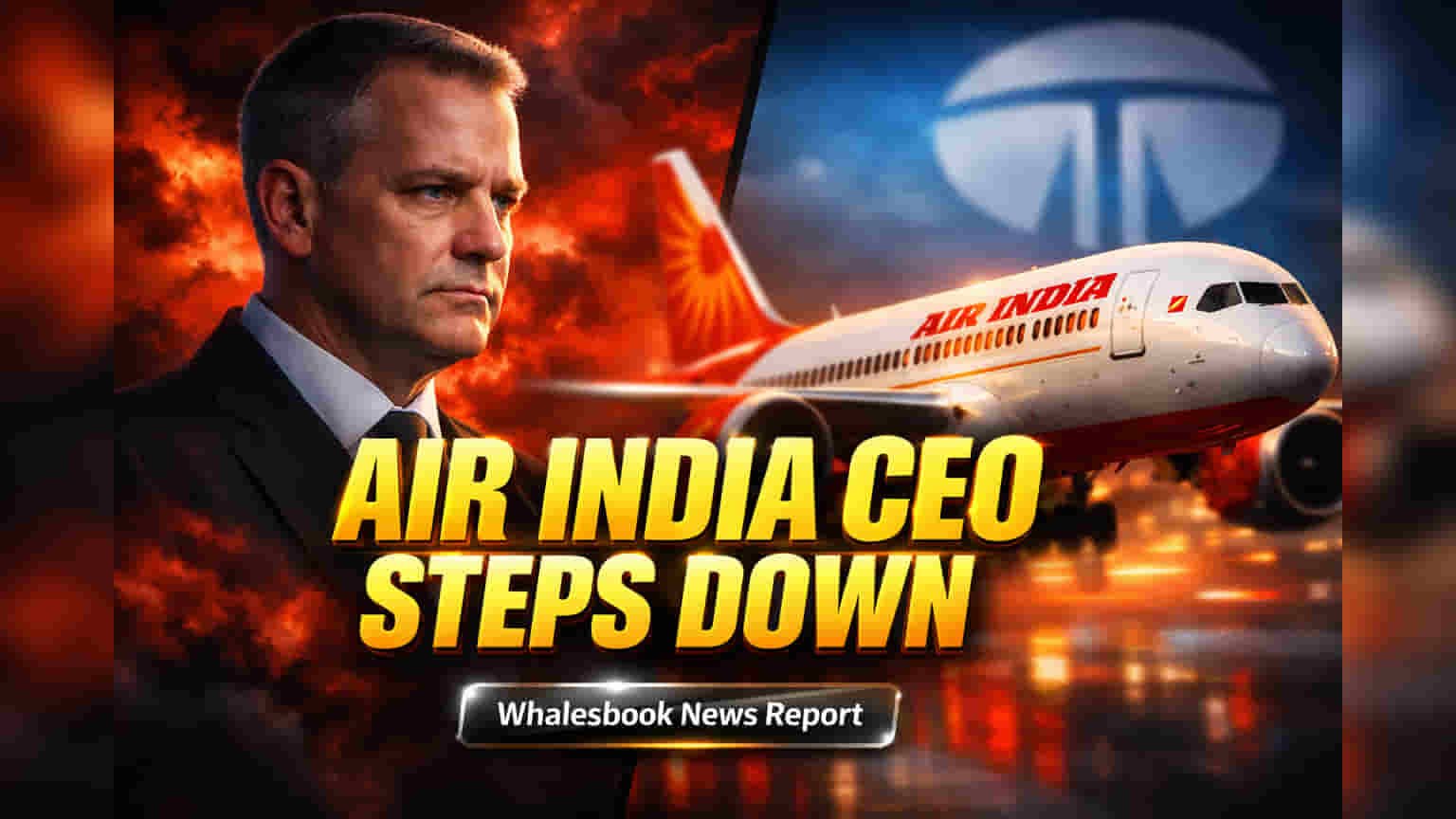


Leadership Change Adds Uncertainty to Revival Efforts
Campbell Wilson's departure as Air India's chief executive adds uncertainty to the airline's critical revival efforts. The leadership change comes amid ongoing financial strain, with Air India and Air India Express projected to lose over ₹20,000 crore in FY2026. Wilson's exit raises questions about the progress and effectiveness of the 'Vihaan.AI' transformation strategy, especially its ability to manage the severe operational and financial challenges facing the Tata Group-owned airline.
Wilson's Tenure Marked by Merger Successes and Financial Hurdles
Wilson's resignation, accepted at a board meeting last week, comes at a key moment for Air India. His five-year contract, which started in July 2022, was set to end in mid-2027. While Wilson successfully managed the complex merger of Vistara into Air India by November 2024, his leadership has been hampered by major operational difficulties and poor financial results. The airline's debt-to-equity ratio remains high at 67.92 as of FY2024-25, showing significant borrowing. This leadership change could affect investor confidence and the progress of fleet modernization plans, including the ongoing retrofit of widebody aircraft due by mid-2027.
Industry Pressures Mount Amid Air India's Market Position
The Indian aviation sector has a 'negative' outlook, according to ICRA, mainly due to rising global tensions, a weaker rupee, and high jet fuel prices, with Brent crude reaching about $105 per barrel. This environment worsens Air India's current problems. While the Air India Group holds a significant domestic market share, around 27-31% as of late 2025, it trails far behind market leader IndiGo, which holds about 60-64%. IndiGo itself saw a market share drop in late 2025 due to operational disruptions, though it reported a profit before tax of ₹7,587.5 crore for the fiscal year ending March 2025. Air India's capacity declined by 5% in March 2026 compared to the previous year, showing current operational limits. Despite these pressures, fleet modernization continues, including plans to add 30 Boeing 737 MAX aircraft.
Heavy Losses and Fatal Crash Lead to Intense Scrutiny
Campbell Wilson's tenure was significantly challenged by persistent financial losses and a fatal crash incident. Air India and its subsidiary Air India Express incurred substantial losses, with FY2025 figures at ₹9,568.4 crore and projections for FY2026 potentially exceeding ₹20,000 crore. The airline's high debt-to-equity ratio of 67.92 reflects its significant leverage. Intense regulatory scrutiny followed the June 2025 crash of Flight AI 171, which caused 260 fatalities and revealed over 50 safety and operational lapses. Global supply chain disruptions further complicated the turnaround, delaying crucial aircraft deliveries and refurbishment projects. This impacted service quality and punctuality, especially on long routes. Indian airlines, unlike many European counterparts, often operate without fuel hedging, leaving them exposed to price volatility.
Search Underway for New CEO to Navigate Challenges
Campbell Wilson's resignation highlights the significant challenges ahead for Air India. The Tata Group has started searching for a successor, reportedly talking to senior executives from major international airlines. This shows a desire for experienced leadership to guide the company through its financial and operational difficulties. The new CEO will need to manage ongoing losses, deal with the aftermath of the 2025 crash, and speed up the 'Vihaan.AI' transformation in an unstable industry. The sector outlook remains 'negative' as of March 2026, with forecasts of greater losses due to high fuel costs and global instability.