

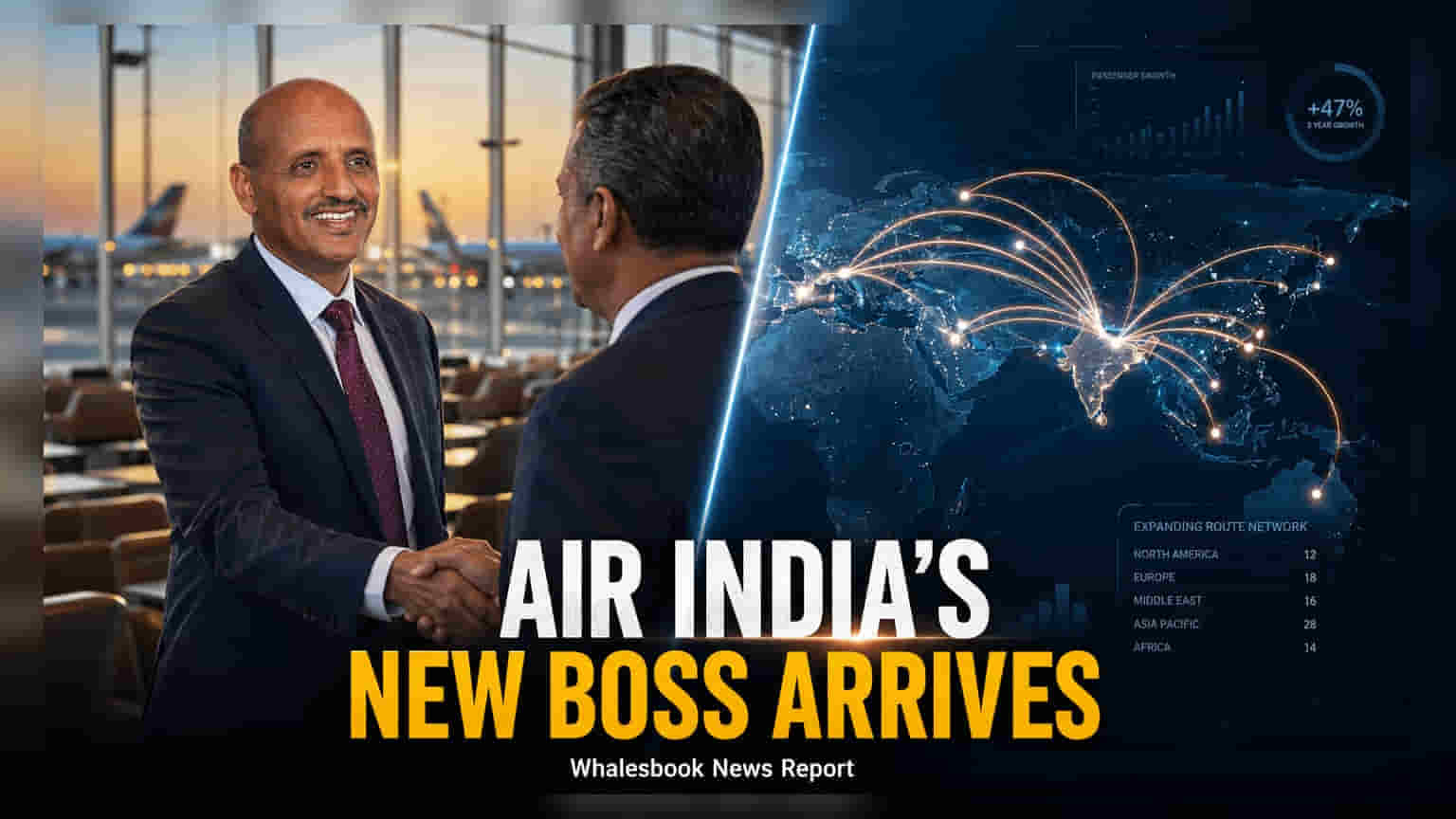
Air India’s incoming CEO, Tewolde Gebremariam, has begun his first official visit to India to meet with Tata Group executives. The aviation veteran, who led Ethiopian Airlines for over a decade, is set to take over next month. Air India is a private company owned by Tata Group and Singapore Airlines and is not listed on the stock exchange.
Tewolde Gebremariam, the newly appointed CEO and Managing Director of Air India, has completed his first visit to India since his appointment was announced in early August 2026. During his trip, he met with senior leaders from the airline and the Tata Group to discuss the company’s future direction. Gebremariam, widely respected for his 11-year tenure as the CEO of Ethiopian Airlines Group, is scheduled to officially take charge next month, succeeding Campbell Wilson.
His arrival signals a new phase for the airline as it pivots from a period of operational stabilization toward a more aggressive, long-term expansion strategy. The Tata Group acquired Air India in January 2022, and the airline has since been working to upgrade its fleet and service standards. Singapore Airlines currently holds a 25.1 percent stake in the carrier, while the Tata Group retains the majority 74.9 percent ownership.
For stock market investors, it is important to note that Air India is a private entity and is not traded on the NSE or BSE. While investors cannot buy or sell shares of Air India directly, the company's performance and strategy remain relevant to the broader Indian aviation sector. As the Tata-owned carrier attempts to capture a larger share of both domestic and international traffic, its expansion plans directly influence the competitive landscape for listed aviation companies, such as InterGlobe Aviation, which operates IndiGo.
Gebremariam inherits an airline that faces significant hurdles. The Indian aviation market is highly competitive, and the new leadership must focus on improving operational reliability, customer service, and scaling the business efficiently. Moving from the initial turnaround phase to a growth-oriented model brings inherent risks, including the challenge of maintaining profit margins while investing heavily in new aircraft and route expansions.
The key factor for market observers will be how the new leadership executes its strategy in a market where pricing power is often sensitive to fuel costs and consumer demand. Investors tracking the aviation sector will likely monitor how Air India’s capacity growth affects ticket pricing and market share distribution among major players in the coming quarters.