

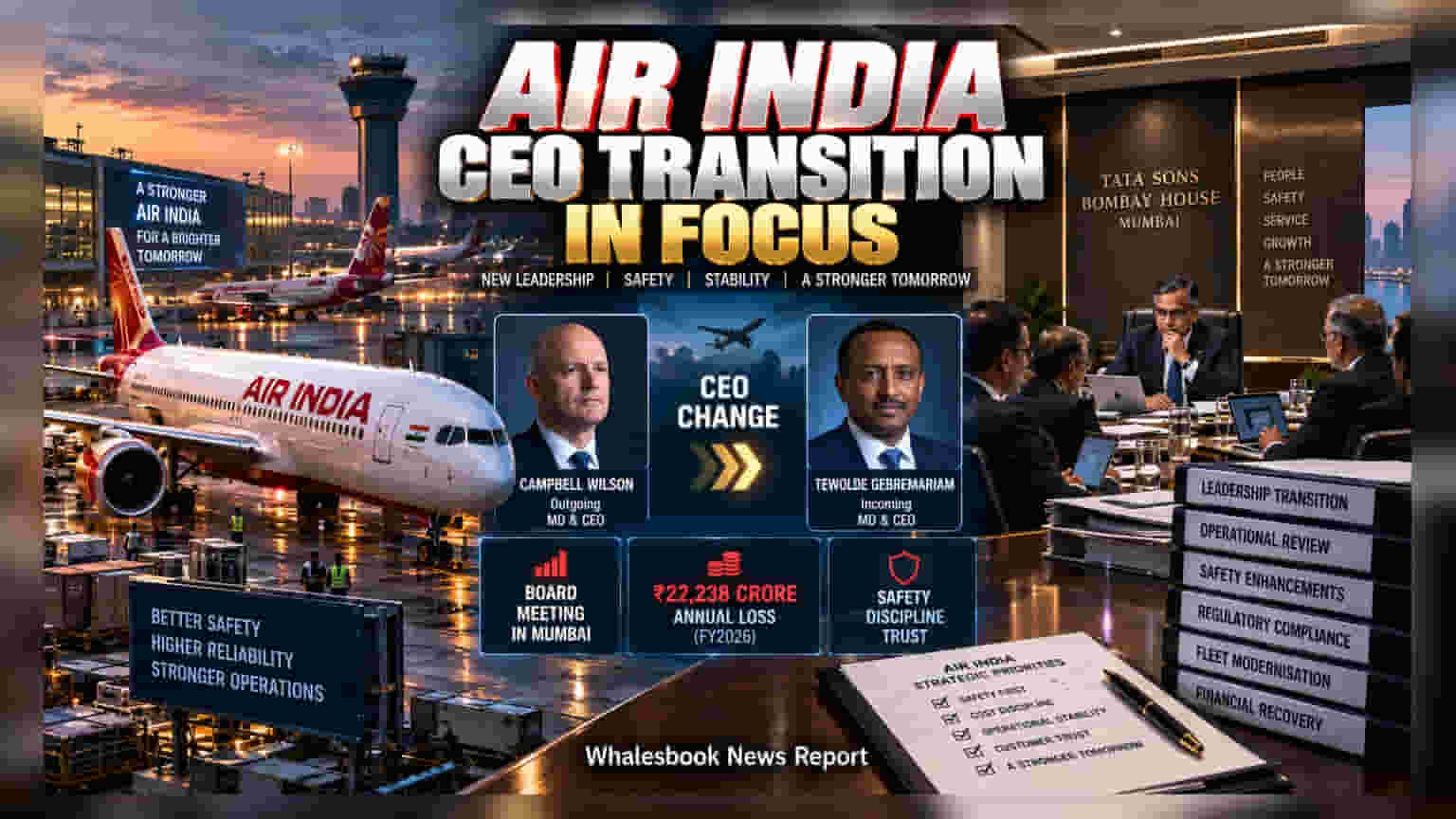
Air India’s board met in Mumbai today to finalize the leadership handover from outgoing CEO Campbell Wilson to incoming chief Tewolde Gebremariam. The airline faces a challenging period, marked by significant financial losses in FY26 and increased regulatory scrutiny regarding safety and security protocols.
Air India’s board of directors held a meeting in Mumbai today at the Tata Sons headquarters, Bombay House, as the airline prepares for a high-profile leadership change. The session, chaired by Tata Sons Chairman N. Chandrasekaran, addressed the transition as outgoing Managing Director and CEO Campbell Wilson prepares to step down this month. His successor, Tewolde Gebremariam, the former head of Ethiopian Airlines Group, is expected to formally take control once final security clearances are processed.
Financial and Operational Realities
The leadership shift arrives at a difficult juncture for the airline. Air India reported a substantial annual loss of approximately ₹22,238 crore (nearly $2.8 billion) for the fiscal year ending March 31, 2026. This significant financial strain highlights the scale of the challenges facing the Tata Group as it attempts to stabilize and modernize the carrier.
The airline has been dealing with intense operational headwinds. The aftermath of the fatal AI171 accident in June 2025, which involved 260 fatalities, remains a primary concern. The incident has triggered ongoing investigations and has placed immense pressure on the airline to overhaul its safety culture and operational reliability. Beyond the accident, the management is also addressing regulatory scrutiny from the Ministry of Civil Aviation, which recently issued a show-cause notice regarding a security lapse involving foreign nationals at Delhi airport.
Strategic Priorities Under New Leadership
Tewolde Gebremariam arrives with a mandate to address these deep-seated operational issues. During a recent employee townhall, both he and N. Chandrasekaran emphasized that the immediate priorities for the company are strengthening safety protocols, imposing stricter cost discipline, and rebuilding trust with passengers. Gebremariam’s background at Ethiopian Airlines is often cited as a model for efficient operational growth, a trait that the board is clearly looking to replicate at Air India.
For stakeholders and observers of the Tata aviation ecosystem, the transition represents more than just a change in management. It marks a critical phase where the promise of a private-sector turnaround must be reconciled with the harsh realities of aviation safety, global geopolitical volatility, and the massive capital requirements needed to modernize the fleet and service levels.
What Investors Should Monitor
The path ahead for the new leadership team will likely be measured by several key factors. Investors and industry analysts will be watching for tangible improvements in safety audit results and regulatory compliance, as these are essential to restore the brand's standing. Additionally, the company's ability to manage its high cost structure in a volatile fuel price environment will be a major monitorable in coming quarters. Any future updates regarding debt restructuring or capital requirements will also be crucial for assessing the long-term viability of the current turnaround strategy.