

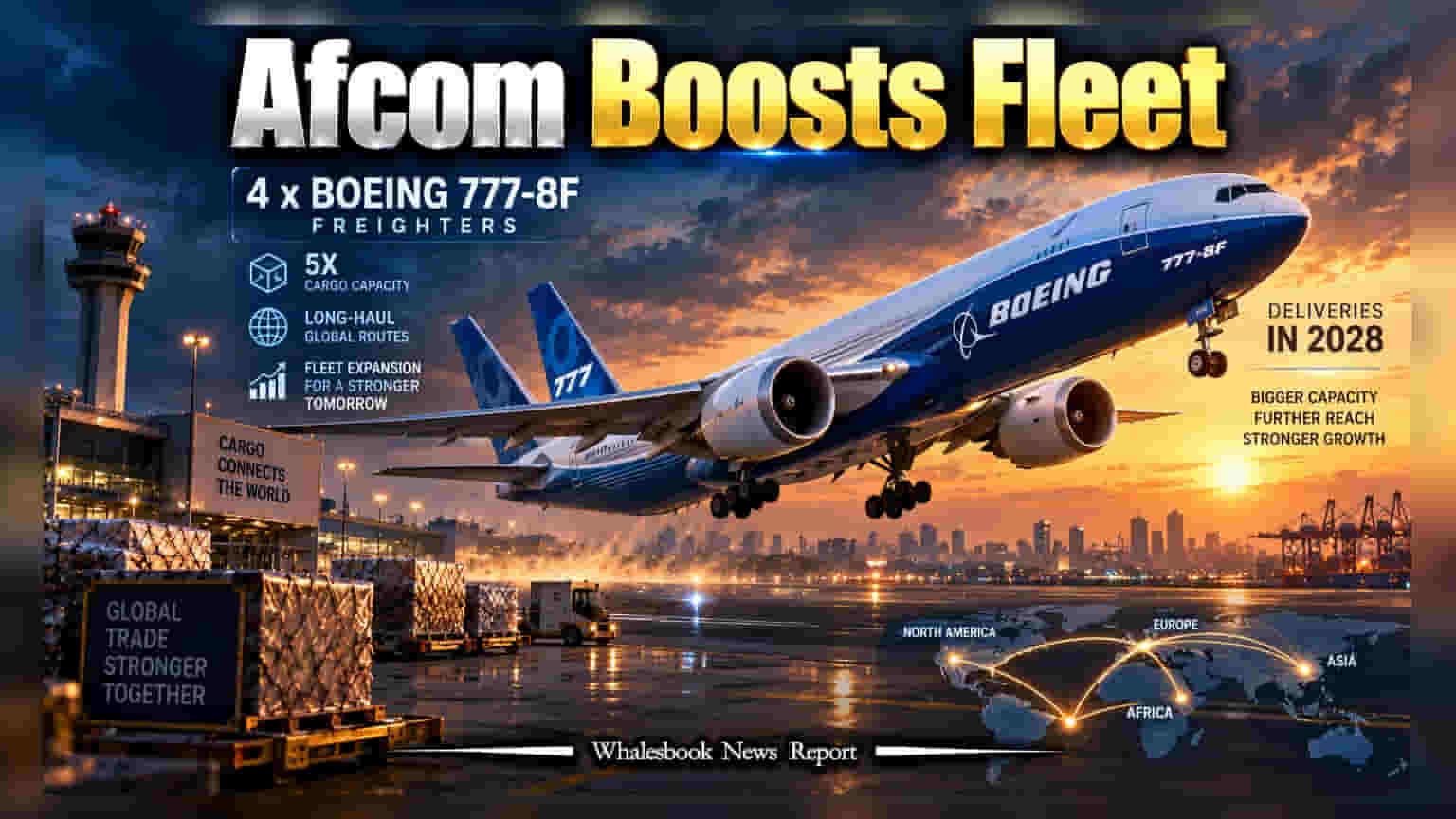
Afcom Holdings has signed a letter of intent to acquire four Boeing 777-8F freighter aircraft, marking its entry into the long-haul international market with a fivefold capacity boost. The 2028 delivery schedule signals a major infrastructure play, though investors should monitor the company’s capital spending and debt levels required to fund this expansion.
Afcom Holdings has taken a significant step in its fleet expansion strategy by signing a letter of intent with The Boeing Company to purchase four 777-8F freighter aircraft. The announcement, disclosed to the BSE on September 2, 2026, marks the company's entry into the wide-body cargo segment, moving beyond its current fleet of B737-800 narrow-body planes. The aircraft are expected to be delivered in 2028.
Scaling for Global Trade
The move is designed to transition the company into long-haul international routes that require 10 to 12 hours of continuous flight. Currently, the company operates narrow-body freighters, which have limited range and volume capacity. The upcoming 777-8F freighters offer roughly five times the cargo capacity of the current fleet. For investors, this shift represents an attempt to capture larger, long-haul shipment volumes and improve operational efficiency by moving toward high-capacity, long-range logistics solutions.
Financial Context and Capital Spending
The announcement comes at a time when the company has demonstrated strong financial performance. In its recently reported Q1 FY27 results, Afcom Holdings posted a standalone revenue of ₹176 crore, marking a year-on-year increase of approximately 47.9%, with a net profit of ₹39.2 crore, up about 85.78% compared to the previous year. This performance has supported positive investor sentiment, with the stock recently touching a 52-week and all-time high of ₹1,711 on September 3, 2026.
However, the scale of this fleet expansion requires significant investment. To support this, the company has increased its borrowing limit to ₹500 crore. While this provides the necessary flexibility to fund the aircraft acquisition, it also means the company will be taking on more debt. Investors should watch how this added financial burden impacts future profit margins and cash flow.
Risks and Execution Factors
While the expansion is significant, there are several factors that investors should keep in mind. First, the agreement is currently a non-binding letter of intent, meaning definitive agreements are still to be finalized. Second, transitioning from a narrow-body fleet to a large wide-body operation involves complex operational changes, including crew training and maintenance requirements.
There is also the potential for equity dilution. The company has outstanding convertible warrants that are due by June 2027, which could impact the shareholding structure if they are converted into shares. Finally, the air cargo business is highly sensitive to global trade demand. Any downturn in demand in key corridors like Southeast Asia, Africa, or the Far East could affect the company’s ability to utilize the new capacity effectively once the planes arrive.
Looking ahead, the key monitorables for shareholders will be the finalization of the purchase agreements, the timeline for capital allocation, and the company’s ability to maintain its profit margins while managing the increased debt levels during this multi-year expansion project.