

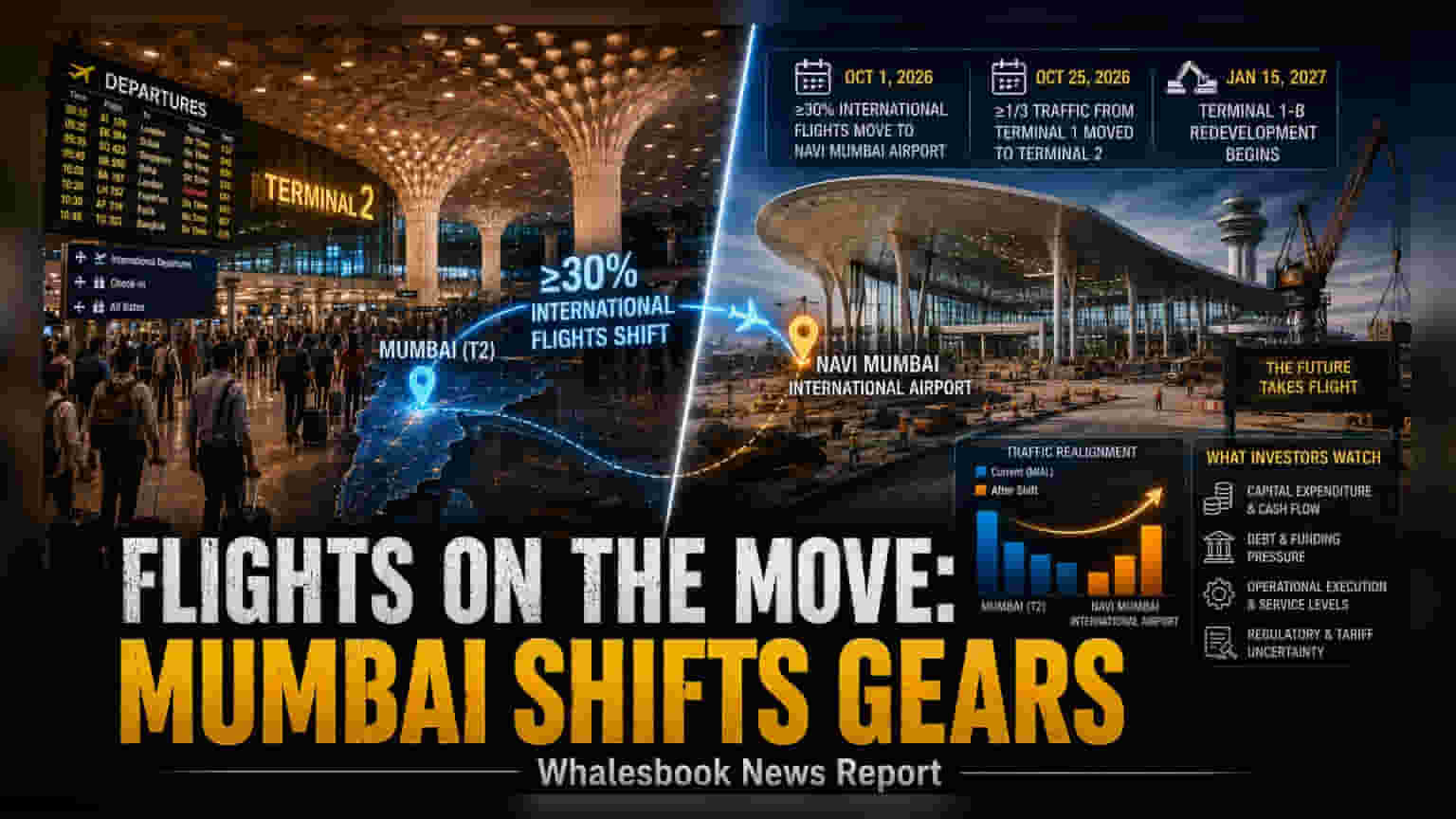
Mumbai International Airport (MIAL) will move 30% of international flights to Navi Mumbai starting October 1, 2026, ahead of a major Terminal 1 redevelopment. The renovation begins in January 2027. Investors are monitoring the execution of this massive infrastructure transition, which involves significant spending and potential operational changes across two major airports.
Mumbai International Airport (MIAL), which is 74% owned and managed by the Adani Group, has announced a significant operational shift to prepare for a major infrastructure project. Starting October 1, 2026, the airport will divert at least 30% of its international flight operations to the newly operational Navi Mumbai International Airport. This move is part of a larger plan to manage passenger traffic while the company upgrades its aging facilities.
Following the international flight shift, the airport will also redistribute at least one-third of the air traffic currently handled at Terminal 1 to Terminal 2, starting October 25, 2026. These changes are necessary steps to clear the way for the full-scale redevelopment of Terminal 1-B, with demolition and construction work scheduled to begin on January 15, 2027.
For investors, this transition marks a complex phase in the company’s airport business. While the redevelopment is aimed at increasing capacity and improving efficiency in the long term, the multi-year construction period presents operational challenges. Maintaining smooth passenger movement while simultaneously managing a major renovation at one terminal and transferring traffic to a separate airport requires precise coordination. Any delays in the transition could impact service levels and potentially lead to operational costs that exceed initial budgets.
The redevelopment of Terminal 1 comes at a time when the Adani Group is balancing extensive infrastructure spending across its airport portfolio. A key monitorable for investors is the financial impact of this capital-intensive work. Large-scale airport upgrades typically require heavy upfront spending, which can impact cash flow and increase debt pressure if not managed alongside strong revenue growth from airport operations. Furthermore, the company faces potential regulatory and tariff uncertainties, which are common in major infrastructure projects where approvals and pricing depend on government and regulatory bodies.
The Navi Mumbai International Airport, which began handling domestic commercial flights in December 2025, is now stepping up to take on international traffic. The success of this move depends on how well airlines and ground services adjust to the new traffic distribution. Investors will likely track the company’s ability to manage this shift without disrupting flight schedules, as well as any updates on the renovation budget and timeline once work commences in early 2027.