 Whalesbook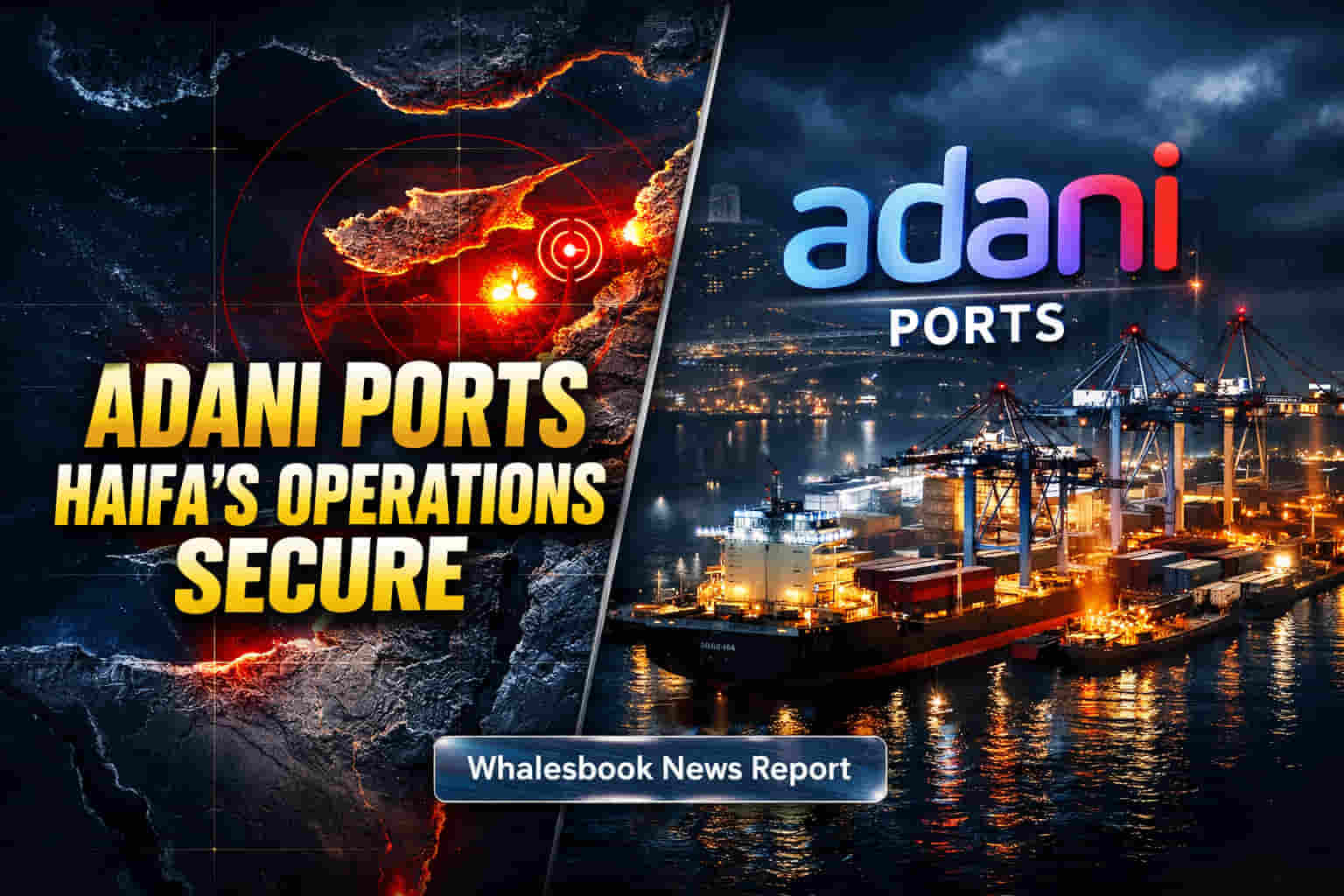


### Operational Continuity Amidst Regional Instability
Adani Ports and Special Economic Zone Ltd issued a statement on Sunday, March 1, 2026, aiming to allay concerns regarding its operations at the Port of Haifa in Israel. The company affirmed that all employees are safe and port assets and infrastructure are secure and fully operational, despite escalating security tensions in northern Israel. This reassurance is part of Adani Ports' strategy to maintain investor confidence and assure global shipping partners that its crucial Mediterranean hub remains functional. The company stated it is closely monitoring regional developments and adhering strictly to guidance from Israel's ministry of transport and road safety. This proactive communication follows reports of missile activity in the vicinity of Haifa, which has led to the activation of northern Israel's security systems. No confirmed structural damage to the port's core infrastructure has been reported.
### Strategic Asset Faces Geopolitical Headwinds
The Port of Haifa, acquired through a joint venture with Israel's Gadot Group for approximately $1.18 billion in 2023, represents a cornerstone of Adani Ports' global expansion strategy. Positioned as a key Mediterranean gateway, it is integral to linking trade routes between Europe, the Middle East, and Asia. While the company stressed its commitment to operational stability and supply chain continuity, the market's immediate response on Friday, February 28, 2026, saw Adani Ports shares decline by 1.98% to ₹1,519.90. This price action indicates that investors are factoring in the persistent geopolitical risks associated with the region. Historical data shows Adani Ports' stock has previously reacted negatively to Middle East conflicts, experiencing drops and extended losses during periods of heightened tension.
The Market's Discounting of Risk
Despite the company's assurances that Haifa Port's operations remain unaffected, with cargo movement continuing normally, the stock's performance suggests a deeper investor concern. The market appears to be valuing the strategic importance of Haifa Port to Adani's global network, making it a potential vulnerability if regional conflicts escalate. The potential for disruption, even if not immediate, can lead to increased shipping insurance premiums and affect supply chain reliability across the Eastern Mediterranean, impacting Adani's broader logistics ecosystem. This sensitivity to geopolitical events underscores the challenges of investing in infrastructure assets located in volatile regions. Analysts, however, largely maintain a positive outlook, with a consensus rating of 'Strong Buy' and an average 12-month price target around ₹1,838.73, indicating potential upside. Yet, some sentiment analyses suggest a 'Hold' rating due to valuation concerns, highlighting a divergence in market perception.
Competitive and Regulatory Undercurrents
In the broader Eastern Mediterranean context, ports like Tangier Med, Jebel Ali, and East Port Said are significant competitors, with some exhibiting higher cargo volumes or efficiency metrics. While Adani Ports' strategic positioning is clear, the broader sector faces challenges from global crises, including past Red Sea disruptions, which affect port performance worldwide. Furthermore, Adani Ports is navigating increased regulatory and legal scrutiny. In January 2026, the stock exchange sought clarifications regarding news of significant investment commitments and reports concerning US regulatory actions against the Adani Group. Recent credit rating reports also acknowledge ongoing sub-judice investigations by Indian and US regulatory bodies, noting any adverse outcomes as a key rating monitorable. The company's market capitalization stood around ₹3.50 lakh crore as of February 28, 2026, with a P/E ratio of approximately 28.53.
### Future Outlook and Market Positioning
Adani Ports' strategic expansion continues, with recent activities including the incorporation of a new subsidiary in the UAE for ship management and operations in February 2026, and the acquisition of Australia's Abbot Point Port Holdings. The company also recently finalized an MoU for an iron ore facility, signaling diversification efforts. While the operational reassurances for Haifa Port aim to mitigate short-term market fears, the enduring geopolitical tensions in the Middle East present a persistent risk premium for the company's stock. The market will likely continue to weigh the company's robust growth trajectory and strategic global presence against the inherent volatilities of its operating environments.