

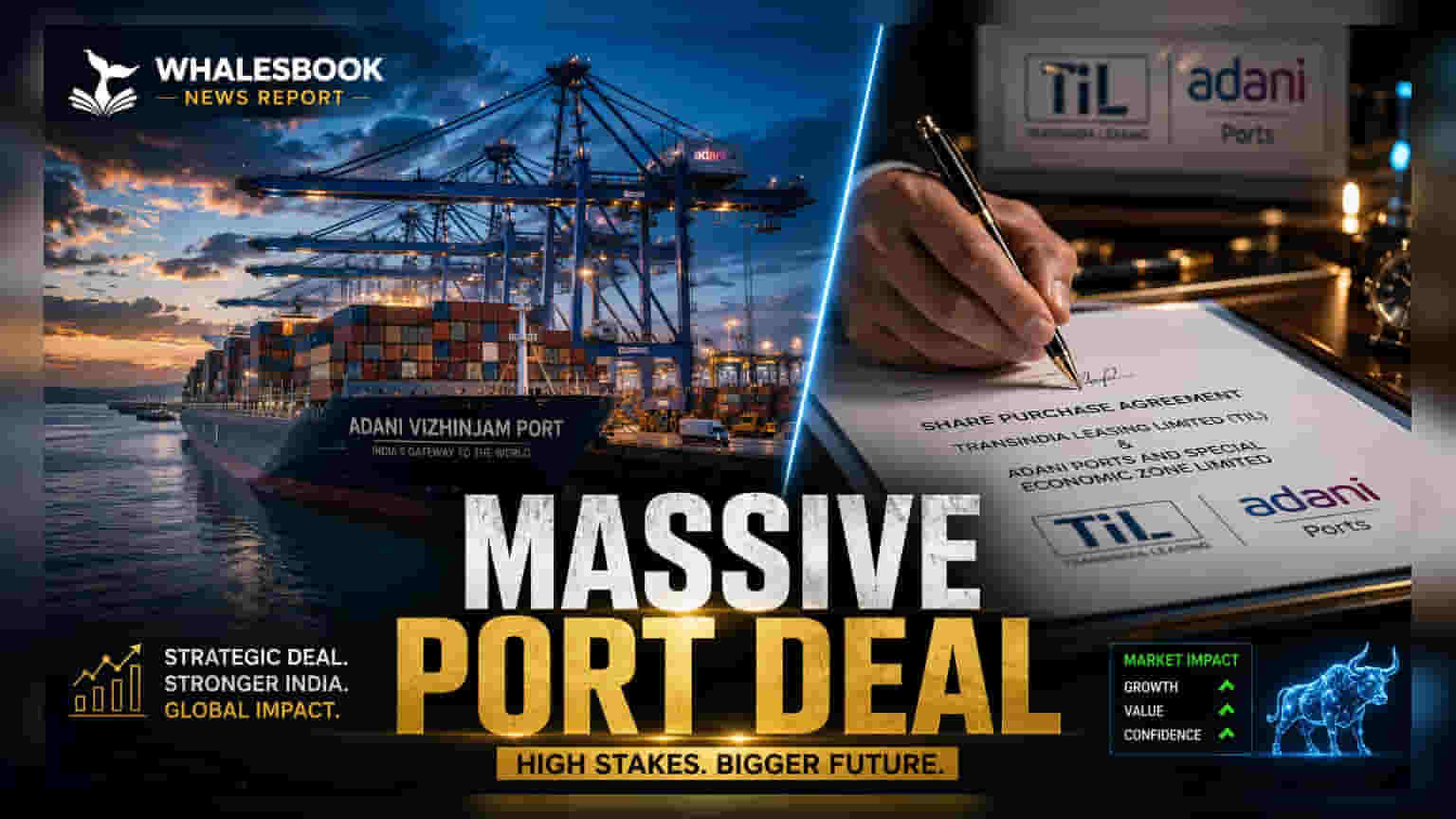
Adani Ports and SEZ Ltd has agreed to sell a 49% stake in its Vizhinjam port unit to Terminal Investment Limited (TiL) for $1.4 billion. The deal involves both an upfront payment and a future amount linked to the port's 2028 expansion. For investors, this partnership with a global shipping giant is a strategic move to secure long-term cargo traffic and manage project capital spending.
What Happened
Adani Ports and SEZ Limited (APSEZ) has signed an agreement to divest a 49% stake in its subsidiary, Adani Vizhinjam Port Private Limited, to Terminal Investment Limited (TiL). The transaction is valued at approximately $1.397 billion. Terminal Investment Limited is part of the Mediterranean Shipping Company (MSC), which is recognized as one of the world's largest container shipping lines.
The deal structure includes two distinct payment phases. The first, an initial payment of $539 million, covers the immediate acquisition of the 49% stake. The second portion, amounting to $858 million, is contingent on the successful completion of the port's expansion project, which is scheduled for December 2028. DSK Legal and Cyril Amarchand Mangaldas advised the respective parties on the transaction.
Strategic Volume Strategy
For investors, the most significant aspect of this deal is not just the cash inflow, but the strategic partnership. The biggest challenge for any new port is attracting shipping traffic. By bringing in a partner like TiL—which is backed by the global shipping network of MSC—Adani Ports effectively secures long-term volume commitments. This helps reduce the risk of the port operating at low capacity in its initial years. Aligning with a global carrier helps guarantee that the port will be a preferred destination for container ships, which is essential for the long-term profitability of such a large infrastructure asset.
The Capital Allocation Context
Adani Ports operates in a capital-intensive sector that requires continuous spending on infrastructure. Large-scale port projects like Vizhinjam often involve significant upfront borrowing or internal capital allocation. By monetizing a stake in the project, the company is effectively using a capital-light approach to fund its broader growth. This strategy allows the company to recycle capital from a completed or operational asset and direct it toward other growth opportunities without over-relying on fresh debt. It also brings in a partner who shares the burden of future infrastructure spending.
Execution and Timeline Risks
Investors should note that a significant portion of the deal—$858 million—is tied to the completion of the expansion by 2028. This makes the project timeline a critical monitorable. Infrastructure projects in India can face challenges ranging from land acquisition hurdles and environmental clearances to construction delays and cost overruns. If the expansion faces significant delays, the receipt of the second payment could be pushed back, which might impact the company's anticipated cash flow timeline.
The Bigger Picture
Vizhinjam is positioned as India's first deep-draft mega transshipment hub. Its ability to handle massive container vessels gives it a competitive advantage over smaller or shallower ports in the region. The goal is to compete with major regional hubs like Colombo or Jebel Ali. The success of this facility depends on its ability to handle the planned increase from the current 1.6 million TEUs to 5.7 million TEUs. The sector is currently seeing a focus on such strategic partnerships to de-risk investments and secure global shipping routes.
What Investors Should Track
Investors should keep an eye on the project's construction progress as the 2028 deadline approaches. Management commentary regarding the integration of TiL's shipping volumes into the port's operations will be a key indicator of the deal's success. Additionally, tracking the company’s debt levels and its ability to maintain healthy operating margins while expanding capacity will remain essential for assessing long-term performance.