

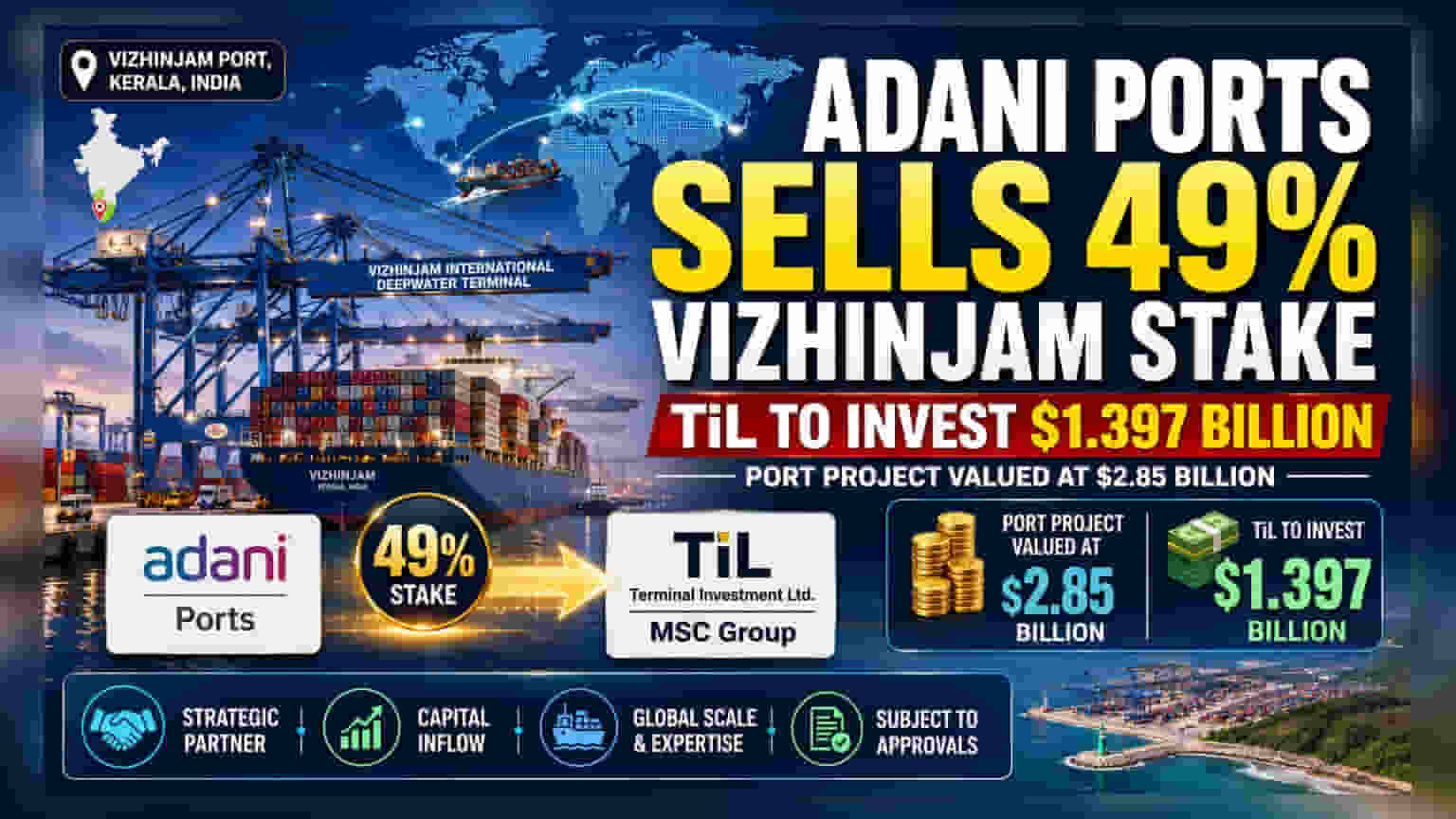
Adani Ports (APSEZ) is offloading a 49% stake in its Vizhinjam port project to Terminal Investment Ltd (TiL) for $1.397 billion. The deal values the Kerala-based asset at $2.85 billion and strengthens the company's ties with the global shipping giant MSC Group. This influx of foreign capital is expected to enhance the company's financial flexibility as it continues its infrastructure expansion.
What Happened
Adani Ports and Special Economic Zone (APSEZ) has entered into an agreement to sell a 49% stake in its Vizhinjam Port project to Terminal Investment Ltd (TiL). TiL is the port operations arm of the Mediterranean Shipping Company (MSC) Group, a major player in global maritime logistics. The deal, finalized on Monday, values the Kerala-based port project at $2.85 billion. Under the terms, TiL will invest $1.397 billion for its 49% share. The transaction is now subject to standard regulatory approvals.
Why This Matters For The Business
For APSEZ, this deal represents a significant capital inflow. By bringing in a global partner like TiL, the company is not only monetizing a portion of its asset but also securing a strategic long-term partner. Vizhinjam is a deep-water transshipment port, which means it is designed to handle very large vessels that cannot dock at smaller ports. These ports act as hubs where cargo is unloaded from large ships and transferred to smaller vessels for transport to other destinations. Having MSC Group involved as a partner and operator helps guarantee container volumes, which is crucial for the success of any new port project.
Impact On Financial Flexibility
Infrastructure projects like ports require heavy upfront spending. By selling a stake, APSEZ can recover a portion of the capital it has already invested. This provides the company with more cash, which can be used to lower its debt burden or to fund other expansion projects across its network. Investors typically view such "asset-light" moves favorably, as they show the company's ability to unlock value from its infrastructure assets without needing to rely entirely on fresh borrowing.
Understanding The Strategic Context
Vizhinjam is located in Kerala and is strategically positioned to capture a share of the transshipment cargo that currently goes to ports in neighboring countries like Sri Lanka. Competition in the port sector is high, and the success of Vizhinjam depends on its ability to offer faster turnaround times and competitive costs. By partnering with TiL, APSEZ is aligning itself with one of the world's largest shipping lines, which could provide a competitive advantage in attracting global shipping traffic to the port.
Risks And Monitorables
While the deal brings in significant capital, investors should remain aware of standard infrastructure risks. Port projects often face challenges regarding operational ramp-up, regulatory compliance, and demand fluctuations in global trade. Additionally, while this deal is a positive for cash flow, the final impact on the company's profitability will depend on the port's actual operational performance over the coming years. The main monitorables for shareholders include the timeline for receiving all regulatory clearances, the actual transfer of funds, and how the company chooses to allocate the proceeds—whether toward debt reduction or new project investments.