

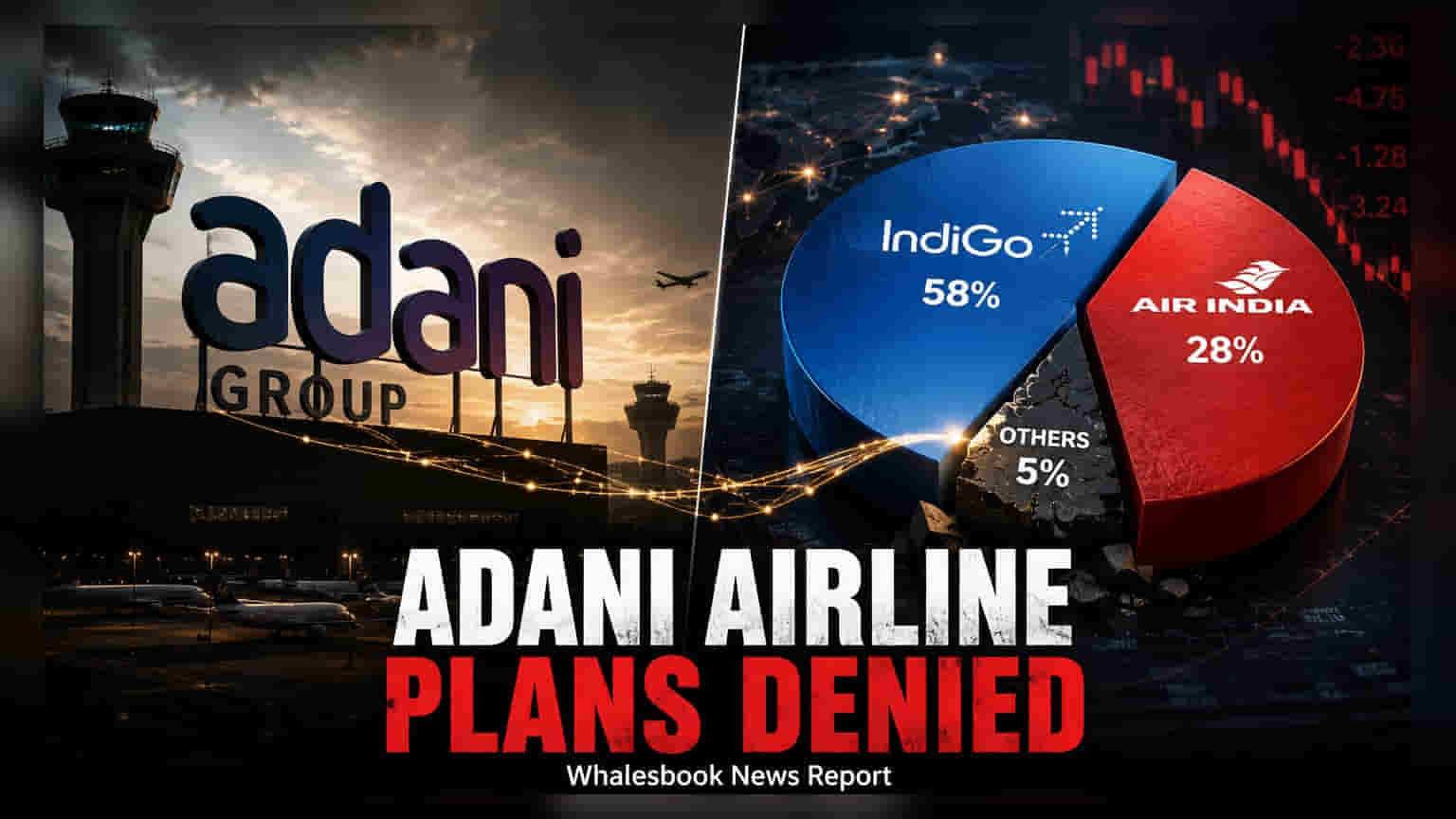
The Adani Group has issued a formal exchange filing rejecting media speculation about plans to launch an airline. The conglomerate currently manages major airports in India, leading to industry concerns over potential conflicts of interest. The company clarified it is not evaluating any proposal to enter the scheduled airline sector.
Detailed Coverage
The Adani Group has formally dismissed recent market speculation regarding a potential entry into India's commercial aviation sector. In a clear response to reports that emerged on July 23, 2026, the conglomerate issued an official filing to the stock exchanges stating that it is not evaluating any proposal to launch an airline. The company explicitly termed the reports as baseless and factually incorrect, putting an end to discussions that suggested the group was lobbying for regulatory changes to allow airport operators to own stakes in airlines.
Impact of Airport Management on Aviation Strategy
Adani Group is currently a major player in India’s aviation infrastructure, operating six significant airports and overseeing the development of the Navi Mumbai International Airport. The speculation regarding an airline venture had triggered concerns among existing industry players, including IndiGo’s management, which cited potential conflicts of interest. Industry leaders have pointed out that if an airport operator also owns an airline, it could lead to concerns regarding preferential access to airport slots and facilities, a scenario that is not common in global aviation models.
While the company has denied these specific plans, its involvement in the aviation ecosystem remains significant. The group has entered into strategic partnerships with companies like Embraer and Leonardo. These collaborations focus on aircraft manufacturing, helicopter production, and regional aviation support within India. These activities align with the government's push for indigenous aircraft development rather than entering the highly competitive scheduled passenger airline market.
Sector Dynamics and Competition
India's aviation market is currently dominated by an entrenched duopoly, with Air India and IndiGo collectively commanding nearly 90 percent of the market share. While the Indian government has expressed interest in increasing competition, new entrants face significant challenges. Recent history shows that even newer players like Akasa Air have seen modest growth, while other established names like SpiceJet have faced declining market shares due to financial and operational pressures.
Industry analysts have noted that succeeding in the Indian aviation market requires more than just capital. It requires a robust strategy that integrates cargo operations, loyalty programs, and seamless passenger experiences. Furthermore, concerns regarding overcapacity and the high cost of operations continue to act as barriers for new entrants. For investors, the focus remains on the company's existing infrastructure assets, including its airport and logistics portfolio, rather than the airline space. The primary monitorable for shareholders will be the operational progress and financial performance of the group’s existing airport infrastructure projects, as the company continues to invest in building its aviation-related support services.