

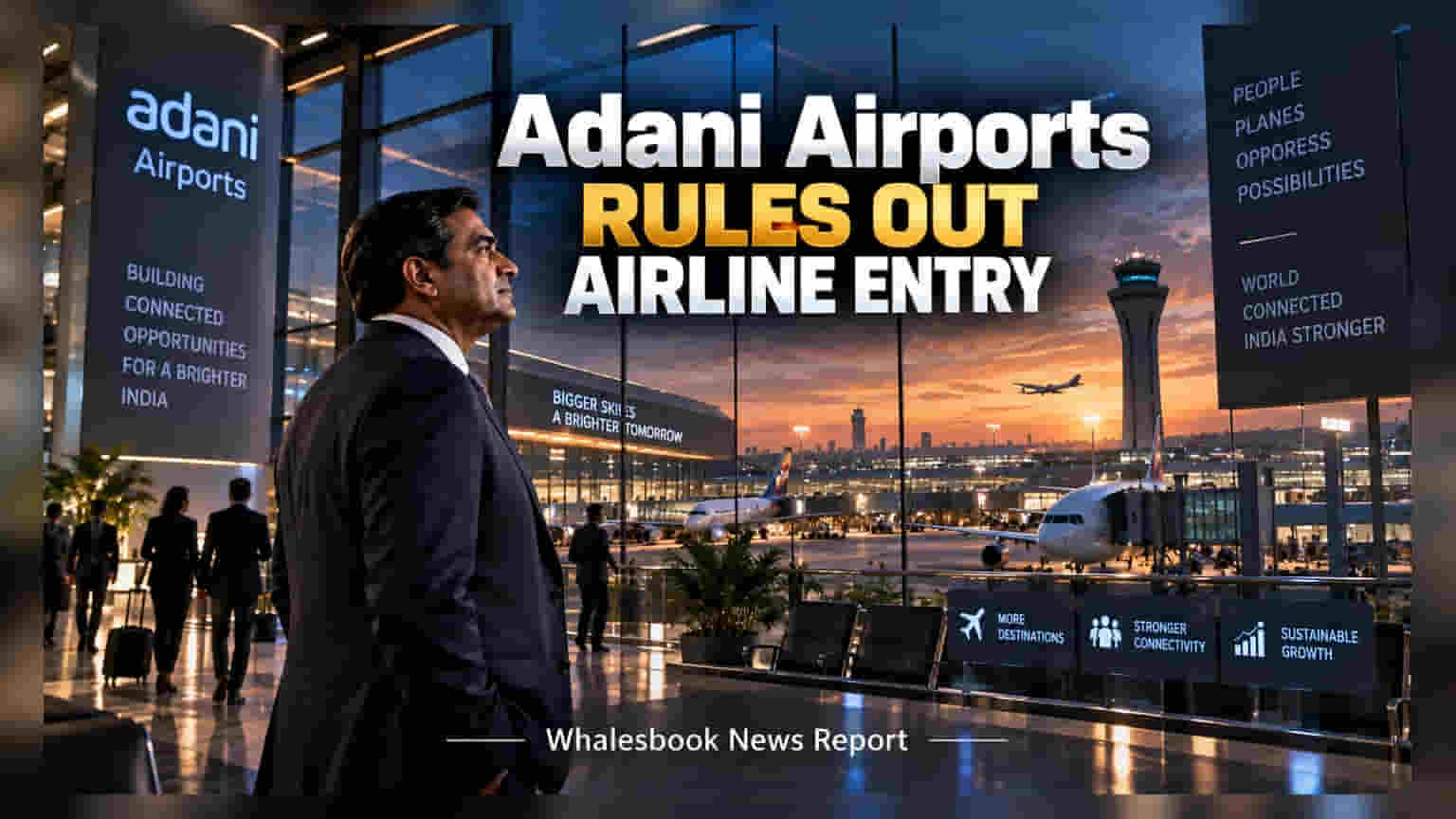
Adani Airports plans an $11 billion investment over the next five years to expand infrastructure, while explicitly ruling out plans to start an airline. This move aims to maintain its position as a neutral operator. Investors are now focused on project execution and funding strategies as the company builds out massive capacity across hubs like Navi Mumbai.
Adani Airports has reaffirmed its strategic focus on airport infrastructure management, officially ruling out plans to enter the airline business. Arun Bansal, CEO of the group, stated that the firm intends to focus entirely on its core strength: operating and developing airport facilities. This clarification aims to position the company as a neutral partner to all airlines, rather than a competitor.
For investors, this strategy creates a clearer picture of the company’s business model. By avoiding the airline sector—a business often characterized by thin profit margins, high operational volatility, and intense competition—Adani Airports is committing to the utility-like, long-term cash flow model of airport concessions. This approach simplifies the operational risk profile compared to conglomerates that own both airports and airlines, where internal conflicts of interest can sometimes arise.
The core of the company’s growth plan is a $11 billion capital expenditure program scheduled over the next five years. This spending is directed toward upgrading existing airports and completing major greenfield projects, most notably the upcoming Navi Mumbai International Airport. The company currently handles approximately 100 million passengers annually and aims to use these investments to significantly increase its passenger handling capacity.
While the focus on infrastructure is clear, the scale of this $11 billion investment brings specific risks that investors should monitor. Large infrastructure projects are capital-intensive and can be prone to execution delays and cost overruns. Furthermore, such massive capital requirements typically involve significant use of debt. Shareholders will likely look for updates on funding plans and how the company intends to maintain its financial leverage while managing these projects. Additionally, since the company’s revenue is fundamentally tied to passenger traffic, its financial performance remains sensitive to broader economic conditions and consumer spending on air travel.
The most important monitorable for stakeholders will be the commissioning timeline for the Navi Mumbai project and any updates on airport tariff revisions from the Airports Economic Regulatory Authority, which determines the fees airports can charge to airlines and passengers. Investors may also track quarterly updates from the parent company, Adani Enterprises, to assess the pace of this capital deployment and its direct impact on the group's balance sheet and cash flow.