

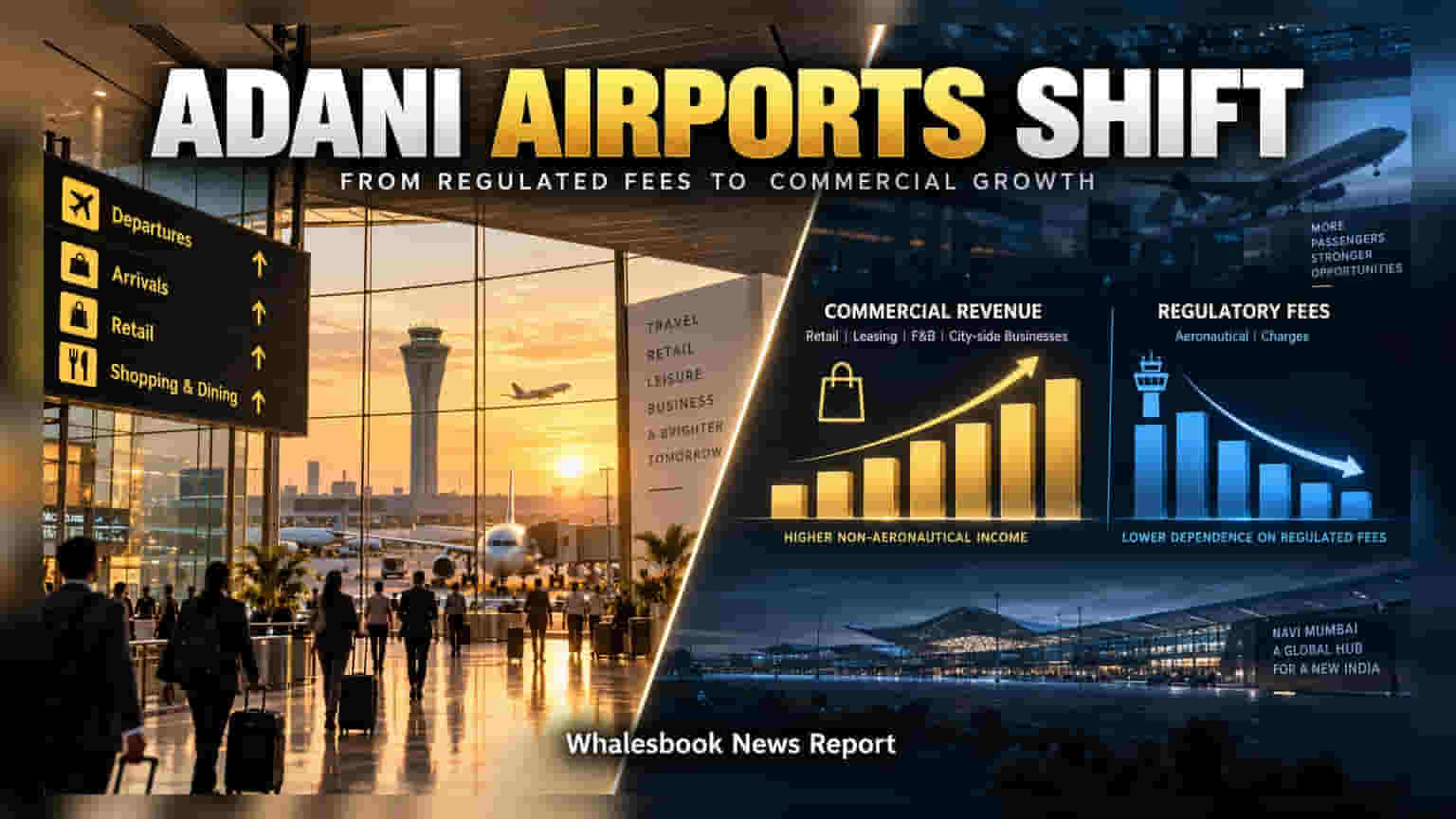
Adani Airports aims to reduce aviation fees by increasing income from retail and commercial operations. This shift targets long-term growth, supported by the upcoming Navi Mumbai International Airport. Investors should monitor the operational challenges of Mumbai’s Terminal 1 redevelopment, set for January 2027, and the regulatory environment governing airport tariffs.
Adani Airports Holding Ltd (AAHL), a subsidiary of Adani Enterprises, is working on a plan to reduce its reliance on regulated aeronautical charges. The company aims to shift its revenue focus toward commercial and city-side activities, such as retail and leasing. By boosting these non-aeronautical income streams, the airport operator intends to lower the fees charged to airlines, potentially making its airports more attractive for domestic and international carriers.
This strategy is part of a broader push to prepare for India’s anticipated growth in air travel. The group aims to significantly expand passenger capacity across its network over the next decade. A key component of this plan is the new Navi Mumbai International Airport, which is being built to serve as a major transit hub for long-haul international flights. The management believes this will allow Indian airports to compete more effectively with hubs in the Middle East, especially as major Indian airlines expand their fleets.
However, this transition involves operational and regulatory complexities. Airport tariffs in India are determined by the Airports Economic Regulatory Authority (AERA), which follows a specific model to set charges. This regulatory oversight means the company’s ability to change fee structures is not entirely within its control. Furthermore, moving away from aeronautical income assumes that non-aeronautical revenue, such as retail and parking, will grow steadily. If passenger growth slows or commercial spending by travelers drops, this could create pressure on the company’s profit margins.
For investors, a specific point of concern is the upcoming operational change at Chhatrapati Shivaji Maharaj International Airport in Mumbai. The company plans to demolish Terminal 1 starting in January 2027. This move requires transferring the capacity of five million passengers to other terminals or the new Navi Mumbai facility. Successfully managing this transition without causing flight delays or passenger inconvenience is a significant logistical challenge. The company has clarified that while it manages the infrastructure, it cannot force airlines to relocate, meaning the success of this shift depends on cooperation with the carriers.
Additionally, the Adani Group operates under a significant capital expenditure cycle to build these large infrastructure projects. Investors often monitor the group's debt levels and its ability to manage large construction projects on schedule. Any delay in the Navi Mumbai project or the Mumbai T1 redevelopment could lead to increased costs and reduced financial flexibility. Monitoring upcoming traffic volume data, regulatory orders from AERA regarding tariff adjustments, and progress reports on the Mumbai T1 transition will be important for understanding the company’s long-term financial health.