

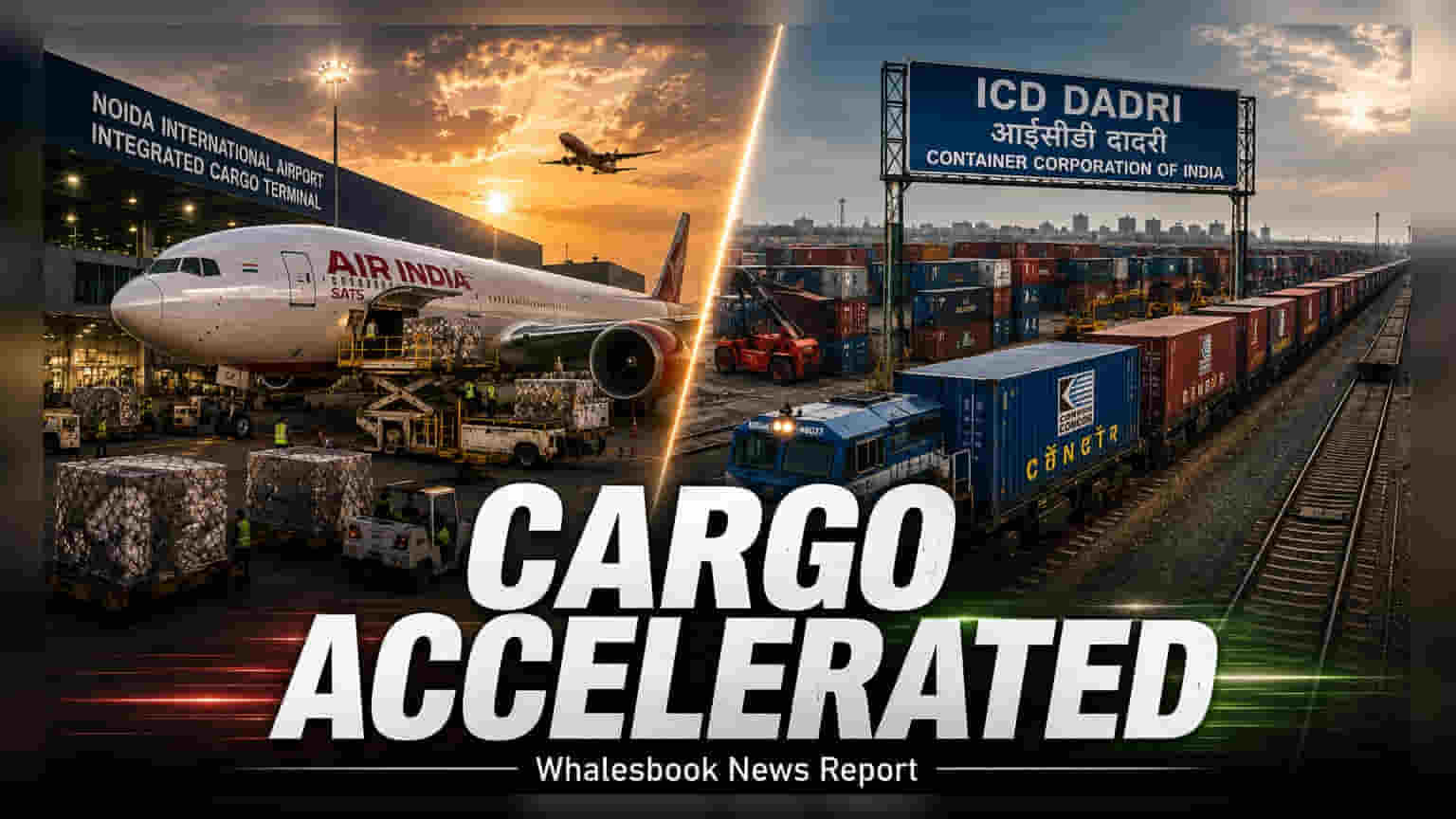
Air India SATS (AISATS) and Concor Air have partnered to expedite customs-cleared cargo movement from the Dadri Inland Container Depot to Noida International Airport. This agreement aims to improve logistics efficiency for international dispatch by connecting inland freight networks. Investors should watch whether this integration leads to faster volume growth and better utilization of the airport’s cargo infrastructure.
Air India SATS Airport Services Private Limited (AISATS) has formalised a strategic agreement with Concor Air Limited, a subsidiary of the state-run Container Corporation of India (CONCOR), to streamline cargo logistics in the National Capital Region. The partnership is designed to speed up the movement of customs-cleared goods from the Inland Container Depot (ICD) at Dadri to the Integrated Cargo Terminal at the newly operational Noida International Airport.
The core of this collaboration lies in linking two critical logistics hubs. ICD Dadri serves as a major gateway for containerized rail trade, while the Noida International Airport’s cargo terminal is built to manage high volumes of international air freight. By creating a unified pathway for transhipment, the companies aim to reduce transit times and operational delays for exporters. This is particularly important for time-sensitive cargo, such as pharmaceuticals, electronics, perishables, and express shipments, which require reliable supply chain connections.
AISATS, a 50:50 joint venture between Air India Limited (part of the Tata Group) and Singapore-based SATS Limited, has invested significantly in the Integrated Cargo Terminal and warehousing facilities at Noida International Airport. These investments are largely debt-funded, meaning the company must ensure high operational efficiency and volume throughput to justify the capital spending. For CONCOR, which is listed on the stock exchanges, this collaboration is a move to expand its logistics reach beyond traditional rail-road containers by tapping into the growing air cargo segment.
While the partnership aims to improve connectivity, investors monitoring CONCOR should note the competitive landscape. The company faces ongoing pressure from private container train operators and the expanding road freight sector, which has influenced its market share. Additionally, the broader aviation industry, including the Air India group, has dealt with financial challenges and losses in FY26, which may influence capital allocation strategies across the Tata Group’s aviation-related JVs.
The success of this initiative will depend on how effectively the companies can synchronize customs protocols and handling processes between the rail-based ICD and the airport terminal. The immediate monitorable for stakeholders will be the ramp-up in cargo volumes through this new corridor and the utilization rates of the Noida International Airport’s initial annual cargo capacity of 200,000 metric tonnes.