

Air travel through Hyderabad will become cheaper from September 1, 2026, as the Airports Economic Regulatory Authority (AERA) significantly lowered the revenue cap for the airport operator. The regulator set a baseline revenue requirement of ₹11,683.49 crore, far below the ₹27,851 crore requested by GMR Hyderabad International Airport. Investors are closely watching how this tariff reduction and the new 'incremental' revenue model will impact the company's future profit margins.
Air travel via Hyderabad is set to become more affordable starting September 1, 2026, following a new tariff order from the Airports Economic Regulatory Authority of India (AERA). The regulator has slashed the revenue allowance for Rajiv Gandhi International Airport for the five-year control period ending in 2031. This decision directly impacts the fees charged to passengers, effectively rejecting the operator’s higher proposal.
Impact on Passenger Fees
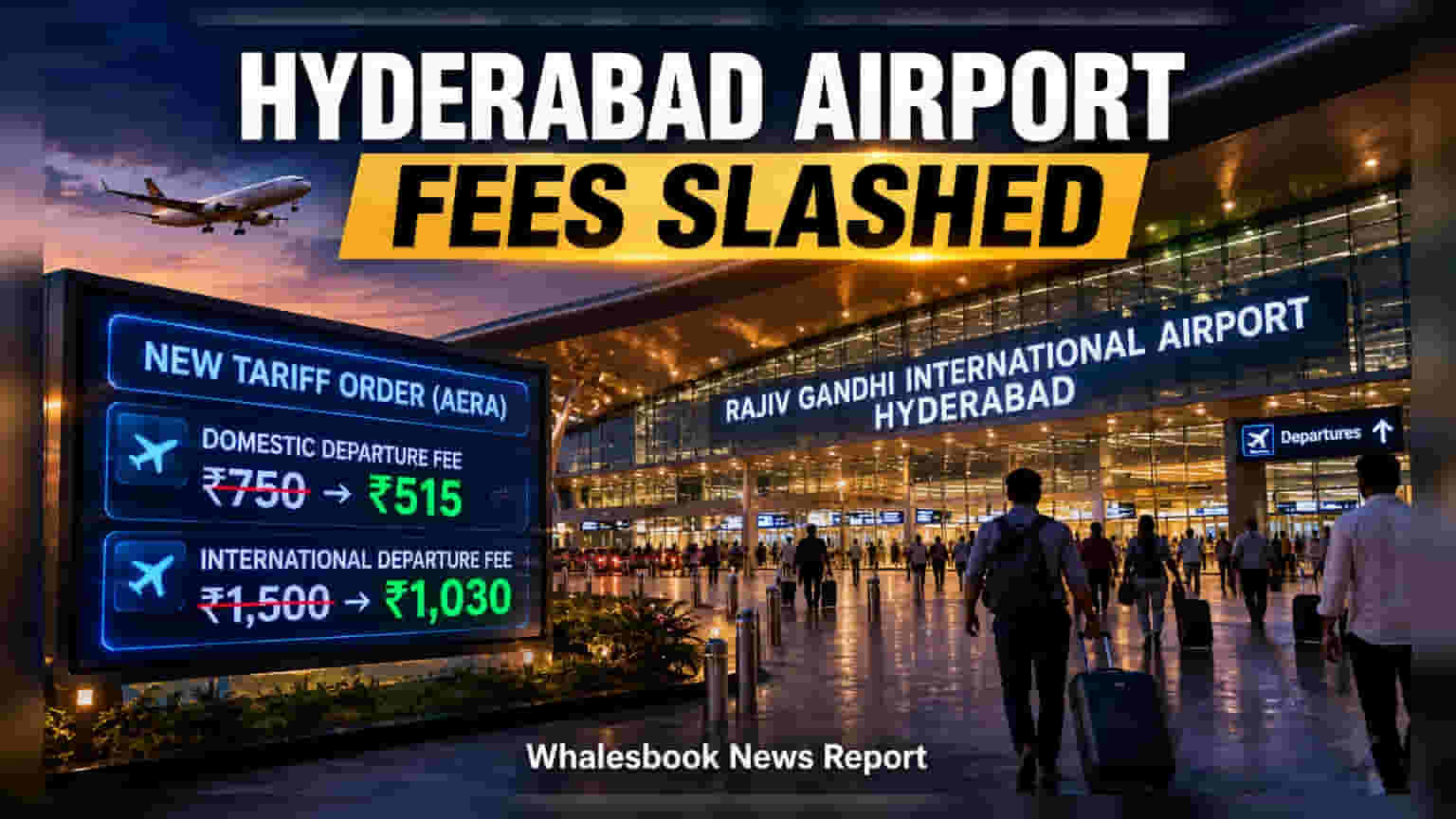
The regulator’s decision forces a reduction in user development fees across all travel categories. For departing domestic passengers, the fee will drop from the current ₹750 to ₹515. International travelers will see a sharper reduction, with fees falling from ₹1,500 to ₹1,030. To help offset some of the lost revenue from departing passengers, the operator is introducing arrival fees for the first time: ₹220 for domestic arrivals and ₹440 for international arrivals.
The Revenue Gap
The core of the conflict lies in the "Aggregate Revenue Requirement" (ARR), which is the total money an airport is allowed to collect from passengers and airlines to cover costs and earn a return. GMR Hyderabad International Airport (GHIAL), the operator, had requested a revenue cap of ₹27,851 crore for the 2026-2031 period. AERA, however, set this requirement at ₹11,683.49 crore. This substantial difference indicates the regulator is strictly controlling travel costs, which puts pressure on the operator to manage its business more efficiently.
New 'Incremental' Revenue Model
Investors should note a key shift in how the operator will earn this revenue. AERA is using an "incremental ARR" framework. Under this system, the airport cannot automatically collect the full approved revenue. Instead, the right to collect specific portions of this revenue is linked to the actual completion and commissioning of high-value capital spending projects.
This creates a clear execution risk. If the operator faces delays in expanding airport facilities, it may not receive the projected revenue, potentially squeezing cash flow.
Investor Context
For GMR Airports Infrastructure Ltd, which manages this asset, the ruling changes the financial landscape. With aeronautical income—money earned directly from airport operations—now facing a tighter cap, the company will likely need to rely more heavily on non-aeronautical revenue. This includes income from duty-free shops, retail outlets, food courts, and parking services to protect its profit margins. The stock of GMR Airports Infrastructure traded at approximately ₹99.85 as of August 25, 2026. The key monitorable for shareholders will be the company’s ability to execute infrastructure projects on time to unlock the "incremental" revenue, alongside its performance in the non-aeronautical business segment.