

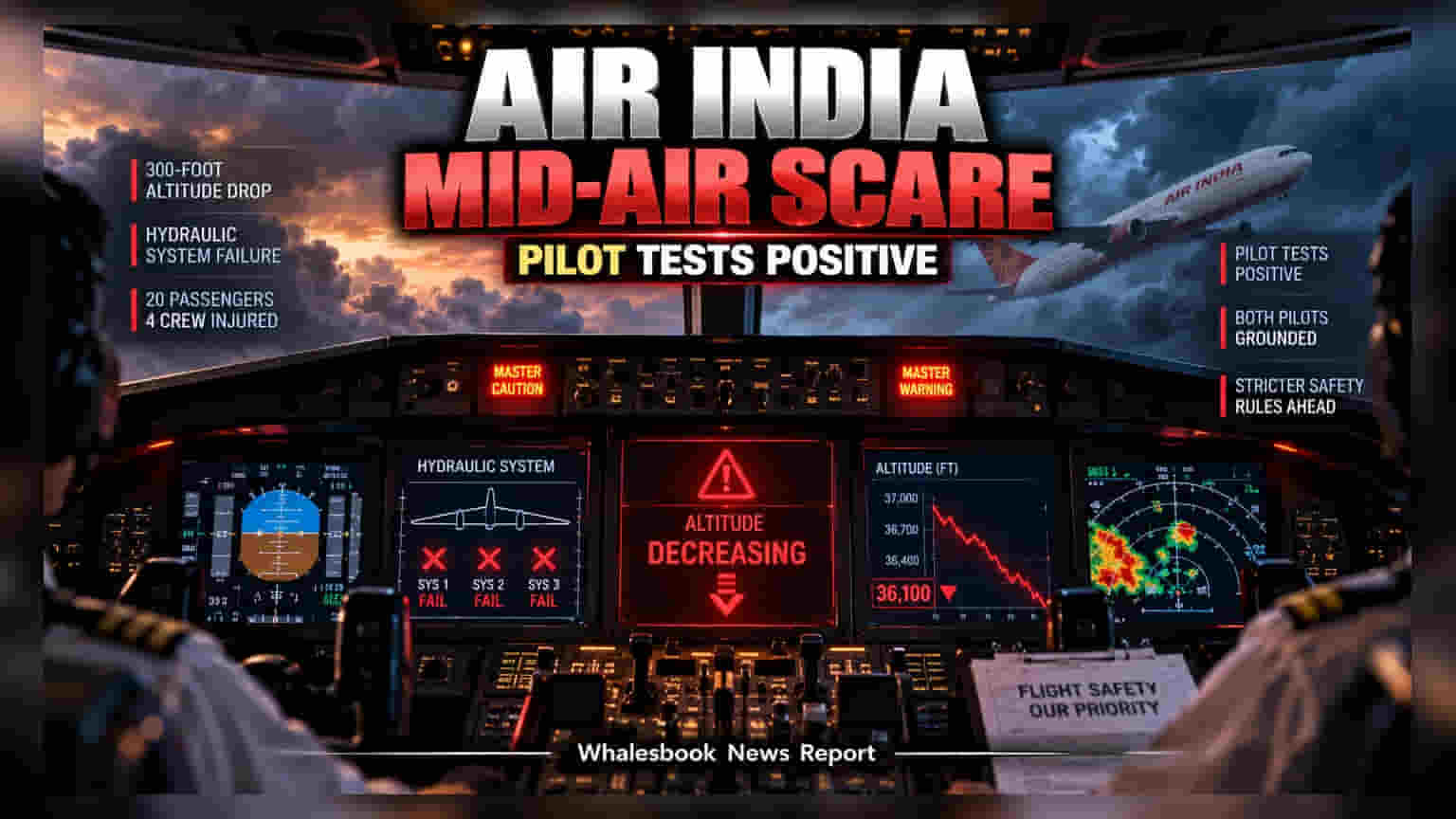
A government investigation into an Air India flight that dropped 300 feet mid-air has confirmed the pilot tested positive for psychoactive substances. The August 4 incident resulted in 24 injuries and raised serious safety questions. This development comes as the airline faces rising financial pressure, with a reported FY26 loss of ₹22,238 crore and a new capital infusion plan from Tata Sons.
A preliminary investigation by the Aircraft Accident Investigation Bureau has confirmed that the pilot-in-command of an Air India flight from Phuket to Delhi tested positive for psychoactive substances in a confirmatory test. This finding follows a serious mid-air incident on August 4, 2026, where the aircraft experienced a sudden 300-foot altitude drop while flying over Odisha.
Incident Details and Safety Findings
The flight, identified as AI2379, faced extreme turbulence that caused injuries to 20 passengers and four crew members. Beyond the human factors now under review, the investigation revealed that the aircraft suffered a total, albeit momentary, failure of all three hydraulic systems. This technical failure, combined with the pilot's test results, has prompted the Aircraft Accident Investigation Bureau to urge the Directorate General of Civil Aviation to take immediate regulatory action. Both pilots involved in the flight have been removed from the duty roster while authorities conduct a full audit of safety procedures.
Financial and Operational Context
This incident adds to the operational challenges currently facing Air India as it attempts a large-scale business transformation. The airline reported a net loss of ₹22,238 crore for the 2026 financial year, a figure that has more than doubled compared to the previous year. The company is also carrying a significant debt burden, estimated at approximately ₹40,000 crore.
To support the airline's turnaround and modernization efforts, Tata Sons has approved in-principle a fresh capital infusion of over ₹10,000 crore. However, the success of this capital deployment depends on the company's ability to demonstrate a clear path to profitability and improved operational efficiency. The airline is currently navigating a complex period characterized by fleet integration and supply chain constraints that have affected the availability of aircraft.
Future Regulatory Outlook
The findings from this mid-air incident are likely to result in stricter industry-wide safety regulations. The aviation regulator is already considering proposals for 100% annual random drug testing for all pilots to ensure strict adherence to safety standards. Investors and stakeholders will be watching for the final technical report, which will determine the cause of the hydraulic system failure, and any subsequent penalties or operational changes mandated by the authorities. The primary focus for the airline in the coming months will remain on restoring safety standards and managing its financial recovery amid intensified regulatory scrutiny.