

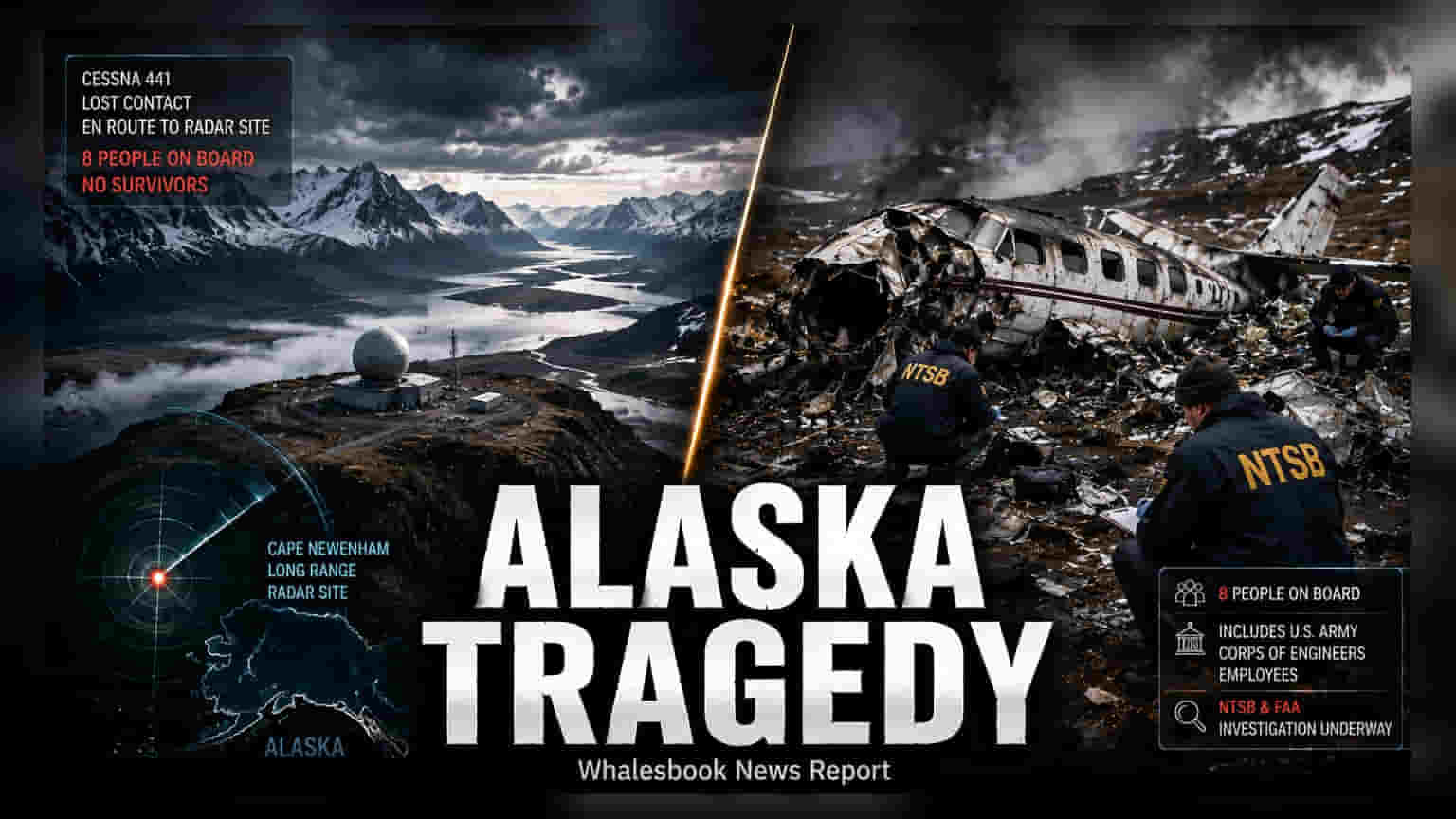
All eight individuals on board a twin-engine aircraft died after it crashed near a remote radar site in western Alaska. The flight, chartered by the U.S. Army Corps of Engineers and operated by private carrier Security Aviation, is now under investigation by federal authorities to determine the cause of the accident.
A civilian-contracted flight operated by Anchorage-based Security Aviation crashed in western Alaska on Thursday, resulting in the death of all eight people on board. The twin-engine Cessna 441 was en route to the Cape Newenham Long Range Radar Site when the incident occurred. Among the six passengers were two employees of the U.S. Army Corps of Engineers.
The aircraft had departed from Ted Stevens Anchorage International Airport before losing contact while approaching the remote radar facility. Rescue and recovery teams were deployed to the site, confirming that there were no survivors. The radar site itself is a key component of Alaska's Cold War-era continental defense network, managed by the Pacific Air Forces Regional Support Centre.
Investigation and Operational Scrutiny
The National Transportation Safety Board (NTSB) and the Federal Aviation Administration (FAA) have launched a joint investigation into the circumstances surrounding the crash. Investigators are expected to examine factors such as weather conditions, pilot communications, and maintenance logs for the Cessna 441 aircraft. Reports indicate that visibility in the area was poor at the time of the flight, with fog reported in the vicinity of the crash site.
For Security Aviation, the provider of the charter service, this incident initiates a period of heightened regulatory scrutiny. As a private operator managing government-contracted flights, the company faces potential investigations into its operational safety protocols and compliance with aviation regulations. While the company has not yet provided a detailed statement regarding the cause of the accident, federal authorities will likely review whether any mechanical or procedural failures contributed to the tragedy.
Risks and Context for Private Contractors
Incidents involving civilian contractors serving military agencies highlight the operational risks inherent in remote aviation services. For companies like Security Aviation, contracts with agencies such as the U.S. Army Corps of Engineers require strict adherence to safety standards and navigation in demanding, often unpredictable, weather environments. Any finding of negligence or systemic safety gaps by the NTSB or FAA could have significant long-term implications for the company's ability to retain government contracts.
Investors and industry observers will monitor the final report from the NTSB, which will be the primary source for clarifying the cause of the crash. The timeline for such investigations can be extensive, often spanning months as experts reconstruct the flight path and analyze aircraft components. The immediate focus remains on the recovery of the victims and the initial fact-finding phase of the federal investigation.