

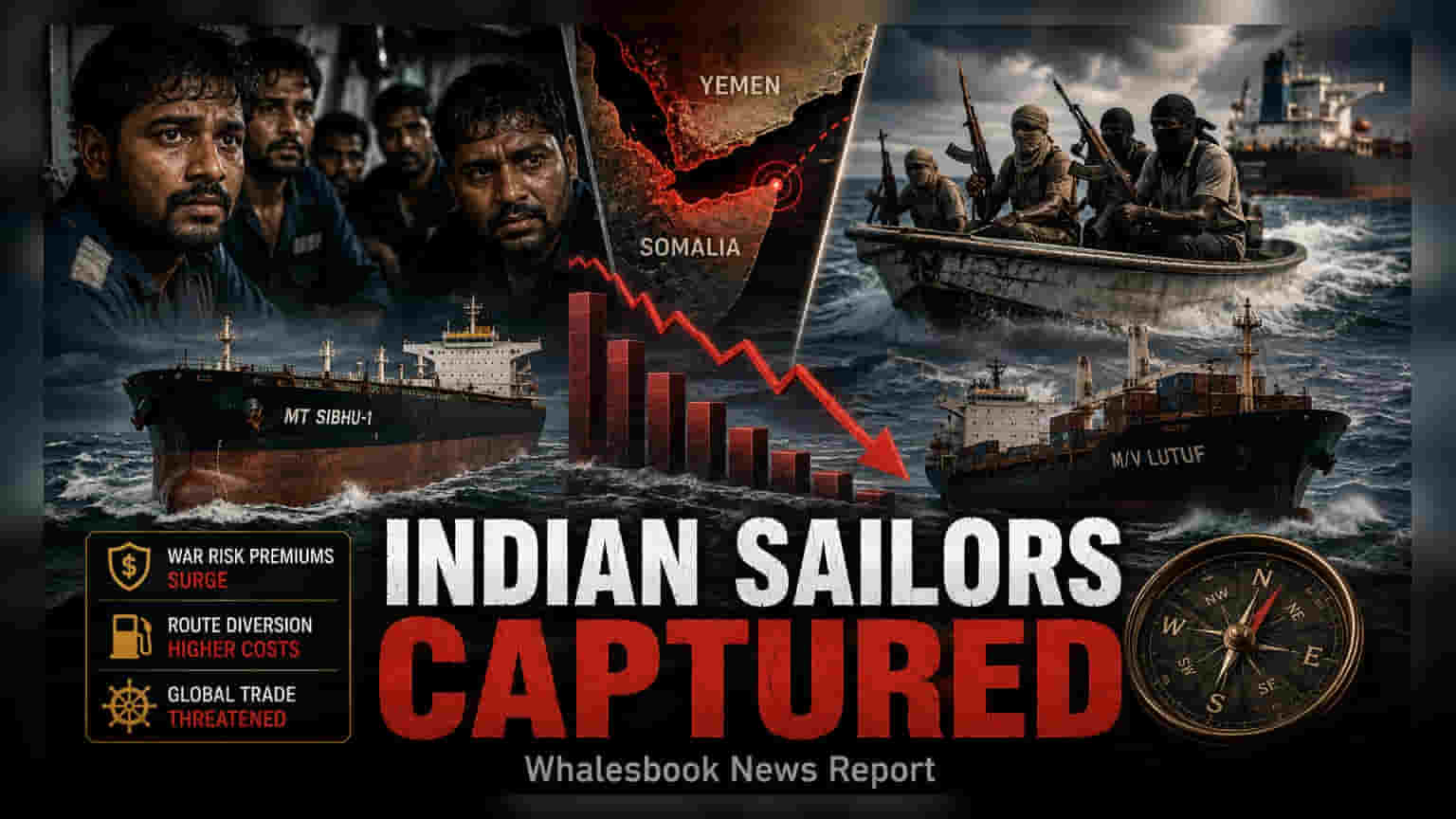
Two commercial vessels carrying 22 Indian crew members have been hijacked near Yemen and Somalia, highlighting a resurgence of maritime piracy. For investors, this poses risks of increased insurance premiums, potential route diversions, and higher operational costs for shipping companies operating near the Horn of Africa.
The Indian Shipping Ministry has confirmed the hijacking of two commercial vessels in separate incidents, involving a total of 22 Indian nationals. While reports indicate that all crew members are currently safe, the events have drawn attention to the escalating security challenges in the waters off Yemen and Somalia, a critical route for global trade.
The first incident involves the Eritrea-flagged oil tanker, MT Sibhu-1, which was seized on August 20 in the Gulf of Aden. The vessel had 16 Indian crew members among its 20 personnel. Notably, this vessel had been subject to U.S. sanctions in December 2025 regarding its involvement in the Iranian petroleum trade. The second incident occurred on August 17, when the Cameroon-flagged cargo ship, M/V LUTUF, was hijacked off the coast of Puntland, Somalia. This ship, carrying six Indian crew members, was reportedly transporting specialized military and satellite equipment, which adds a layer of geopolitical sensitivity to the situation.
For the shipping industry and investors, these hijackings are significant. The return of piracy in this region often leads to an immediate spike in insurance costs, specifically war risk premiums, for vessels traversing the Gulf of Aden and the Indian Ocean. When security threats rise, companies are often forced to deviate from standard routes, which increases fuel consumption and leads to significant delays in cargo delivery. These operational inefficiencies can pressure profit margins for shipping lines that are already navigating thin margins in a competitive global market.
Investors monitoring the logistics and shipping sector should be aware that vessels involved in sanctioned trades or those carrying high-value, sensitive, or military-related cargo often face a distinct risk profile. The hijacking of the MT Sibhu-1, specifically, underscores the complexities of the 'shadow fleet'—vessels often used to bypass international sanctions—which may attract higher scrutiny or become targets for instability in volatile regions.
The market will likely track how insurance providers and maritime regulators respond to these developments. The core monitorable for the coming weeks will be whether these incidents lead to a broader, sustained increase in operational costs for the shipping sector or if they remain isolated events. Companies with exposure to these high-risk maritime corridors may face increased pressure to invest in enhanced security measures, which could impact short-term capital spending and bottom-line performance.